TikTok Spark Ads: The UK Practitioner's Guide for 2026
How Spark Ads actually work in the UK: specs, costs, creator whitelisting and the setup that makes native ads convert.
TikTok Spark Ads let brands run a real organic post — their own or a creator’s — as a paid native ad, with every like, comment, follow, and view flowing back to the original post. Use them when you already have validated organic or creator content worth scaling. If you’re starting from scratch with no proven posts, a standard in-feed ad gets you to market faster.
Three-question decision check before you proceed:
- Does the post already perform organically, or does a creator’s audience respond to it?
- Do you have the creator’s authorization (or own the account)?
- Can you tie the campaign to a measurable objective — conversions, followers, or awareness?
If you answered yes to all three, you’re ready to spark. Here’s the pre-flight:
- Pick the post you want to promote (brand-owned or creator-sourced).
- Get the authorization code from the creator (or connect your brand account in Business Center).
- Set the authorization window — 7 or 30 days for a test, 60 or 365 days for a proven winner.
Key Takeaways
Spark Ads are most effective when you already have validated content — the format’s compounding social proof and native feel only pay off when the underlying post is worth scaling.
| Point | Details |
|---|---|
| Use validated content | Only spark posts with proven organic engagement or creator reach — untested posts waste the format’s advantage. |
| License short-term first | Start with 7–30 day authorization for tests; re-license winners at 60–365 days once performance is confirmed. |
| Track two data streams | Ads Manager metrics and organic post engagement are separate — don’t conflate them when optimizing. |
| UK compliance is non-negotiable | Label all creator Spark Ads as advertising under ASA/CAP Code; retain authorization records for two years. |
| Vertical | Offers integrated Spark Ads management — creator sourcing, rights workflows, paid social, and measurement — for UK brands. |
Table of Contents
- What Spark Ads actually do for your brand
- How the authorization mechanics actually work
- Spark Ads vs. standard in-feed ads: which one fits your situation?
- Step-by-step setup in TikTok Ads Manager
- Creative workflow that actually stops the scroll
- Measuring Spark Ads and knowing when to optimize
- UK compliance, creator consent, and payment considerations
- Fixing the most common Spark Ads failures
- Why Spark Ads earn their place in a serious TikTok strategy
- How Vertical supports your Spark Ads campaigns
- Sources
What Spark Ads actually do for your brand
The format’s core mechanic is deceptively simple: Spark Ads run a real organic post as the ad creative, and all engagement gained during promotion is attributed back to that original post. Paid views, likes, comments, and new followers don’t disappear when the campaign ends — they compound on the account permanently.
Core features:
- Two authorization flows. Brand-owned posts connect directly through TikTok Business Center. Creator posts use a short authorization code the creator generates inside the app — no credential sharing required.
- Engagement attribution to the original post. Unlike standard in-feed ads, where paid engagement lives only in Ads Manager, Spark Ads push every interaction back to the organic post.
- Authorization windows. TikTok supports 7, 30, 60, or 365-day windows, with batch authorization of up to 20 codes at a time.
- 10-minute maximum video length. Most brands won’t hit this ceiling, but it matters for long-form creator content.
- Account limit of 10,000 Spark Ads. Relevant for large-scale creator programs.
Marketing benefits:
- Native feel. The ad appears as a real post with a real profile handle, not a branded creative unit. Audiences scroll past ads; they engage with posts.
- Compounding social proof. Every paid view adds to the public count. A post with 50,000 likes before you spark it looks credible before a new viewer even watches.
- Lower auction costs on validated creative. There is no separate Spark Ads surcharge in TikTok’s auction — cost differences come from creator licensing fees and how the auction responds to creative quality. Posts that already perform organically tend to win auctions more efficiently.
- Follower growth. Viewers can follow the creator or brand directly from the ad unit, which standard in-feed ads don’t support in the same way.
Limitations worth knowing before you commit:
- You cannot edit the caption after authorization. What the post says is what the ad says.
- Comment moderation falls on the organic account, not Ads Manager. A controversial comment thread is visible to everyone who sees the ad.
- A sparked video must be un-authorized before it can be deleted from the organic account. Miss this step and you’ll have a campaign outage mid-flight.
How the authorization mechanics actually work
The Spark Ads system is built around a token-based handoff, not account access. Creators generate an authorization code inside the TikTok app — three dots on the post, then Ad settings, then Generate — and the advertiser pastes that code into Ads Manager. The creator never hands over login credentials.
Advertiser-side flow:
- Connect the brand’s TikTok account to Business Center (required for brand-owned posts).
- In Ads Manager, navigate to the ad creative step and select the TikTok Posts tab.
- Either choose a post from the connected account or enter the creator’s authorization code.
- Set the campaign live. TikTok validates the post against eligibility criteria before serving begins.
Creator-side flow:
- Open the TikTok app and go to the post you want to authorize.
- Tap the three-dot menu, select Ad settings, then Generate code.
- Choose the authorization duration: 7, 30, 60, or 365 days.
- Send the code to the brand or agency. That’s the entire handoff.
What gets preserved when you spark a post:
- Caption (as written at authorization — cannot be changed afterward)
- Comments and likes
- Music link and audio attribution
- Profile handle and follower button
- Follows gained during the campaign
Eligibility checks to run before you try to spark:
- The account must be connected to Business Center (for brand posts) or the creator must have a TikTok account in good standing.
- The post must comply with TikTok’s content policies — posts flagged for violations are ineligible.
- Music rights must be cleared for commercial use. A track licensed for organic use may not be cleared for paid promotion.
- The post must not already be in an un-authorized state.
- Post age matters: very new posts with no organic signal are technically eligible but rarely worth sparking immediately.
Pro Tip: Before you ask a creator for a code, confirm the music on their post is commercially licensed. TikTok’s Commercial Music Library is the safest source. A post with a trending sound that isn’t cleared for ads will fail review and cost you time.
Spark Ads vs. standard in-feed ads: which one fits your situation?
The honest answer is that neither format is universally better. The right choice depends on what you’re trying to accomplish and what creative you already have.
| Factor | Spark Ads | Standard in-feed ads |
|---|---|---|
| Authenticity | High — real post, real profile | Lower — clearly a brand creative |
| Social proof | Accumulates on original post | Stays in Ads Manager only |
| Creative editability | None after authorization | Full control at any point |
| Testing speed | Slower — needs existing post | Faster — build and launch directly |
| Follower growth | Supported natively | Limited |
| Auction behavior | Benefits from organic validation | Neutral — creative quality determines cost |
Pick Spark Ads when:
- You have a post with proven organic engagement you want to scale.
- Follower growth and persistent social proof are part of the campaign objective.
- You’re running a creator program and want the creator’s authentic voice to carry the ad.
Pick standard in-feed ads when:
- You need to iterate quickly on creative without waiting for organic validation.
- You want full control over copy, CTA, and creative elements.
- The content category carries comment risk (sensitive products, controversial topics) where a public comment thread is a liability.
One-sentence rule: if the post already works organically, spark it; if you’re still testing, use standard in-feed until you find a winner.
Step-by-step setup in TikTok Ads Manager
Pre-flight checklist
Before you touch Ads Manager, confirm:
- Campaign objective is selected (Traffic, Conversions, Reach, Video Views, or Community Interaction — all support Spark Ads).
- TikTok Pixel is installed and firing correctly on the landing page.
- Landing page is mobile-optimized and loads in under three seconds.
- Creator agreements are signed and authorization windows are agreed.
- You have the creator’s code in hand (or the brand account is connected to Business Center).
Setup procedure
- Log into TikTok Ads Manager and click Create Campaign.
- Select your objective. Spark Ads support Reach, Video Views, Traffic, Conversions, App Installs, and Community Interaction.
- Configure the ad group. Set targeting (demographics, interests, custom audiences), placement (TikTok feed only is recommended for Spark), and budget.
- At the ad level, select “Spark Ad” as the ad format (not “Custom Identity”).
- Add the post. Use the TikTok Posts tab to select a brand-owned post, or click “Enter authorization code” and paste the creator’s code.
- Set your CTA button (Shop Now, Learn More, Sign Up — match it to the landing page action).
- Add UTM parameters to the destination URL for attribution tracking.
- Review and publish. TikTok’s review typically takes a few hours; allow 24 hours before a planned go-live.
Creator authorization mini-procedure
For test campaigns, request a 7 or 30-day authorization. For posts you plan to run as evergreen creative, license short-term first (7–30 days), then re-license winners for 60–365 days once performance is confirmed. This protects budget and keeps creator fees proportional to proven results.
Creative specifications
| Spec | Recommendation |
|---|---|
| Aspect ratio | vertical, full-screen |
| Optimal length | 9–15 seconds for most objectives |
| Maximum length | 10 minutes |
| Caption | Kept from original post; cannot be edited post-authorization |
| Daily budget minimum | Check current TikTok Ads Manager policy — platform minimums apply per ad group |
| File size | Follow TikTok’s current upload specs in the TikTok Business Help Centre |
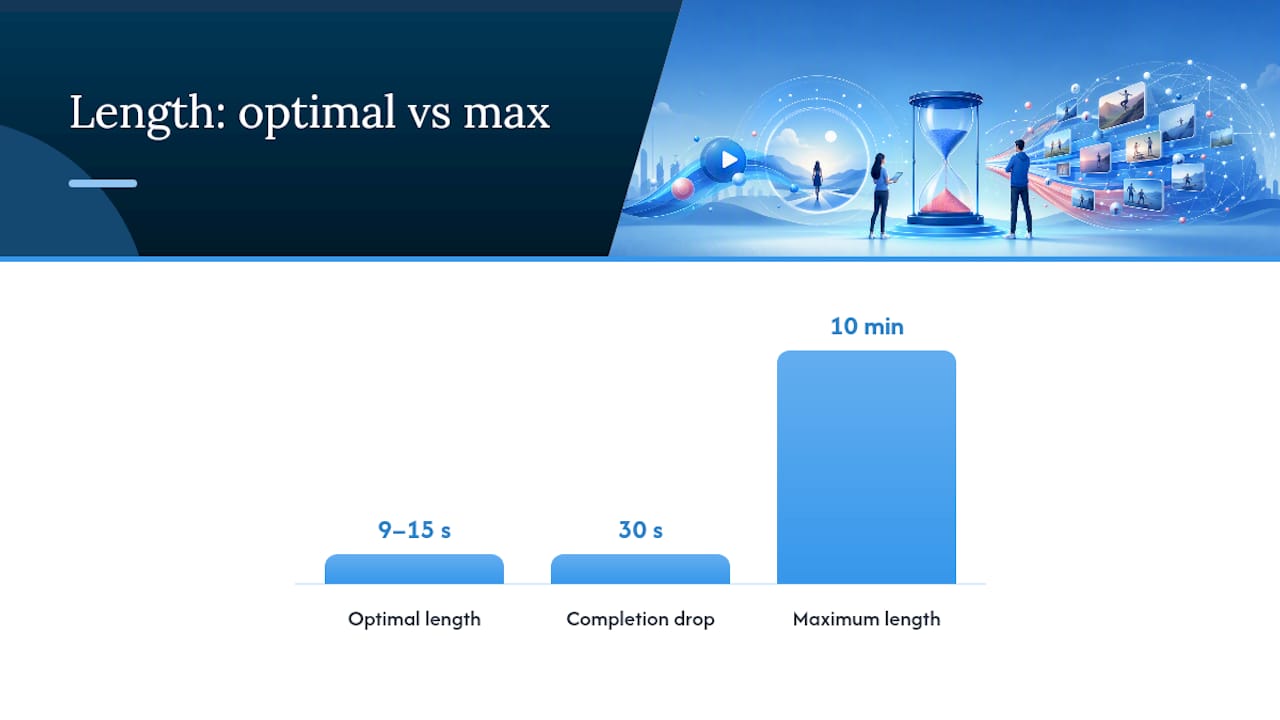
The 9–15 second guidance comes from platform explainers and industry setup guides that consistently point to this range for completion rates and cost efficiency. Longer posts can work for storytelling formats, but completion rates drop sharply past 30 seconds.
Creative workflow that actually stops the scroll
Most Spark Ads underperform not because of targeting or budget, but because the hook fails in the first three seconds. Practical creative guidance for TikTok in 2026 is consistent on this: build the hook before you build the video, design the first three seconds to interrupt scrolling, and test multiple concepts before committing production resources.
The hook-first production process
- Write five hook options before filming anything. A hook is the first visual or spoken line that makes a viewer stop. Examples: a surprising statement, a before/after reveal, a product doing something unexpected, or a direct question to the viewer.
- Use AI to generate concept variations. Tools like ChatGPT or Claude can generate ten hook scripts in minutes. Shortlist the two or three that feel most native to TikTok’s tone — not polished, not branded, just real.
- Shoot lightweight tests. Film the top three hooks with minimal production. Post organically and watch the first 24 hours of retention data.
- Produce the winner properly. Once you have a hook that holds attention past three seconds, invest in a cleaner version for the Spark campaign.
- Create variations for scale. Change the hook, keep the body. This gives you multiple Spark-eligible posts from one production session.
Creative checklist before you authorize:
- Sound is on and adds to the content (not just background music).
- Captions are present — most TikTok users watch with sound off at least some of the time.
- Visual change happens every 2–3 seconds to maintain attention.
- CTA appears in the final three seconds and matches the Ads Manager CTA button.
- No copyrighted music that isn’t cleared for commercial use.
Three script frames that work for Spark Ads
Creator testimonial: Creator speaks directly to camera. “I’ve been using [product] for three weeks and here’s what actually changed.” Authentic, low-production, high-trust. Works best when the creator has genuine experience with the product.

Problem → demo → result: Open with the problem (relatable, specific), show the product solving it in real time, close with the result. Fifteen seconds is enough. The demo must be visual — don’t describe what the product does, show it.
Surprise reveal: Start with something unexpected or counterintuitive. “You’re probably doing this wrong.” Then reframe with the product as the fix. The pattern works because curiosity holds attention better than benefit statements.
Pro Tip: Before you authorize a post for a Spark campaign, run this five-point check: (1) hook lands in under two seconds, (2) captions are accurate and readable, (3) music is commercially cleared, (4) CTA is visible and matches the Ads Manager button, (5) the creator’s profile is in good standing. Catching one of these before launch saves a support ticket later.
Measuring Spark Ads and knowing when to optimize
Spark Ads produce two separate data streams: the Ads Manager campaign metrics and the organic post’s engagement signals. Both matter and conflating them leads to bad optimization decisions.
KPIs to track in Ads Manager:
- View-through rate (VTR) at 6 seconds and completion — the primary signal of creative quality.
- Paid followers and paid profile visits — unique to Spark Ads and a direct measure of brand-building value.
- CTR on the CTA button — measures intent to act.
- Conversion rate and CPA — for conversion-objective campaigns, these are the bottom-line metrics.
How engagement attribution changes your reporting logic:
Because all engagement flows back to the original organic post, you’ll see the post’s like and comment counts rise on TikTok while Ads Manager shows campaign-level metrics separately. Don’t try to reconcile these as the same number — they measure different things. The organic post count is cumulative; the Ads Manager metric is campaign-scoped.
Optimization cycle:
- Days 1–3: Monitor delivery and early VTR. If the 6-second view rate is low, the hook is failing. Don’t touch budget yet — let the algorithm learn.
- Days 4–7: Compare Spark vs. non-Spark performance if you’re running a split. Testing Spark against non-Spark on the same creative in the same account is the cleanest way to isolate the format’s effect.
- Day 7+: If CPA is within range and VTR is holding, scale budget. If not, test a new hook before scaling.
- Authorization renewal: Set a calendar reminder five days before the authorization window expires. A lapsed code pauses the ad without warning.
Pro Tip: For UK campaigns, use server-side events via TikTok’s Events API alongside the pixel. Browser-based tracking alone misses a meaningful share of iOS conversions. This matters more for Spark Ads than standard in-feed because the engagement attribution split makes pixel-only data look artificially low.
UK compliance, creator consent, and payment considerations
Running Spark Ads in the UK means operating under the ASA/CAP Code, which treats paid promotion of creator content the same as any other influencer advertising. The label requirement is not optional.
Regulatory checklist:
- All Spark Ads using creator content must be clearly labeled as advertising. TikTok’s “Sponsored” label on the ad unit satisfies part of this, but the post itself should also carry a disclosure if the creator was compensated — “Ad,” “#ad,” or “Paid partnership” are all acceptable under CAP Code guidance on influencer advertising.
- Disclosure must be upfront and prominent, not buried in a caption or below a “more” fold.
- Recordkeeping: retain the authorization code, the creator agreement, and evidence of disclosure for a minimum of two years. The ASA can request records during an investigation.
- If the creator is a minor, additional consent requirements apply — check the CAP Code and ICO guidance before proceeding.
Payment and licensing structure:
- Short authorization windows (7–30 days) suit test campaigns and carry lower licensing fees. Re-license at a higher rate only when performance justifies it.
- The short-license-first approach protects budget: you pay for long-term rights only on proven creative.
- Include an un-authorization-before-delete clause in every creator agreement. Without it, a creator who archives or deletes a post mid-campaign kills the ad with no recourse.
Consent and authorization record template (what to store):
- Creator name and TikTok handle
- Post URL and date of authorization
- Authorization code and expiry date
- Agreed fee and payment terms
- Disclosure method confirmed (screenshot of published post with label)
- Signed agreement or email confirmation of terms
Pro Tip: Build a simple shared spreadsheet for creator authorization tracking: one row per post, columns for code, expiry date, fee, and disclosure confirmed. It takes ten minutes to set up and prevents the most common compliance gap — a lapsed authorization nobody noticed until the campaign paused.
Fixing the most common Spark Ads failures
Most Spark Ads problems fall into four categories. Here’s how to diagnose and fix each one.
Common problems and fixes:
- Authorization code expired: The creator must generate a new code. You cannot extend an existing code — it’s a fresh generation each time. Set calendar reminders five days before expiry.
- Creator deleted or archived the post: If the un-authorization step was skipped, the ad pauses immediately and cannot be restored. The only fix is to find a replacement post and restart. This is why the contract clause matters.
- Caption locked — you need to change it: You can’t. Un-authorize the post, ask the creator to edit the caption, re-authorize, and generate a new code. Factor this into your pre-launch review.
- Music rights blocking the post from running as an ad: The track isn’t cleared for commercial use. The creator needs to swap the audio to a track from TikTok’s Commercial Music Library, re-post, and generate a new code. This is the most common reason a post fails ad review.
- Post failing content policy review: Check TikTok’s advertising policies for the specific category. Some product categories (supplements, financial products, alcohol) have additional restrictions that apply to paid promotion even when the organic post is fine.
48-hour post-launch checklist
- Confirm the ad is delivering (check status in Ads Manager — “Active” and spending).
- Check the comment section on the organic post. Have a moderation plan ready.
- Review early VTR at 6 seconds. Below 15% on a cold audience is a signal to test a new hook.
- Confirm UTM parameters are firing correctly in your analytics platform.
- Verify the authorization expiry date is logged and a renewal reminder is set.
What to escalate to TikTok support vs. what to resolve internally:
Contact TikTok support for: billing discrepancies, account-level policy flags, pixel integration errors, and ad review decisions you want to appeal. Resolve internally: authorization logistics, creator communication, caption issues, and music rights — these are operational, not platform, problems.
Why Spark Ads earn their place in a serious TikTok strategy
The conventional wisdom on TikTok advertising tends to focus on production quality and targeting precision. Both matter, but they’re not what separates Spark Ads from everything else. The real advantage is structural: Spark Ads convert ephemeral paid engagement into lasting organic assets. Every pound you spend doesn’t just buy impressions — it builds a post’s public credibility in a way that persists after the campaign ends.
Most brands undervalue this. They look at CPA in isolation and compare Spark Ads to standard in-feed on a cost-per-click basis, which misses the compounding effect entirely. A post with 80,000 likes and 3,000 comments is a different asset than a post with 200 likes, even if both ran at the same CPA during the campaign. The former earns trust before a new viewer watches a single second.
The friction, though, is real. The main operational challenge in Spark Ads isn’t Ads Manager — it’s rights and workflow. Creator agreements, authorization tracking, music clearance, and disclosure compliance are all manual processes that break down at scale without a system. Brands that build those systems before they need them scale creator programs efficiently. Brands that improvise spend more time fixing problems than running campaigns.
The practical lesson: treat the authorization workflow as infrastructure, not admin. Build it once, document it clearly, and it pays for itself the first time a creator tries to delete a post mid-flight and the contract clause saves the campaign.
How Vertical supports your Spark Ads campaigns
Spark Ads deliver their best results when creative selection, creator rights management, and paid social execution run as one connected process — not three separate workstreams handed off between teams.
Vertical runs exactly that kind of integrated program. The agency handles creator strategy and sourcing, paid social campaign management, creative testing (including the AI-assisted hook-testing workflow described above), and measurement setup — including server-side tracking for UK campaigns where pixel-only data undersells performance. For brands starting out, Vertical offers a Spark Ads audit and pilot: a structured review of your existing TikTok content, a shortlist of posts worth sparking, and a managed test campaign with clear KPIs. For brands already running TikTok ads, the agency can step in at the campaign management level with full creator authorization workflows built in. Get in touch with Vertical to scope a pilot or audit for your brand.
Sources
The following are the primary references used in this guide, plus official TikTok tools every practitioner should bookmark.
- TikTok Spark Ads: Complete Setup, Strategy & Benefits Guide (2026) - TikAdTools
- TikTok Spark Ads: Setup, Codes, and Creator Authorization That Lasts Up to 365 Days | Novoads AI
- TikTok Spark Ads: Setup, Costs, and When They Beat a Normal In-Feed Ad | Soku
- Spark Ads TikTok: The Ultimate Guide for 2026 - JoinBrands
- How to create scroll-stopping TikTok ads with AI in 2026 | Cyprus Mail
Recommended

Other posts







































Stay ahead with better decisions.
Get business insights today.
