How to Build a First-Party Data Strategy for E-Commerce Personalisation
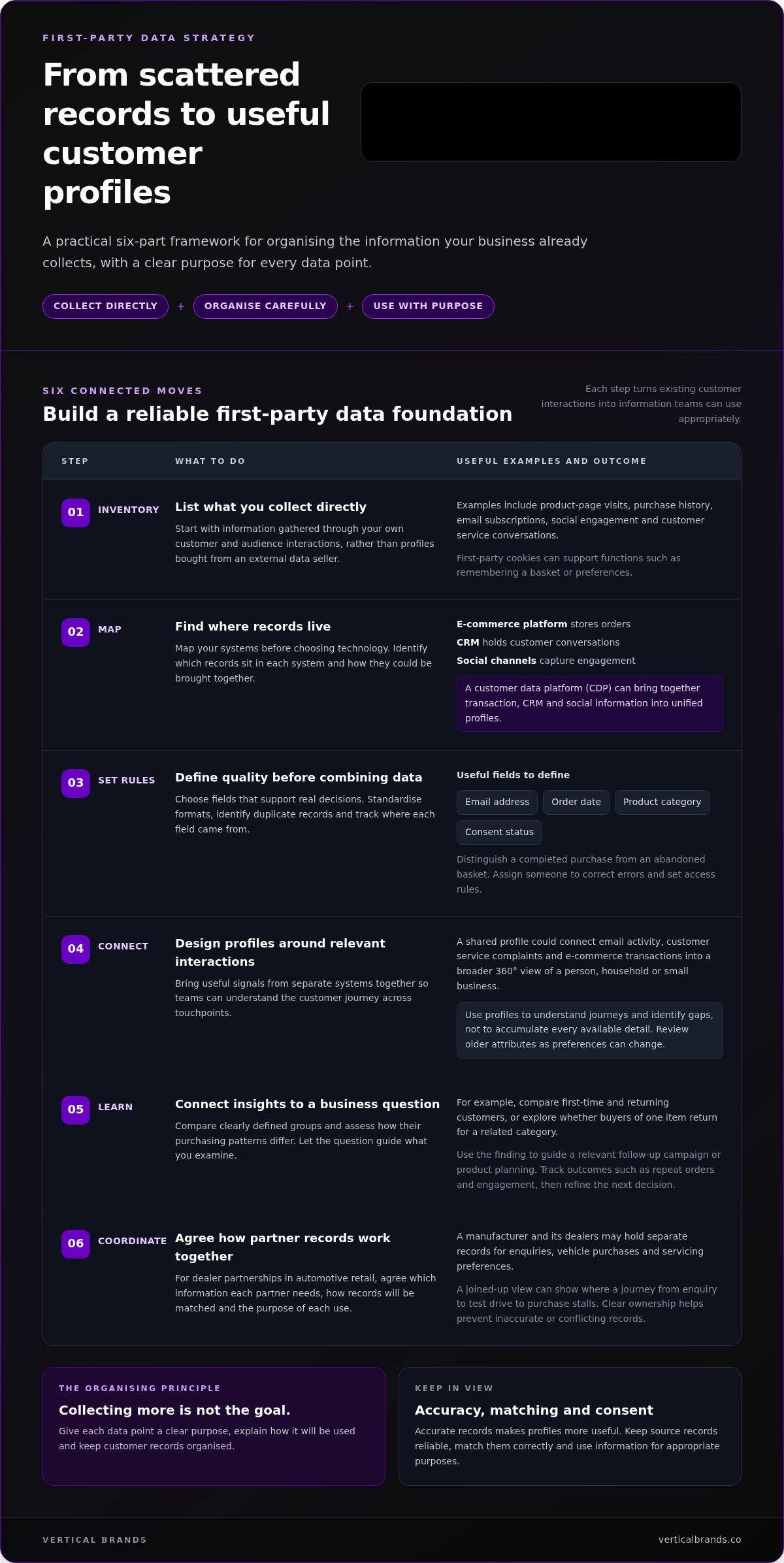
A practical first-party data strategy for e-commerce starts with information your business collects directly from customers and audiences. This may include website interactions, purchase history, email subscriptions, social engagement and customer service conversations. Its value comes from organisi...

A practical first-party data strategy for e-commerce starts with information your business collects directly from customers and audiences. This may include website interactions, purchase history, email subscriptions, social engagement and customer service conversations. Its value comes from organising data around clear consent and using it to make customer experiences more relevant.
Collecting more data isn’t the goal. What matters is making the information you already gather useful for personalisation, retention and cross-selling. Give each data point a clear purpose, explain how it will be used, and keep customer records organised.
This guide explains how to build that approach step by step: what to collect, how to connect data sources, and how to use customer insights in email and other marketing. The result is a practical framework for creating more relevant experiences while respecting customer choices.
Key Takeaways
• Identify the customer information your business already collects, then decide which data sources need to work together.
• Use a customer data platform to organise information into useful customer profiles, not simply to collect more data.
• Apply customer insights to personalise messages, support retention and make cross-selling more relevant.
• Design social campaigns around a clear value exchange, so people understand why they’re sharing their details.
• Build trust with transparent explanations and clear consent. A strong strategy connect each data point to a defined purpose.
What is First-Party Data?
• Start by listing the information your business collects directly from customers and audiences. For an online retailer, this could include product-page visits, purchase history, email subscriptions, social engagement and customer service conversations. First-party cookies are created under your business’s own domain and can support functions such as remembering a basket or preferences. These records describe interactions with your business, rather than profiles bought from an external data seller.
• Map the systems that hold your records before choosing technology. An e-commerce platform may store orders, while a CRM holds customer conversations and social channels capture engagement. A customer data platform, or CDP, can bring together information from transactions, CRM systems and social media, then organise it into unified customer profiles. This gives teams a consistent view across touchpoints, provided the source records are reliable and matched correctly.
• Set data quality rules before combining information. Define the fields that support real decisions, such as email address, order date, product category and consent status. Standardise formats, identify duplicate records and track where each field came from. For example, distinguish a completed purchase from an abandoned basket. Assign someone to correct errors and set access rules so teams use accurate records for appropriate purposes.
• Design profiles to connect relevant customer interactions. Separate systems can leave marketing with email activity, customer service with complaints and ecommerce with transactions. A shared profile can bring those signals together into a broader 360° view of a person, household or small business. Use it to understand the journey and identify gaps, not to accumulate every available detail. Review older attributes regularly, since past preferences may no longer reflect current behaviour.
• Connect customer insights to a measurable business question. Compare defined groups, such as first-time and returning customers, and assess how their purchasing patterns differ. A retailer might find that customers who buy a particular item often return for a related category. That insight could guide a relevant follow-up campaign or improve product planning. Track outcomes such as repeat orders and engagement, then use the findings to refine your next decision.
• Apply the same discipline to dealer partnerships in automotive retail. A manufacturer and its dealers may hold separate records for enquiries, vehicle purchases and servicing preferences. Agree which information each partner needs, how records will be matched and the purpose of each use. For example, an enquiry may lead to a test drive and later a purchase. A joined-up view can show where that journey stalls, while clear ownership helps prevent inaccurate or conflicting records.
Use cases such as personalisation, retention and cross-selling
Use customer interactions to shape relevant offers, improve retention and measure advertising performance. Connect each action to a useful customer signal and a clear outcome.
•
Segment Audiences for Personalised Marketing
Group customers by meaningful behaviour, then tailor messages to each audience. For example, separate first-time buyers, repeat purchasers and customers who viewed a product without buying. Check that each segment supports a distinct marketing action, such as a replenishment reminder or product recommendation. Avoid broad categories that don’t change the message. Deloitte found that 80% of consumers prefer brands offering personalised experiences, and those consumers spend 50% more with them.
•
Personalise Creative and Offers
Match creative and offers to customer interests, purchase history and loyalty status. Dynamic creative optimisation can assemble different product images, copy or calls to action for relevant audience segments. Test each element against a defined outcome, such as clicks or completed purchases. For loyalty programmes, use past interactions to make offers more relevant, rather than sending the same discount to every member. Acxiom’s 2024 CX trends report found that 47% of consumers prefer recommendations based on personal preferences.
•
Personalise Without Third-Party Data
Use information customers share directly, alongside activity on your website and marketing channels. A returning shopper’s previous purchase can inform product recommendations; an email preference can guide the topics they receive. Keep personalisation relevant to the signal collected, and don’t treat one interaction as a complete picture of someone’s needs. Loyalty activity and voluntary preference choices can also help improve the experience over time.
•
Measure Advertising and Retention
Measure campaigns by connecting advertising interactions to outcomes your business records, such as website visits, orders and repeat purchases. How can retailers measure and advertise after third-party cookies? Use campaign tags and first-party records to assess which channels and messages contribute to conversions. For advertising, use appropriate customer audiences and compare results with sales data, while respecting consent and stated data uses. Track retention through repeat-purchase patterns, then invest in the approaches that produce useful customer engagement. A clear campaign measurement approach helps connect each test to a business outcome.
First-party data collection through social campaigns
Social campaigns and digital events can invite useful customer interactions beyond a purchase. Plan what data you’ll request, how you’ll collect it and how consent will work before launch.
•
Plan Social Campaign Data Collection
Set one clear objective for each campaign, such as learning product preferences or inviting people to a launch update. Offer a relevant reason to participate, such as a product quiz or useful guide, then request only information needed for that purpose. A reported second phase of the Quaker Cruesli campaign captured 400,000 new contacts. Treat that as an example, not a target. Each campaign need a clear hand-off from response to follow-up.
Define the audience, channel and next action before publishing. Check that the question, offer and follow-up message align. A social poll about favourite flavours, for example, can inform product content, but shouldn’t quietly become an unrelated marketing list.
•
Select First-Party Collection Methods
Choose a collection method that fits the interaction. Website forms can gather preferences, email subscriptions can capture contact details, and loyalty programmes can record customer choices. A digital event can collect registration details and topic interests. FT Live’s Global Boardroom digital event attracted more than 50,000 sign-ups, showing how event registration can create a direct audience relationship.
Keep each form focused. Separate optional preferences from information needed to provide the requested content. Use a short quiz when a few useful answers can shape product recommendations, rather than asking broad questions that won’t affect a later interaction. Each method should support a defined customer journey.
•
Implement Data Collection Tools
Connect campaign forms and event registrations to the system that will manage the resulting records. Map each field to a consistent label, such as source, campaign, stated preference or registration date. Test the full process, from form submission to stored record and follow-up message. Make sure duplicate entries don’t create conflicting profiles or trigger repeated communications.
Use campaign tags to distinguish responses by channel and creative. Review a test record before launch, then check that the right team can interpret it. A tool is useful only when data arrives accurately and supports a practical decision.
•
Collect Data Responsibly with Consent
Explain what information a campaign collects, why you’re asking for it and how you’ll use it. Make privacy information and cookie choices visible where relevant, and keep wording consistent across social adverts, forms and event registration pages. Don’t imply that entering a competition automatically signs someone up for unrelated marketing.
Record each person’s choice alongside the relevant source and purpose. Make it straightforward to change preferences or withdraw permission. Clear data handling protects the relationship as well as the information.
Consumer trust, transparency and consent
Risks include collecting unnecessary details, misusing information and sending unwanted marketing. Reduce them by explaining each purpose, limiting access and respecting customer choices.
•
Manage Consent and Governance
Document what you collect, why, where it goes and which teams can use it. For example, keep email preferences distinct from order records, and note when a customer changes those preferences. Assign an owner to each dataset and review access regularly. The European Union states that the GDPR requires companies to be transparent about how they collect and use personal data. For UK retailers, clear governance means aligning data handling with the rules that apply to their operations.
Keep consent records linked to the relevant channel and activity. If a customer signs up for product updates, don’t treat that choice as permission for unrelated uses. Review forms, privacy explanations and campaign settings together so the stated purpose matches actual data use. Clear records also help teams respond consistently when a customer changes their choices.
•
Offer Value in Exchange for Consent
Give people a clear reason to share information, such as tailored product recommendations, useful content or early access to relevant updates. Explain the exchange before asking for details. A quiz that suggests suitable product categories, for example, should explain how answers shape recommendations and whether they inform later marketing. Don’t make the benefit vague or imply that every offer requires the same information.
Make each choice understandable and voluntary. Separate a requested service, such as an order update, from optional promotional messages. A BCG study found that 90% of consumers were willing to share personal information when they received clear value in return. Treat value as part of the experience, not a reason to obscure what data collection involves.
•
Reduce Data Collection and Use Risks
Collect only details that support a defined customer or business purpose. A product preference may improve recommendations, while an unrelated personal detail adds exposure without improving the experience. Limit access by role, remove information that no longer serves its purpose, and make sure campaign audiences use the correct consent status. These steps reduce the risk of inaccurate targeting, inappropriate use or unnecessary access.
Check data quality before using it in a conversion campaign. A stale preference or merged customer record can lead to irrelevant messages and damage trust. Keep a route for customers to correct details or withdraw consent, then ensure connected systems reflect that change. BCG also found that 57% of consumers believed companies were selling their personal data. Explain data use plainly, and ensure actual practices match that explanation.
Building a first-party data strategy
Build your strategy around decisions the business needs to make, not the volume of customer data it can collect. A practical first-party data strategy for e-commerce connects useful information to clear actions, owners and measures.
• Set a commercial objective before selecting data. Choose a decision, such as improving repeat purchases, reducing irrelevant promotions or understanding which channels drive orders. Define the outcome you’ll measure, then identify the customer data needed to inform it. For example, a retention objective could use purchase dates, product categories and customer preferences. Don’t collect fields that don’t support the chosen action.
• Map where relevant records currently sit. Review your CRM, e-commerce platform, point-of-sale system, content management system, loyalty programme and any demand-side platform. For each source, note the owner, format, update process and intended use. A simple map may show that email preferences are in one system while transaction history sits elsewhere. That gap becomes a defined integration task.
• Prioritise connections that support an end-to-end customer view. Set shared identifiers and consistent labels before linking records. Distinguish an order from a product view, and a stated preference from an inferred interest. Companies linking all their first-party data sources generate twice the incremental revenue from a single ad placement, communication or outreach compared with companies with limited integration. Treat integration as an operational priority, not just a software purchase.
• Assign ownership and quality controls to every important field. Name the team responsible for maintaining email status, product categories and campaign source data. Schedule regular reviews for duplicates, missing values and outdated preferences. For example, compare the consent status in your customer platform with the audience selected for an email campaign. Regular audits keep records relevant and reduce errors in later analysis.
• Activate data through a small, measurable test. Select one audience and one action, such as recommending complementary products to repeat buyers. Track the campaign source, message, response and resulting orders. Use consistent labels for Google search campaigns and social activity so channel reporting is clear. Don’t change several variables at once, or the team won’t know which customer insight shaped the result.
• Review performance and update the plan as customer needs change. Compare results against the objective, then keep, revise or stop the activity. Use customer feedback and observed behaviour to refine preferences, rather than treating an old profile as permanently accurate. If internal teams need support translating data into content tests, develop a customer-led content approach that connects each message to a defined audience and purpose.
Vertical Brands: Klaviyo Email Marketing
Vertical Brands can turn consented customer data into more relevant email activity through Klaviyo Email Marketing and Email Marketing & CRM Management. This is a practical next step when your records are ready but customer segments, campaign logic or follow-up journeys need structure. Use customer preferences and purchase behaviour to shape messages, then assess engagement and sales against the campaign’s purpose. Paid Social and Paid Search can support a wider approach by connecting customer insights with advertising activity. A strong setup keeps data use aligned with consent and gives each channel a clear role. To build a more coordinated approach, contact Vertical Brands to discuss your requirements.
Turn customer data into your next growth decision
A first-party data strategy for e-commerce is valuable when it changes a real business decision. Choose one customer journey to improve, identify the information that can guide the change, and agree how you’ll assess its impact. Keep the first test focused. A relevant post-purchase message or clearer product recommendation can give your team a practical starting point.
Then set a review point. Check whether the activity reached the intended audience, supported a useful interaction and respected customer choices. Use what you learn to refine the next action, rather than collecting more information without a clear purpose. The next step is to connect your data, customer experience and channel activity in one workable plan.
Vertical Brands can help shape that plan around your priorities and existing marketing activity. Contact Vertical Brands to plan your strategy. Start with a clear objective, and build from there.
Frequently Asked Questions
What first-party data should UK e-commerce businesses collect?
Collect information that can improve a defined customer experience or business decision. Useful examples include product preferences, order frequency, chosen delivery options, reasons for returns and customer service topics. A homeware retailer might use returns feedback to clarify product dimensions on its website. Don’t collect sensitive or unrelated details simply because a form can capture them. For each field, record its purpose and decide how it will guide a practical action.
How can e-commerce businesses collect customer data with consent?
Explain the purpose when asking for information, then let customers make a clear choice. For example, keep an optional marketing sign-up separate from order updates needed to complete a purchase. A product quiz can explain how answers will shape recommendations before customers submit them. Record the choice, the relevant form or channel, and any later preference changes so your communications reflect the customer’s decision.
What are the UK GDPR and PECR rules for first-party data and cookies?
UK GDPR requires transparency about how personal data is collected and used. PECR is relevant to electronic communications and technologies that store or access information on a user’s device. For cookies, distinguish those strictly necessary for a requested service from other tracking or advertising uses, and present clear choices where consent is required. Keep privacy notices, cookie controls and actual practices aligned. First-party collection doesn’t remove the need to explain purposes or respect choices.
How can e-commerce businesses build and grow an email and SMS subscriber list?
Offer a clear reason to subscribe, such as product updates, restock alerts or useful buying advice. Place sign-up options at relevant moments, such as on a product page or order confirmation, without making marketing enrolment a condition of purchase. Ask for an email address or mobile number only when needed for the chosen channel. Send messages that match the stated purpose, and make it easy for subscribers to change preferences or unsubscribe.
How can online retailers unify first-party data across web, apps, CRM and stores?
Start by agreeing how each system identifies a customer and labels key events. Use consistent identifiers where appropriate, then map actions such as app sign-ins, web orders, store purchases and service enquiries to those records. Customer records are useful only when teams can distinguish a completed transaction from a product view. Test a sample journey across systems, resolve duplicates, and assign an owner to correct mismatched or outdated details.
Which customer data platforms and tools are best for UK e-commerce, and what do they cost?
The best fit depends on your data sources, marketing channels and reporting needs. A small retailer may begin with an e-commerce platform, CRM and email marketing tool; a CDP can help when records need broader matching and activation. Costs vary by contact volume, features, integrations and support. Compare the full operating cost, including implementation and ongoing data maintenance, rather than choosing a platform based on its subscription price alone.
How can first-party data support personalisation, segmentation and product recommendations?
Use observed choices to tailor the next relevant interaction. A customer who repeatedly buys coffee beans could receive grinder recommendations, while someone browsing gifts might see curated gift options. Create segments based on meaningful behaviours, such as product category or purchase stage, then measure clicks and orders for each message. Set rules to exclude unavailable products and avoid recommendations based on one ambiguous visit. Review performance and update segments as preferences change.
What steps should a small e-commerce business take to create a first-party data strategy?
Choose one business goal, such as encouraging a second purchase, then identify the customer information needed to support it. Map where those details are held, document their intended use, and choose a simple way to connect the relevant records. Test one campaign with a defined audience and measure its outcome. Review data accuracy and customer preferences before extending the approach. This keeps the first project focused and gives the next investment a clear basis.

Other posts



























































Stay ahead with better decisions.
Get business insights today.
