90 Day LMS Marketing Playbook for Product Owners and Marketers

The single most effective LMS marketing strategy combines audience-focused positioning with a funnel-driven content and activation engine. Four pillars make this work: a sharp value proposition tied to a specific buyer, content mapped to each funnel stage, channels chosen for where L&D buyers actually spend time, and a measurement system built on activation and retention, not just signups. The rest of this guide breaks down how to build each pillar.
TL;DR:
- Focusing on collaboration features and cohort-based programs can improve activation metrics, as these methods are increasingly valued by learners and adopted more frequently.
- Prioritizing intent-driven channels like paid search and targeted social ads helps reach buyers actively researching LMS solutions, while organic social builds trust through peer-shared thought leadership.
- Designing onboarding, microlearning, and gamification strategies enhances engagement during the trial period, which is crucial for increasing the likelihood of a deal closing.
- Packaging and pricing should align with buyer evaluation criteria, offering easy-to-understand tiers, guided setup, and clear success metrics to reduce friction before purchase.
- A 90-day growth plan includes clarifying positioning, launching targeted campaigns, optimizing based on data, and capturing case studies, with product improvements favored when activation rates are weak.
Table of Contents
- Define your target audience and value proposition
- Set measurable goals and KPIs for the LMS funnel
- Content strategy by funnel stage
- Channels and tactics that reach L&D buyers
- Learner activation and engagement tactics
- Pricing, packaging, and trial offers that reduce friction
- Measurement, cohorts, and what to test first
- A 90-day go-to-market playbook
- What a real client result looks like in practice
- Product-led growth versus demand generation: choosing your primary route
- How Vertical can help you execute this playbook
- Sources
- FAQ
Define your target audience and value proposition
Before you write a single ad, decide exactly who you are selling to. Most LMS platforms serve several buyer types inside one organization, and each one cares about something different.
Build personas around the roles that actually make or influence the purchase:
- HR and L&D leaders care about compliance coverage, skill development, and reporting they can show to leadership.
- Training managers care about ease of content creation, learner engagement rates, and time saved on administration.
- Operations leaders care about consistency across locations and reduced onboarding time.
- Customer success teams care about renewal risk and whether learners actually finish what they start.
Once personas are clear, write a value proposition in one or two sentences that a training manager could repeat to their boss. A workable template: “We help [buyer type] achieve [specific outcome] without [common pain point].” Sell the outcome, not the feature list. “Cuts onboarding time by weeks” lands better than “customizable course builder,” because it answers the question every buyer is actually asking: what changes for us if we buy this.
Set measurable goals and KPIs for the LMS funnel
Clarity starts with knowing what you are measuring and why. Each funnel stage needs its own primary indicator, and each indicator should tie back to a business outcome your finance team recognizes.
- Awareness: organic traffic to product and category pages, qualified leads from gated content.
- Consideration: demo requests, webinar signups, time spent on pricing or comparison pages.
- Activation: trial-to-active-user rate, time to first course completion.
- Retention: repeat login frequency, renewal rate, seat expansion.
Translate these into business terms before you report them: a rise in trial-to-active rate should map to projected seats or annual recurring revenue, not sit alone as a vanity metric. Set targets using your own historical baseline first, then adjust as campaigns mature.
One figure worth building your roadmap around: the Learning at Work 2023 report found webinar and e-learning use still leads adoption at 41%, down from 51% in 2021, while peer collaboration features and cohort-based programs are increasingly valued and more frequently adopted. That shift suggests activation metrics tied to collaboration features deserve more attention than they currently get.

Content strategy by funnel stage
Content only earns its budget when it matches what the reader needs at that moment. Structure your editorial calendar around three clear stages.
- Awareness stage: publish research summaries, SEO pillar pages on training and compliance topics, and guides that open with the buyer’s problem rather than your product.
- Consideration stage: build feature-category explainers, simple ROI calculators, and outcome-framed case studies that describe results without naming other vendors.
- Decision stage: produce demo playbooks, onboarding checklists, and short trial walkthrough videos that shorten the gap between signup and first use.
Format choice matters as much as topic choice. Webinars work well for consideration-stage buyers who need to justify a purchase internally. Long-form guides support SEO and give sales teams something to send after a first call. Short video explainers suit decision-stage buyers who want proof the product works before they commit budget. Templates and checklists, meanwhile, do double duty: they generate leads at the top of the funnel and become onboarding assets once a trial starts.
The CIPD’s summary of the post-pandemic surge in digital learning notes that many organizations simply moved face-to-face content online rather than rethinking how people learn. That gap is an opening: content that shows a genuinely different learning method, not just more of it, differentiates faster than another feature comparison ever will.
Channels and tactics that reach L&D buyers
Not every channel deserves equal budget. Prioritize the ones where your buyer already spends time researching a purchase.
- SEO: build topic clusters around training and compliance problems, optimize product and feature pages for buyer-intent keywords, and keep page speed and structured data clean on every landing page.
- Paid search: bid on intent-heavy terms rather than broad category terms, since L&D buyers rarely search casually.
- Paid social: target HR and L&D titles directly on LinkedIn, and retarget anyone who abandoned a demo or trial signup.
- Organic social: publish thought leadership from your team and encourage employees to share it, since peer-shared content earns more trust than brand posts.
- Email and CRM: run triggered nurture sequences based on behavior, not just time delay, so a trial user who skips onboarding gets a different message than one who is already active.
- Partnerships: pursue integrations with complementary tools, relationships with L&D consultancies, and outreach to training or reseller partners who already sell into the same buyer.
Our guide to B2B LinkedIn Ads covers targeting and creative approaches specific to HR and L&D titles, which tend to respond differently than typical B2B audiences. For nurture sequence design, this lead nurturing guide walks through behavior-triggered flows that suit trial activation particularly well.
Pro Tip: Route demo and trial abandoners into a single retargeting audience across paid social and email so the message stays consistent no matter where they see it next.
Learner activation and engagement tactics
Marketing does not stop at signup. What happens in the first week of a trial often decides whether a deal closes at all.
- Onboarding: give every new admin a short setup checklist, and track time-to-first-course-completion as your core early metric.
- Microlearning: break content into short, mobile-first modules, since long courses lose learners before they finish.
- Cohorts and gamification: group learners into small cohorts and add light gamification to encourage completion, since peer accountability tends to outperform reminders alone.
- In-product feedback: collect short prompts inside the platform to catch friction before a learner drops off entirely.
The Learning at Work 2023 report found that adoption of more engaging formats such as mobile apps and gamification remains relatively limited, even as peer collaboration grows. That gap is a clear opportunity for LMS marketers to lead with engagement design as a genuine differentiator rather than an afterthought.
Pro Tip: Ask new trial admins one question after their first login: what almost stopped you from finishing setup. The answers surface friction points faster than any dashboard.
Pricing, packaging, and trial offers that reduce friction
Packaging should match how your buyer actually evaluates a purchase, not just how you want to bill them.
- Free trials suit smaller teams that self-serve and want to test quickly without a sales call.
- Paid pilots suit mid-sized organizations that need to prove ROI to a budget holder before a full rollout.
- Demo-led enterprise sales suit larger organizations where procurement and IT need direct answers before signup even begins.
Whichever model you choose, give trial admins a guided setup, preloaded sample content, and a clear success metric to hit before the trial ends. Structure pricing tiers so that a natural next step, more seats, more courses, more integrations, feels like an obvious upgrade rather than a renegotiation.
Measurement, cohorts, and what to test first
Short-term channel metrics tell you what brought someone in. Cohort-based product metrics tell you whether they stayed, and that second number matters more over time.
- Track these events consistently: signup, first invite sent, first course started, first course completed, and repeat login within 30 days.
- Group by cohort, not just by channel, so you can see whether a March signup behaves differently from an April one after a messaging change.
- Test in this order: creative and ad copy first, since it is cheapest to iterate, then landing pages, then nurture sequence timing.
Read results against your own baseline before comparing to any industry number. A jump in trial signups paired with a drop in completion rate usually means the campaign attracted the wrong audience, not that the product underperformed. Our landing page design guide covers the specific elements worth testing first when conversion stalls.
A 90-day go-to-market playbook
A time-boxed plan keeps a launch from drifting.
- Month 1: finalize positioning and personas, set up analytics and KPI tracking, and publish the first wave of SEO pillar content.
- Month 2: launch paid search and social campaigns, run a webinar tied to a decision-stage topic, begin partnership outreach, and refine trial onboarding based on early admin feedback.
- Month 3: optimize campaigns using the first full cohort of data, capture at least one outcome-framed case study, and package findings into sales enablement material.
Assign clear ownership each week: one person owns content production, one owns paid channel performance, and one owns the activation metrics that tell you whether the product side is holding up its end.
What a real client result looks like in practice
An effective approach for growth marketing agencies involves removing the friction of separate vendors for strategy, creative, performance media, and web.
A short checklist worth copying in your first 30 days: define one persona, write a one-sentence value proposition, set up analytics before launching any campaign, publish two pieces of stage-mapped content, launch one paid channel test, fix your trial onboarding flow, track five core events, run one retargeting audience, capture one early testimonial, and review cohort data weekly.
Product-led growth versus demand generation: choosing your primary route
Lead with product improvements when your trial-to-active rate is weak. No amount of demand generation fixes a leaky activation funnel. Lead with demand generation once activation holds steady and the constraint becomes volume, not retention.
For small teams, a rough split works well: put roughly two-thirds of effort into whichever side is currently the constraint, and revisit the split every quarter as the numbers shift.
— Alex
How Vertical can help you execute this playbook
Running every pillar above at once, positioning, content, paid media, activation design, and measurement, takes a team most LMS companies do not have in-house. Some growth marketing agencies bring digital marketing strategy, creative design, paid social and search, and website design and development together under one team, which removes the handoff delays that usually slow a launch down.
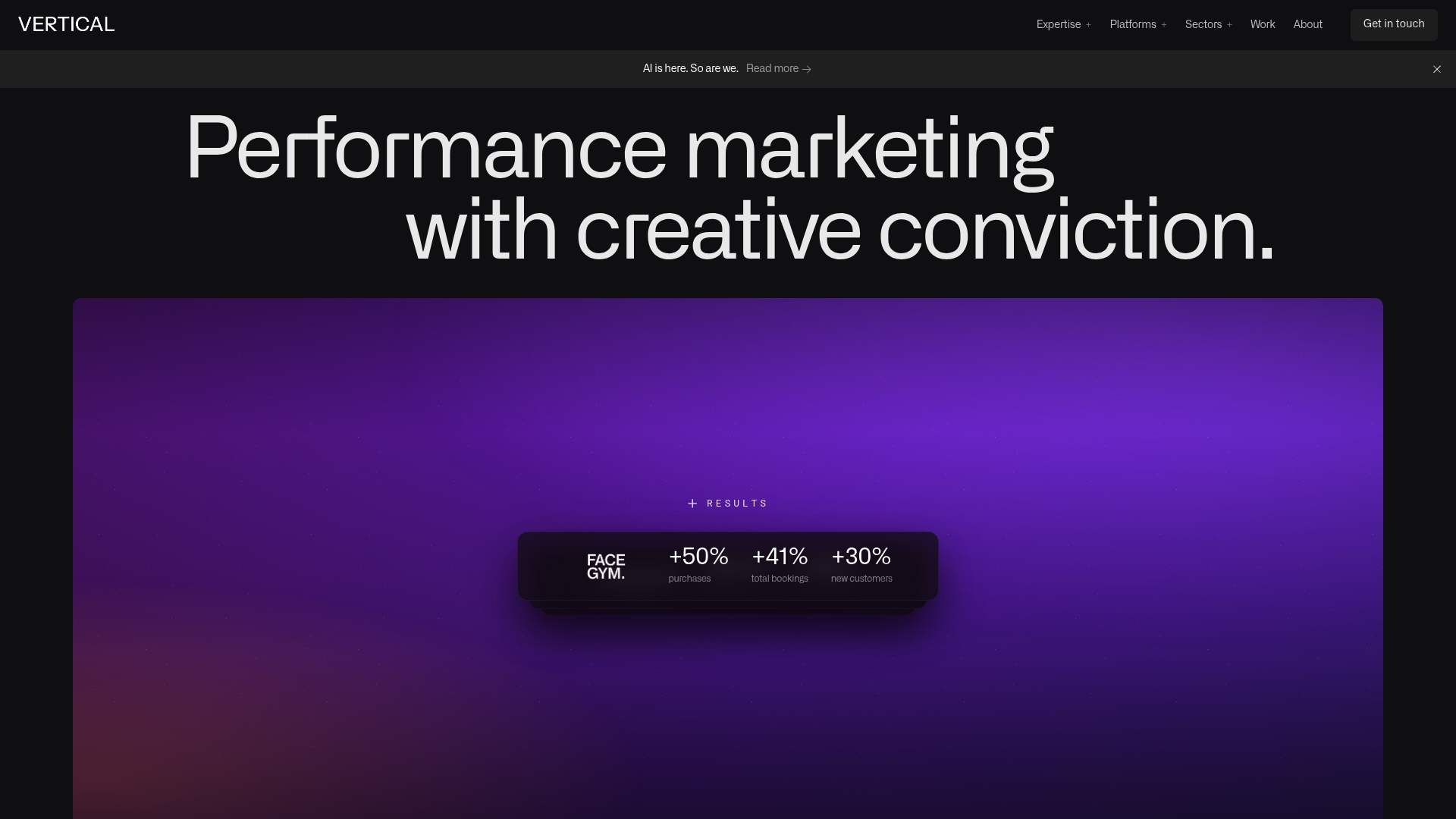
A practical starting point is a focused diagnostic: a review of your current positioning, funnel content, and activation metrics, followed by a 90-day pilot built around the gaps that matter most. See the full range of services on the Vertical Brands services page and get in touch to scope a plan for your platform.
Sources
For sector data, see the CIPD’s report on digital learning adoption and the Learning at Work 2023 survey. For tactical follow-up, see our guide on post-purchase email flows.
- Surge in use of digital learning in wake of COVID-19, finds CIPD / Accenture report
- Learning at work 2023 survey report
FAQ
What does LMS marketing mean?
LMS marketing means promoting a learning management system to organizational buyers, typically HR, L&D, and operations leaders, using positioning, content, and channel strategy that speaks to their outcomes rather than generic software features. It covers everything from top-of-funnel awareness content through trial activation and renewal.
What is the 3-3-3 rule for marketing?
Definitions of the 3-3-3 rule vary across marketing contexts, and there is no single standard version tied to LMS marketing specifically. A common version refers to reviewing results across three time horizons, short, medium, and long term, rather than judging a campaign on one data point alone.
What are the 5 main marketing strategies?
Marketing strategies are commonly grouped into content marketing, search engine optimization, paid advertising, social media marketing, and email or CRM marketing, though the exact grouping varies by source. For an LMS, the strongest results usually come from combining these around a clear funnel rather than running each in isolation.
What are the top 5 LMS platforms?
Rankings of top LMS platforms shift often and vary by source, audience size, and industry focus, so no single list holds steady across the market. Buyers are better served comparing platforms against their own priorities, like compliance coverage, engagement features, and integration needs, than chasing a fixed ranking.
How long does an LMS marketing launch take to show results?
Most LMS marketing plans need a full quarter to show meaningful movement, since content and SEO take weeks to gain traction and trial cohorts need time to convert. A 90-day plan that covers positioning, campaign launch, and optimization gives a realistic first checkpoint for judging results.
Recommended

Other posts






























































Stay ahead with better decisions.
Get business insights today.
