4 Questions Growth Marketers Use to Pick Micro vs Macro Influencers

For conversion-driven campaigns, pick micro creators. For one-day launches that need scale and instant credibility, pick macro. When you need both simultaneous reach and sustained community follow-up, run a hybrid. Follower counts are a starting filter, not a decision. Audience quality and opinion leadership determine whether the partnership actually performs.
TL;DR:
- Micro and nano influencers are most effective for conversion, UGC, and localized activations due to their higher engagement and niche audiences.
- Macro influencers excel for rapid, large-scale reach during product launches or timed awareness campaigns but offer lower engagement density and higher costs.
- Audience quality and perceived expertise predict campaign success more reliably than follower counts, especially across different platforms.
- Combining macro awareness with micro conversion efforts in hybrid campaigns can maximize impact and optimize tracking of ROI.
- Prioritize early vetting of creators’ engagement authenticity and run small-scale tests before scaling to ensure campaign efficiency.
Table of Contents
- Micro vs Macro Influencers at a Glance
- What Do Follower Ranges Actually Mean?
- When Do Micro and Nano Influencers Win?
- When Do Macro Influencers Win, and What Do You Give Up?
- How Do You Choose the Right Tier for Your Campaign?
- How Do You Measure Influencer Marketing ROI?
- How Do You Vet Creators Before You Sign?
- How Do You Run a Hybrid Micro and Macro Campaign?
- What Should You Test First on a Limited Budget?
- Sources
Micro vs Macro Influencers at a Glance
Before you commit budget, understand where each tier fits inside your funnel. Nano creators sit at 1K to 10K followers, micro at roughly 10K to 100K, mid-tier from 100K to 500K, and macro influencers often run 500K to 1M, with mega influencers above that.
- Reach: Nano and micro deliver hundreds to tens of thousands of impressions per post; macro and mega deliver hundreds of thousands to millions.
- Engagement: Nano and micro typically post the highest engagement rates; macro trends lower per follower.
- Cost shape: Nano often works on gifting; micro runs flat fees or affiliate splits; macro commands agency-negotiated rates per post.
- Admin overhead: Low per creator at macro scale, high in aggregate at micro scale because you’re managing dozens of relationships instead of one.
- Best use: Micro for conversion and UGC, macro for awareness and launches.
What Do Follower Ranges Actually Mean?
Platform and campaign type both shift where a tier’s boundaries fall, so treat the ranges above as a working baseline, not a rulebook. A creator with 80,000 TikTok followers behaves differently than one with 80,000 YouTube subscribers, because the platforms reward different content behaviors.
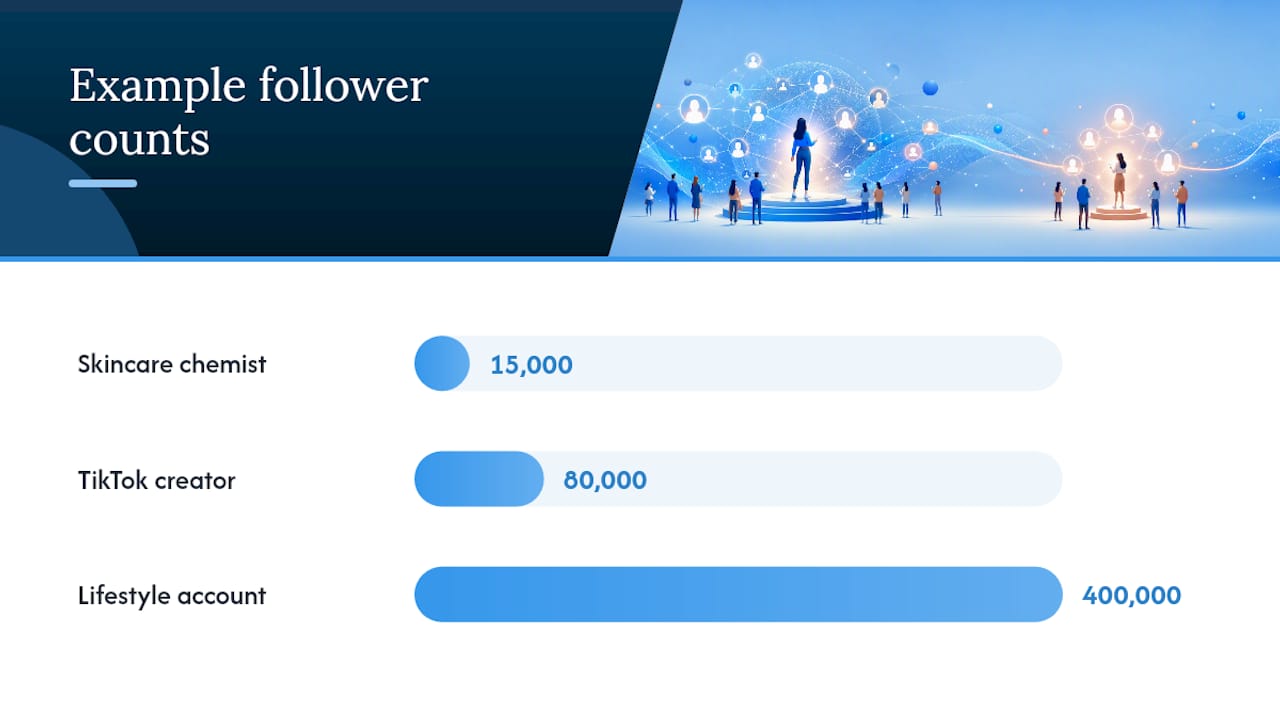
Opinion leadership, the perceived authority and subject expertise a creator holds with their audience, predicts campaign impact more reliably than raw subscriber count. Research on the rise of nano and micro-influencers found that audiences follow advice from creators they view as credible specialists, regardless of tier. That’s why a 15,000-follower skincare chemist can outperform a 400,000-follower lifestyle account on a beauty launch.
Platform mechanics matter too:
- TikTok rewards virality; a mid-tier account can spike far beyond its normal reach with one strong video.
- Instagram rewards sustained community interaction over single-post spikes.
- YouTube rewards depth, with longer content that builds trust over multiple viewings.
When Do Micro and Nano Influencers Win?
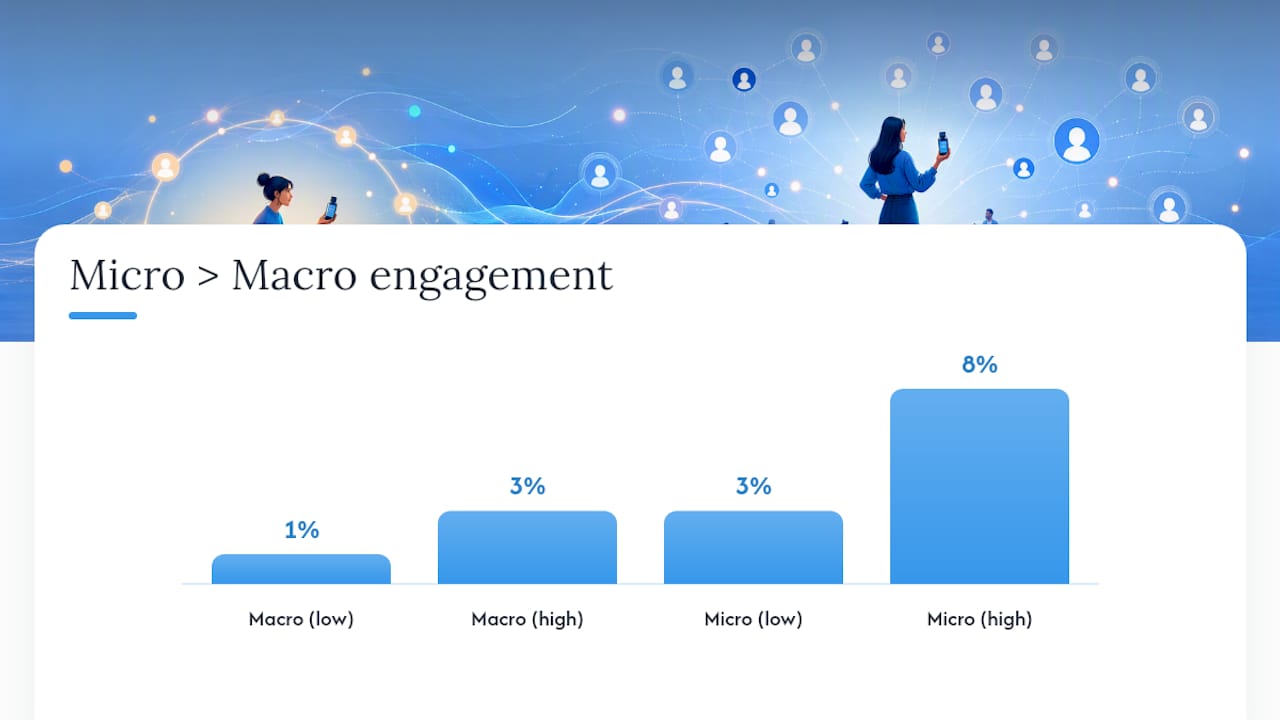
Micro and nano creators win when the objective is conversion, not exposure. Their audiences tend to be tighter and more niche, which usually means higher intent and better trust in product recommendations. Micro influencers often post Instagram engagement rates of 3 to 8 percent, compared with 1 to 3 percent for macro accounts, and that gap translates directly into lower cost-per-engagement for performance campaigns.
Cost expectations run low per creator. Many nano partnerships work through product gifting alone, while micro creators typically charge modest flat fees or work on affiliate commission. The real cost isn’t the fee, though. It’s the labor of sourcing, briefing, contracting, and reporting on dozens of creators instead of one.
Micro and nano tiers are best suited to:
- Performance affiliate programs with tracked links or promo codes
- UGC collection for reuse in paid social creative
- Localized activations tied to a specific city, store, or region
Pro Tip: Batch your micro creator outreach into cohorts of 10 to 15 and standardize your brief template. Trying to custom-brief 40 individual creators is how micro campaigns quietly burn through a marketing team’s week.
When Do Macro Influencers Win, and What Do You Give Up?
Macro creators win when you need mass reach on a fixed timeline, particularly at product launch. A single macro post can put your brand in front of hundreds of thousands of relevant viewers within hours, something dozens of micro partnerships can’t replicate on a same-day basis.
The trade-off is engagement density. Average engagement rates drop as follower count climbs, since a broader audience is inherently less personally connected to the creator. Pricing bands scale accordingly, often running from four figures to well into five figures per post depending on niche and platform, but you’re buying compressed, simultaneous delivery rather than a slow-building campaign.
Macro partnerships also carry a legitimacy signal. A recognizable creator vouching for your brand can shortcut the trust-building that smaller accounts take months to earn, which matters most when you’re entering a new category or launching to a cold audience.
- Best for: product launches, category entries, timed announcements, brand awareness pushes
How Do You Choose the Right Tier for Your Campaign?
Work through four questions in order, and the right tier usually becomes obvious.
- Define the objective. Awareness, conversion, UGC volume, and community building each point toward a different tier.
- Map your budget to realistic options. Micro campaigns often run cheaper on cost-per-engagement; macro requires bigger flat spend but delivers reach density instantly.
- Check your timeline. A single-day launch favors macro’s simultaneous reach; an always-on conversion program favors micro’s compounding relationships.
- Assess internal capacity. Fewer macro relationships need less coordination; many micro partners need real operational investment in briefing and reporting.
| Objective | Recommended tier | Why |
|---|---|---|
| Conversion / sales | Micro or nano | Higher engagement, lower CPE, niche trust |
| Awareness / launch | Macro | Simultaneous mass reach, credibility signal |
| Limited budget | Nano or micro | Lower flat costs, gifting-friendly |
| Reach plus conversion | Hybrid | Macro drives visibility, micro drives action |
Start with the objective, not the follower count. A brand with a small budget and a conversion goal should never default to “biggest reach available.”
How Do You Measure Influencer Marketing ROI?
Track five KPIs from day one: cost per engagement (CPE), cost per thousand impressions (CPM), cost per acquisition or return on ad spend (CPA/ROAS), incremental conversions, and lifetime value lift among influenced customers. Skipping incrementality testing is the most common measurement mistake, because raw conversion counts don’t tell you what would have happened anyway.
Practical tracking doesn’t require a data engineering team. Unique tracked links, dedicated promo codes, affiliate platform dashboards, and simple geo or audience holdout tests all give you a usable signal within a single campaign cycle.
| Metric | Typical use | Tier where it’s most favorable |
|---|---|---|
| CPE | Conversion campaigns | Micro |
| CPM | Awareness campaigns | Macro |
| CPA/ROAS | Performance-driven programs | Micro, sometimes hybrid |
| Incremental lift | Any campaign testing true impact | Both, via holdout tests |
Report weekly during active campaigns and monthly for ongoing creator programs. A KPI dashboard framework helps standardize this reporting across multiple creator tiers so you’re comparing performance on equal terms instead of tier-specific vanity metrics.
How Do You Vet Creators Before You Sign?
Audience quality checks should happen before contract terms, not after. Look for sudden follower-growth spikes with no matching content event, generic or bot-like comments, and average post impressions that sit far below the account’s total follower count. That impressions-versus-followers gap is one of the clearest signs of a padded audience.
Manual spot checks work: scroll comment sections for real engagement, sample a handful of followers to confirm they look like genuine accounts, and compare audience overlap if you’re running multiple creators in the same campaign.
- Check follower-growth history for unexplained jumps
- Sample comments for authentic, specific responses rather than emoji spam
- Confirm niche and content fit with your brand, not just audience size
Contracts need four essentials: usage rights for repurposing content in paid ads, disclosure requirements per advertising standards, a defined delivery schedule, and clarity on exclusivity windows if you don’t want the creator promoting a competitor the same month.
Pro Tip: Ask for average impressions on the creator’s last five posts before you negotiate rate. It’s the single fastest way to catch inflated pricing built on an inflated audience.
How Do You Run a Hybrid Micro and Macro Campaign?
Hybrid campaigns typically outperform single-tier buys for product launches because each tier does a different job. Brief the macro creator for top-of-funnel awareness with an explicit call to action, then brief a cohort of micro creators to provide product context, honest use cases, and affiliate links that convert the attention the macro post generated.
- Macro post goes live first to establish visibility and legitimacy
- Micro creators follow within days with detailed, niche-specific content
- Repurpose the strongest micro content into paid social creative for retargeting
- Track attribution separately by tier using unique codes or links
Vertical Brands used this layered approach with FACEGYM, combining creative and performance work that drove a significant increase in purchases and bookings. The tactics behind results like that usually come down to pairing reach-generating content with conversion-focused follow-up, then feeding the best-performing creator content back into paid media rather than letting it die on one feed.
What Should You Test First on a Limited Budget?
Run a small micro test first, four to six creators with tracked links, if you need conversion evidence before scaling. Save your one big macro placement for a timed launch. Prioritize measurement setup and creator vetting over chasing follower counts. Vertical Brands applies this same discipline across every influencer and growth engagement we run for clients.
— Alex
Choosing between micro and macro influencers isn’t really about audience size. It’s about matching campaign objective to creator behavior, then measuring honestly enough to know if it worked. If you’d rather have a team build and run that framework for you, Vertical Brands integrates strategy, creative, and performance marketing to turn influencer spend into tracked, repeatable growth. For a deeper look at pairing influencer content with paid amplification, see this guide on scaling paid social without killing ROAS, and for broader strategic framing, this influencer marketing strategy resource is worth a read.
Sources
- Opinion leadership in a digital age: The rise of nano and micro-influencers
- Micro vs macro influencers (Shopify)
- Micro vs Macro Influencers: Which Is Right for Your Campaign? (InfluencerFee)
Recommended

Other posts






























































Stay ahead with better decisions.
Get business insights today.
