Marketing Leaders: Measured Full Funnel Marketing for 15–20% More ROI

Full-funnel marketing connects brand awareness, consideration, conversion, and retention into one measured system, rather than treating them as separate budgets. Businesses that link brand-building with performance marketing can see a 15 to 20 percent lift in marketing ROI, according to McKinsey. Start by mapping your actual customer journey, then attach one measurable test to each stage before scaling spend.
TL;DR:
- Full-funnel marketing relies on measuring and linking all stages of the customer journey to ultimately improve marketing ROI by 15 to 20 percent.
- Awareness channels like connected TV, social, and podcasts should focus on reach and recall rather than clicks, planting brand signals for future consideration.
- Bottom-of-funnel tactics center on proof and friction removal, such as trials, case studies, and checkout optimization, to maximize conversions and customer lifetime value.
- Accurate measurement combines multiple attribution methods, with a unified KPI system that ties every stage back to revenue or customer value.
Table of Contents
- What Is Full-Funnel Marketing?
- How Do You Build Awareness at the Top of the Funnel?
- How Do You Nurture Leads in the Consideration Stage?
- What Converts Leads, and How Do You Keep Them?
- How Do You Measure Full-Funnel Marketing Accurately?
- What Operating Model Does Full-Funnel Marketing Require?
- How Do You Build a Full-Funnel Program in Six Steps?
- What Do Full-Funnel Results Actually Look Like?
- Where Full-Funnel Marketing Actually Breaks Down
- How Vertical Brands Helps You Run Full-Funnel Marketing
- Sources
- FAQ
What Is Full-Funnel Marketing?
Full-funnel marketing treats every stage of the buyer’s journey as part of one connected system instead of a series of disconnected campaigns. A performance-only approach chases last-click conversions and ignores the awareness work that fills the pipeline in the first place. A brand-only approach builds recognition but rarely proves it moved revenue. Full-funnel strategy links both, so a display campaign that raises brand recall gets credit for the search conversions it influenced weeks later.
Most frameworks organize this around three core stages, with a fourth increasingly common:
- Top of funnel (TOFU): awareness, where prospects first encounter your brand
- Middle of funnel (MOFU): consideration, where prospects evaluate options
- Bottom of funnel (BOFU): conversion, where prospects buy or sign up
- Loyalty/advocacy: a post-purchase stage many practitioners now treat as essential, not optional
That four-stage version, including the loyalty layer, is how Amazon Ads frames the modern funnel. Real customer journeys rarely move in a straight line. Someone might see a video ad, ignore it for three months, then search your brand name directly after a colleague’s recommendation. The funnel model isn’t a map of individual behavior. It’s a planning structure that tells you which content and channels to prioritize at each point of intent.
How Do You Build Awareness at the Top of the Funnel?
Top-of-funnel work exists to put your brand in front of people who don’t yet know they need you, and to make sure they recognize you later when they do. The right KPIs here are reach, impressions, video completion rate, and branded search uplift, not clicks or conversions.
Channels that work hardest at this stage tend to share one trait: they interrupt attention rather than wait for intent.
- Connected TV and video pre-roll for broad reach with strong recall
- Paid social (short-form video, native placements) for scroll-stopping creative
- Influencer and UGC content for social proof at scale
- Programmatic display for retargeting-ready impression volume
- Podcast sponsorships for trust transfer in category-relevant audiences
Awareness campaigns should be built to do double duty. A well-designed TOFU asset doesn’t just generate impressions. It plants specific brand signals, a tagline, a visual style, a core promise, that make the consideration stage faster because the prospect already half-trusts you.
Pro Tip: Run the same core creative concept across TOFU and MOFU with different calls to action. Consistent visual identity at the awareness stage measurably shortens the path to conversion because prospects recognize the brand instead of re-evaluating it from zero.
How Do You Nurture Leads in the Consideration Stage?
Middle-of-funnel marketing is where most full-funnel strategies quietly fail, usually because teams build one nurture sequence and call it done. This stage needs KPIs around engagement rate, content downloads, time on page, and lead quality score, not just volume of leads generated.
Effective lead-nurturing tactics rely on multiple channels working together rather than a single email drip. HubSpot’s research on lead nurturing points to a consistent pattern: the most successful nurture programs combine several of these methods rather than relying on one.
- Gated content (guides, calculators, templates) that trades value for contact information
- Webinars and live demos that let prospects self-select into deeper engagement
- Multi-step email sequences triggered by specific behaviors, not a fixed calendar
- Retargeting ads that follow specific content consumption, not generic site visits
- Progressive profiling that asks one new question per interaction instead of a long form upfront
For B2B companies with multiple decision-makers, this stage also needs role-based paths. A finance stakeholder and a technical evaluator at the same account need different proof points, so segmentation by role and industry matters as much as segmentation by behavior.
- Score leads on both engagement and fit, not engagement alone
- Build separate content tracks for each buying-committee role
- Sequence touchpoints so email, retargeting, and sales outreach don’t collide
B2B nurture cycles typically involve seven to thirteen touchpoints across channels before a lead converts, which is a longer runway than most single-channel campaigns are built to sustain. Content that adapts based on a prospect’s prior behavior and role, rather than one generic asset for everyone, reduces drop-off across that longer path, according to Publitas. If your sales cycle runs longer than a month, treat your LinkedIn ad targeting as part of this sequencing, not a separate campaign.
What Converts Leads, and How Do You Keep Them?
Bottom-of-funnel marketing exists to remove the last reasons someone hesitates to buy. The KPIs that matter here are conversion rate, cost per acquisition, and return on ad spend, since this is the stage where spend most directly ties to revenue.
The tactics that move BOFU numbers are rarely creative in the traditional sense. They’re about proof and friction removal:
- Free trials or live demos that let prospects test the product risk-free
- Customer case studies with specific, named outcomes rather than vague testimonials
- Pricing page tests (annual vs. monthly framing, bundle options, anchor pricing)
- Conversion rate optimization on checkout flows, form fields, and page load speed
- Retargeting sequences aimed at cart abandonment or demo no-shows
Conversion is not the finish line. What happens in the first 30 days after purchase often determines whether that customer buys again or churns quietly. Onboarding email sequences that set expectations early, post-purchase flows that introduce complementary products, and structured referral or advocacy programs all extend the value of a single conversion into repeat revenue.
Treating retention as a funnel stage, rather than a customer service afterthought, is often the single biggest gap between a mediocre full-funnel program and a genuinely profitable one.
How Do You Measure Full-Funnel Marketing Accurately?
Full-funnel measurement fails most often because teams keep judging every channel by the metric closest to the sale. A display ad that built brand awareness three months before a purchase gets zero credit in a last-click model, so it looks like wasted spend even when it wasn’t.
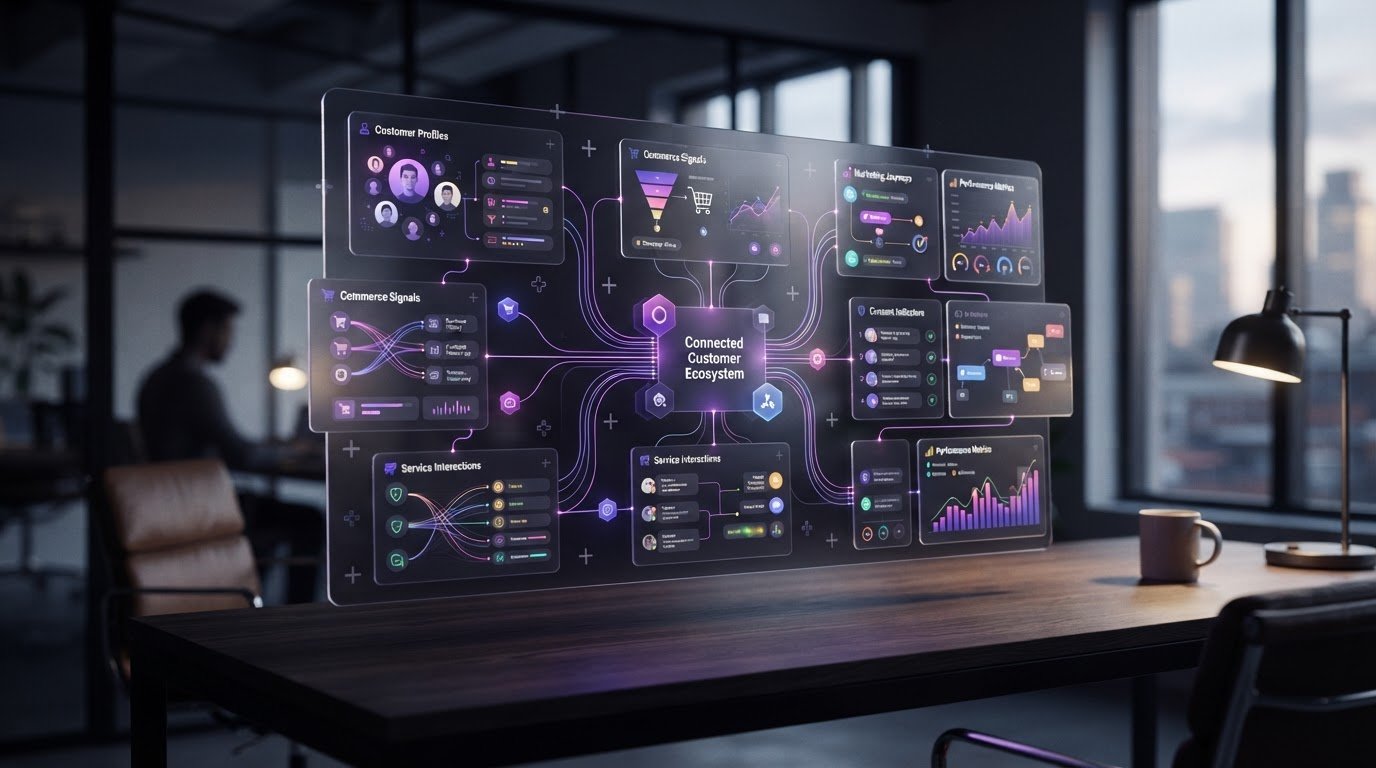
A unified KPI set fixes this by tying every stage’s metric back to one business outcome, usually revenue or customer lifetime value, rather than letting each channel report its own scoreboard. Practical stage metrics look like this:
- TOFU: impressions, reach, branded search volume
- MOFU: engagement rate, content downloads, marketing-qualified leads
- BOFU: conversion rate, CPA, ROAS
- Retention: repeat purchase rate, churn, referral rate
Businesses that connect brand and performance data through a unified measurement framework can see a 15 to 20 percent lift in marketing ROI, largely because budget stops flowing to whichever channel simply looks best under last-click attribution.
Marketing mix modeling (MMM), incrementality testing, and multi-touch attribution (MTA) each answer a different question, and the strongest teams run all three rather than picking one. MMM shows how overall spend allocation affects revenue over time. Incrementality testing isolates the causal lift of one specific channel or campaign. MTA maps the path a converted customer actually took. The common failure mode is over-relying on last-click data alone, when reconciling MMM, incrementality, and MTA monthly, as McKinsey recommends, gives a far more honest read on what’s driving growth. On the technical side, this depends on clean UTM structures, event tracking that fires consistently across platforms, and a CRM connected directly to your marketing automation tool so lead status updates in real time. Build the dashboard around those linked KPIs first, before adding vanity metrics.
What Operating Model Does Full-Funnel Marketing Require?
Full-funnel marketing is an operating model question as much as a channel question. Teams that run brand and performance as separate departments with separate budgets rarely execute a real full-funnel strategy, no matter how good their individual campaigns are.
The teams that get this right build a few specific routines:
- Weekly cross-functional huddles where brand, performance, and lifecycle teams review the same shared dashboard
- A single source of truth for KPIs that everyone reports against, not a different scorecard per team
- Test-and-learn cycles extended to brand creative, not reserved for paid performance ads
Extending test-and-learn to brand teams accelerates creative optimization and helps brand investment show measurable short-term impact instead of disappearing into an annual campaign review. A structured creative testing framework gives brand and performance teams a shared process to run that testing consistently.
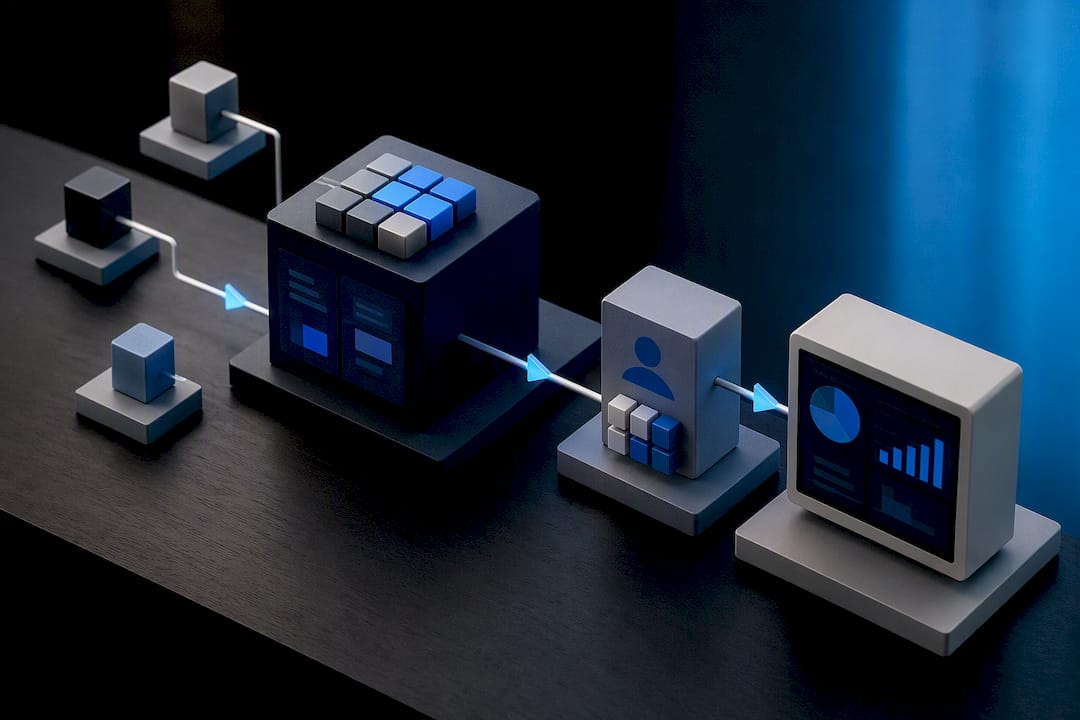
Pro Tip: Assign one person ownership of the customer data pipeline, from ad platform to CRM to reporting dashboard. Without a named owner, tracking gaps get discovered during a budget review instead of during the campaign that caused them.
Governance matters too. Decide upfront who owns first-party data, what SLA your agency or internal team commits to for reporting turnaround, and how disputes over attribution credit get resolved before they happen mid-campaign.
How Do You Build a Full-Funnel Program in Six Steps?
Retrofitting an existing marketing program into a full-funnel structure doesn’t require starting over. It requires sequencing the work correctly.
- Set one business goal (revenue, LTV, or a specific growth target) that every stage ties back to
- Map the actual customer journey, using real behavioral data rather than an assumed path, as Pipedrive recommends
- Define unified KPIs for each stage that all roll up to the same business goal
- Choose channels and content matched to what each stage’s audience actually needs, not what’s easiest to produce
- Build the measurement plan before launch, including tracking, UTM structure, and CRM integration
- Test, measure, and iterate on a fixed cadence rather than waiting for a quarterly review
A realistic rollout looks like this:
- First 30 days: audit existing tracking, map the current journey, and pick one stage with the clearest measurement gap
- 60 to 90 days: launch a test-and-learn cycle at that stage with a single hypothesis and a shared dashboard
- 120 to 180 days: expand the working model to adjacent stages and formalize the cross-functional reporting cadence
Hand teams three concrete templates: a shared KPI dashboard, a one-page test brief format, and a content plan mapped by stage and persona. Tools built for AI-assisted marketing planning can speed up the content-matrix work in step four, particularly for teams producing content across many personas and stages at once.
What Do Full-Funnel Results Actually Look Like?
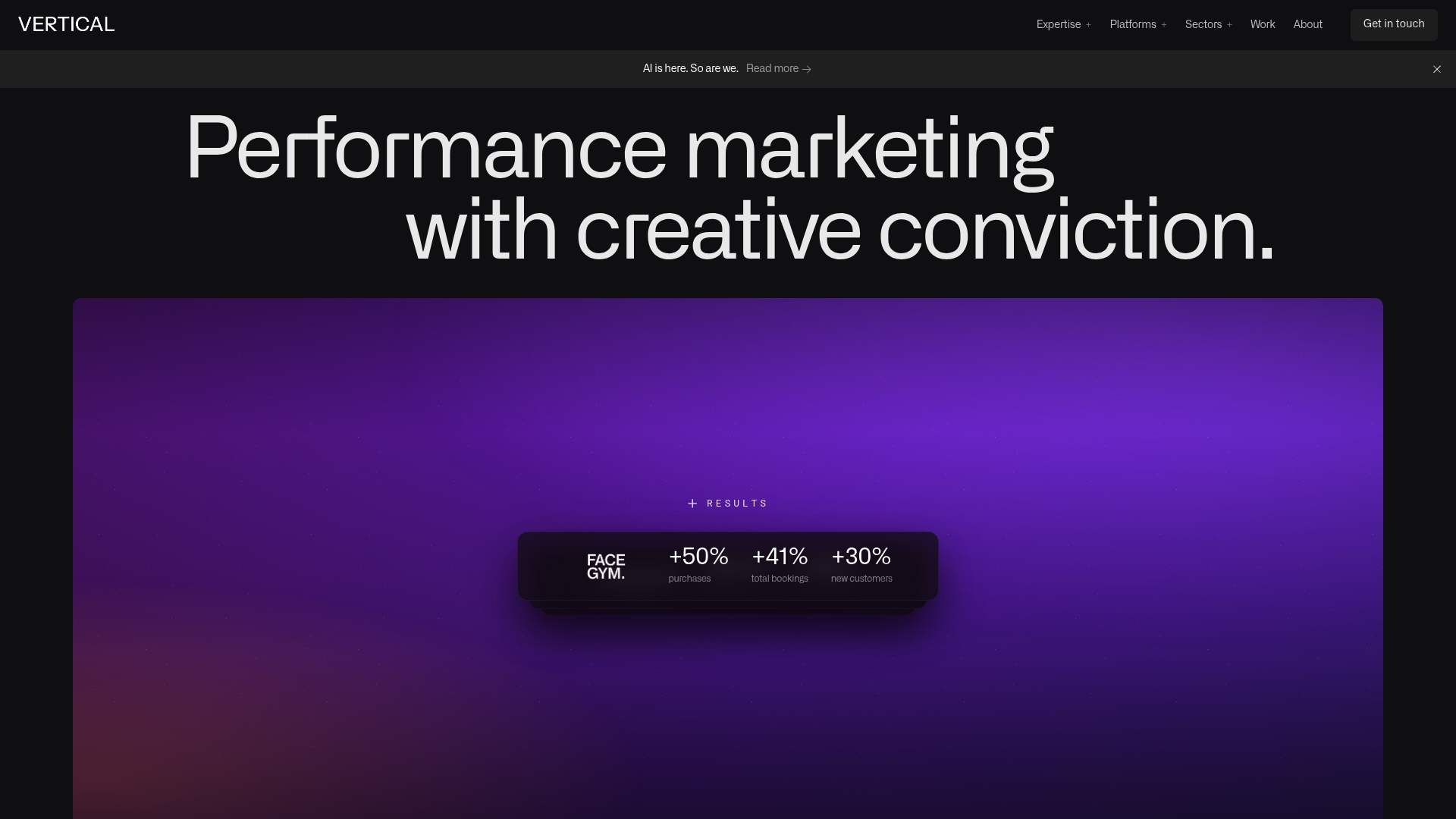
FACEGYM’s work with an integrated marketing approach shows what happens when brand and performance stop operating as separate line items.
The consistent pattern across strong full-funnel campaigns isn’t a bigger budget. It’s a tighter feedback loop between what the brand-building work creates and what the performance team can measure and act on within the same reporting cycle.
That kind of result comes from treating measurement as infrastructure, not an afterthought bolted on after campaigns launch.
Where Full-Funnel Marketing Actually Breaks Down
The biggest mistake I see isn’t a bad channel choice. It’s over-indexing on last-click attribution and quietly starving the awareness stage that fed the pipeline in the first place. Retention gets the same treatment: treated as a support function instead of a funnel stage with its own KPIs. Start small. Pick one stage, run one measurable test, and build the cross-team habit before you scale the budget.
— Alex
How Vertical Brands Helps You Run Full-Funnel Marketing
Running one connected funnel across strategy, creative, performance media, and measurement usually means juggling three or four vendors who don’t share data. Vertical Brands is the alternative to that setup: one team handles brand strategy, paid media, creative, and web development together, so your TOFU creative and BOFU conversion data live in the same reporting loop instead of three disconnected dashboards.
If your funnel currently runs on separate teams with separate scorecards, talk to Vertical Brands about a short audit of where your measurement gaps sit and which stage to fix first.
Sources
- Why every business needs a full-funnel marketing strategy — McKinsey & Company
- What is full-funnel marketing? Creating a funnel strategy — Amazon Ads
- 7 effective lead nurturing tactics — HubSpot
- The Marketing Funnel: What It Is, How It Works, & How to Create One — Pipedrive
FAQ
What Is a Full Marketing Funnel?
A full marketing funnel connects every stage of the customer journey, awareness, consideration, conversion, and retention, into one measured system instead of running each stage as a separate campaign with its own metrics.
What Are the Stages of the Marketing Funnel?
Most frameworks use three core stages: top-of-funnel awareness, middle-of-funnel consideration, and bottom-of-funnel conversion, with many practitioners now adding a fourth loyalty or advocacy stage after purchase, as Amazon Ads outlines.
What Is the 3-3-3 Rule in Marketing?
Definitions of the 3-3-3 rule vary by practitioner and context, so there’s no single agreed-upon standard. If you encounter it applied to your funnel, verify the specific source’s definition before using it as a planning framework.
What Is Full-Funnel Advertising and How Does It Work?
Full-funnel advertising runs coordinated campaigns across every journey stage, using awareness-stage video and display to build recognition, then measuring how that recognition shows up in consideration and conversion metrics rather than judging each channel in isolation. Businesses that connect this data across stages have reported ROI lifts of 15 to 20 percent.
Recommended

Other posts





















































Stay ahead with better decisions.
Get business insights today.
