Integrated Digital Marketing Strategy for E-commerce: The 2026 Operational Blueprint
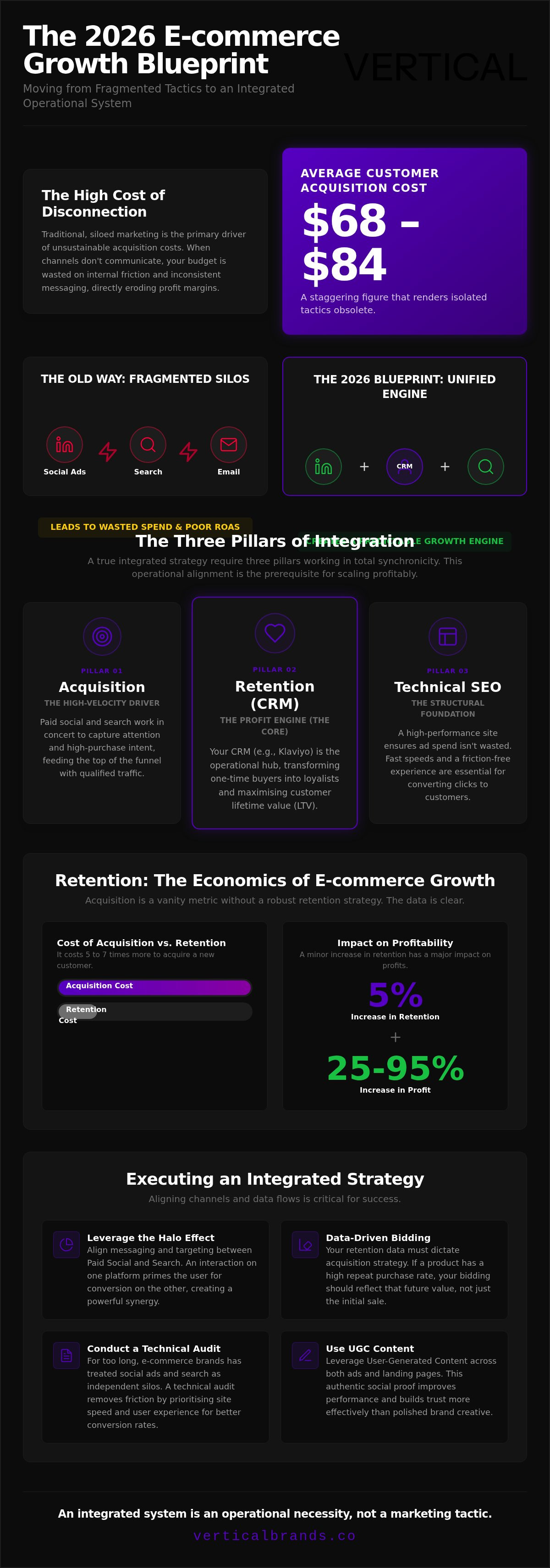
The average customer acquisition cost for e-commerce brands now sits between $68 and $84. It is a staggering figure that renders traditional, siloed marketing obsolete. You likely recognise the frustration of high acquisition costs eating your margins whilst your data remains trapped in isolated sil...

The average customer acquisition cost for e-commerce brands now sits between $68 and $84. It is a staggering figure that renders traditional, siloed marketing obsolete. You likely recognise the frustration of high acquisition costs eating your margins whilst your data remains trapped in isolated silos. Implementing an integrated digital marketing strategy for e-commerce is no longer a luxury; it is an operational necessity. Most brands manages their social ads and email platforms as separate entities. This fragmentation creates friction. It dilutes your brand messaging. It kills your return on ad spend. It is time to stop burning capital on disconnected tactics.
This guide provides the 2026 operational blueprint to align your acquisition and retention efforts into a single, friction-free growth engine. You will learn how to synchronise your Klaviyo CRM with paid search and social to drive predictable growth. We will demonstrate how to increase customer lifetime value through better structural alignment across your entire marketing stack. Every one of these channels require precise coordination to ensure your brand remains competitive in a saturated market. We are moving beyond simple tactics toward a disciplined, performance-first framework.
Key Takeaways
• Eliminate fragmented silos to create a unified operational system that stop wasting your marketing budget.
• Position your CRM as the central engine for an integrated digital marketing strategy for e-commerce to maximise retention.
• Leverage the halo effect by aligning paid social with search whilst using UGC content to improve landing page performance.
• Conduct a technical audit of your marketing stack to remove friction and prioritise site speed for better conversion.
• Each of these tactical channels require precise alignment to form a decisive and profitable growth engine.
The Shift from Fragmented Tactics to Integrated Operational Strategy
Marketing is not a collection of disparate experiments. It is an operational system. For too long, e-commerce brands has treated social ads, search, and email as independent silos. This fragmentation is the primary driver of the $68 to $84 average CAC seen in 2026. A true integrated digital marketing strategy for e-commerce replaces this chaos with a unified growth engine. It demands structural integrity. Without it, you are simply subsidising platform algorithms at the expense of your own margins. Efficiency requires a shift from tactical execution to strategic alignment.
The Failure of Channel-First Thinking
Focusing on individual channel ROAS is a strategic trap. It ignores the complex interplay of the modern customer journey. When your social team optimises for clicks whilst your search team targets high-intent keywords in isolation, messaging becomes inconsistent. This friction confuses the consumer. Data siloes prevent you from seeing how a Meta ad interaction influences a later branded search on Google. This lack of visibility makes accurate attribution impossible. You cannot scale what you cannot measure across the entire Digital Marketing Overview spectrum. Fragmented data leads to fragmented growth.
Inefficient spend occurs when multiple channels bid for the same user without a shared logic. You end up paying twice for the same conversion. This waste erodes the 10% to 20% of revenue typically allocated to ad spend. High-growth brands cannot afford this level of operational leakage. It's a failure of structure, not just creative.
Defining the Integrated Framework for 2026
The 2026 blueprint requires three pillars working in total synchronicity. Acquisition serves as the high-velocity driver. Paid social and search capture attention and intent. Retention acts as the profit engine. This is where Klaviyo CRM management transforms one-time buyers into loyalists. Finally, technical SEO provides the structural foundation. It ensures that every pound spent on ads is supported by a high-performance website that converts at scale.
Every one of these channels require precise coordination to ensure your brand remains competitive. Structural integrity in your data is the prerequisite for scaling. Technical SEO isn't just about rankings; it is about reducing the friction between a click and a purchase. A slow site or a broken mobile experience negates the brilliance of your creative. In 2026, global retail sales are expected to surpass $3.8 trillion. Capturing a share of that market requires a machine that runs without interruption. We build that machine through an integrated digital marketing strategy for e-commerce that prioritises alignment over volume.
Retention as the Core: Aligning CRM and Acquisition
Acquisition is a vanity metric without retention. It costs 5 to 7 times more to acquire a new customer than to retain an existing one. This is a fundamental law of e-commerce economics. Despite this, many brands treats CRM as a post-purchase afterthought. This is a structural error. A robust integrated digital marketing strategy for e-commerce places the CRM at the very centre of the operation. It acts as the bedrock. High acquisition costs are unsustainable without a high customer lifetime value (LTV) to balance the books. A 5% increase in retention can boost profits by 25% to 95%. These numbers are too significant to ignore.
Klaviyo as the Operational Hub
Email lists are not enough. You need a CRM that functions as a command centre for your entire growth engine. Klaviyo enables advanced segmentation based on real-time purchase behaviour. Integrating this data directly into your social ad accounts allows for surgical precision. You can exclude recent buyers from acquisition campaigns to preserve margin. You can target high-value segments with specific lookalike audiences. Automated flows for winbacks and welcome series' are non-negotiable. They reduce the pressure on high-CAC channels by generating revenue automatically. Every one of these flows require precise logic to avoid customer fatigue.
Scaling requires more than just more traffic. It requires better data flow. Our strategic growth advisory ensures your CRM isn't just a list, but a profit-generating asset.
Closing the Feedback Loop
Your retention data must dictate your acquisition bidding strategies. If a specific product category has a 30% higher repeat purchase rate, your acquisition spend should reflect that future value. This is where Klaviyo migration services become essential for high-growth brands. Clean data from day one ensures you don't miss these correlations. Use CRM insights to inform your UGC content production. If customers consistently praise a specific benefit in their email feedback, that should be your primary hook for paid social. It's a closed loop. Acquisition feeds retention; retention informs acquisition. This alignment is the only way to achieve long-term profitability through a true integrated digital marketing strategy for e-commerce.
Synergising Paid Social and Search for Maximum Impact
Search and social are not competing channels. They are symbiotic. A high-performing integrated digital marketing strategy for e-commerce leverages the halo effect. Paid social drives brand discovery. This awareness inevitably leads to an increase in branded search volume. When users see a compelling ad on Meta, they often don't click immediately. Instead, they search for the brand on Google later. Ignoring this connection leads to flawed attribution and wasted budget. You must view your advertising spend as a unified ecosystem.
Technical alignment is critical. Meta Ads and Google Ads must share a common strategic goal. This requires a unified budget approach based on total ecosystem performance rather than siloed ROAS. UGC content plays a pivotal role here. It isn't just for social feeds. Placing UGC on search landing pages increases conversion rates by providing social proof at the point of high intent. It bridges the gap between discovery and purchase. The data shows that search and social is linked in ways that traditional reporting often misses.
Search Engine Optimisation as a Performance Multiplier
Technical SEO is a prerequisite for efficient paid search. High-quality landing pages reduce your cost per click. They improve your quality score. Aligning your keyword strategy with social media trend analysis ensures you capture the demand created by your top-of-funnel efforts. Integrating E-commerce search engine optimisation with paid media creates a barrier to entry for competitors. It ensures you own the search results for the very trends you are sparking on social. This structural alignment prevents capital leakage.
Paid Social Management for Growth
Scaling paid social management requires more than just higher bids. It requires intelligence. Use search intent data to refine your social targeting. If certain keywords are converting at high rates on Google, use those themes to inform your social creative. This creates a consistent brand experience. UGC content is the engine of this authenticity. It builds trust amongst new audiences who are increasingly cynical of traditional advertising. Every one of these tactical moves require precise execution to maintain a stable CAC whilst scaling volume. We prioritise the mechanics of success over creative fluff.
Executing the Omnichannel Growth Strategy: A Technical Roadmap
Execution is the bridge between high-level vision and operational success. It requires a ruthless audit of your existing technical stack. Data fragmentation is the enemy of growth. If your social ads, search campaigns, and email flows don't share a common data source, you are flying blind. A successful integrated digital marketing strategy for e-commerce starts with technical alignment. You must eliminate the friction between platforms. This roadmap ensures that every touchpoint in the customer journey is tracked and optimised for performance. We move from siloed data to a unified growth engine that prioritises clarity over complexity.
Web Development and UX Integrity
Your website is the most critical link in the integrated chain. It is the destination for all paid and organic traffic. Performance-driven web design is not about aesthetics alone; it is about speed and conversion. A one-second delay in mobile load times can decrease conversion rates by up to 20%. Technical SEO is essential here. It ensures that your site is crawlable and fast, which directly supports your ROAS. Every one of these technical audits require a deep understanding of how code affects user behaviour. High-speed infrastructure is a prerequisite for scaling in a market where global retail sales are expected to surpass $3.8 trillion by 2026. Prioritising mobile commerce is essential as it continues to dominate the landscape.
Data Aggregation and Attribution
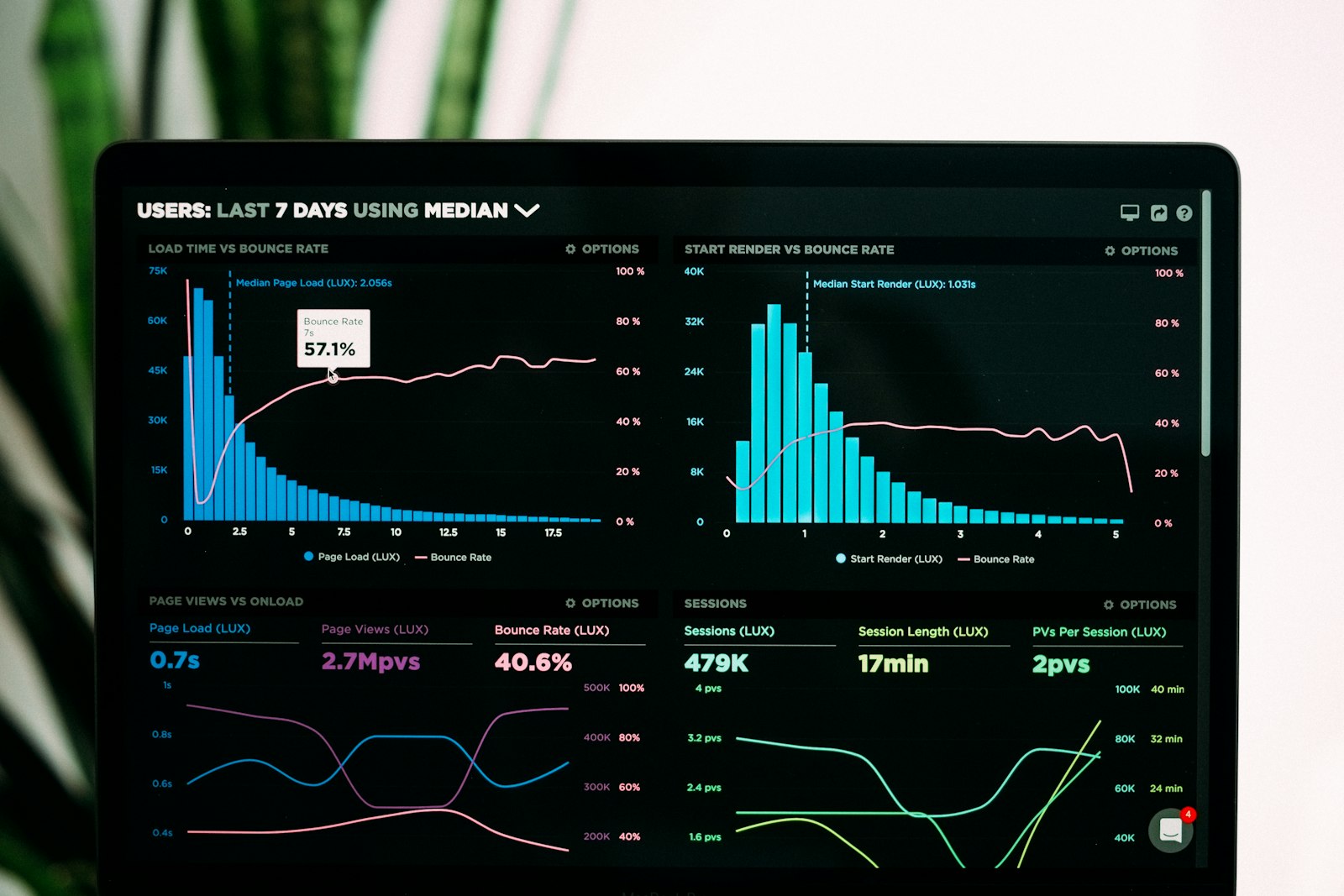
Monitoring growth requires a unified dashboard. You must move beyond last-click attribution to understand how channels synergise. A customer might discover you on social, research you via search, and finally convert through an email flow. Last-click models would attribute all value to the email, ignoring the expensive top-of-funnel work. This is a strategic failure. Implementing cross-channel tracking allows you to see the true impact of your omnichannel growth strategy. The data shows that tracking and attribution is the only way to allocate budget with confidence. It allows for a precise understanding of the halo effect between search and social.
Launch your integrated campaigns with a focus on holistic growth metrics. Don't just look at ROAS in isolation. Look at your contribution margin and LTV. This level of analysis requires a partner who understands the mechanics of business growth. If your current stack is fragmented, it is time for a decisive change. Refine your tactics based on real-time feedback loops between acquisition and retention to ensure long-term stability.
Vertical Brands: Decisive Drivers of E-commerce Growth
Scaling in 2026 demands more than just effort. It requires a partner who operates with surgical precision. Fragmented agencies deliver fragmented results. We do not. Vertical Brands acts as the decisive driver of your operational progress. We specialise in the mechanics of growth. This means aligning your Klaviyo CRM, paid social, and technical SEO into a single, high-performance system. An integrated digital marketing strategy for e-commerce is the only way to protect your margins whilst costs continue to rise. We prioritise structural integrity over decorative marketing. Our focus is on the removal of friction across your entire marketing stack.
Our Strategic Growth Advisory
Volatility is the new constant in the D2C landscape. Brands must navigate fluctuating CPCs and shifting consumer behaviour with discipline. Our growth advisory services provides the structural integrity needed to withstand these pressures. We manage the entire growth ecosystem. We don't just run ads. We architect a unified growth engine. This involves synchronising your influencer marketing and UGC content with your paid media spend. By removing the silos between acquisition and retention, we ensure every pound spent works harder. This performance-first approach is the future of e-commerce. It is about movement, structure, and measurable outcomes. We are the partners for brands who value efficiency over ceremony. Our methodology is rooted in operational reality.
Get Started with a Decisive Strategy
Transitioning to a unified model begins with a ruthless audit. We identify the data siloes and technical bottlenecks eating your profits. Our onboarding process is transparent and methodical. We prioritise structural growth over quick fixes. We look at your technical stack, your CRM logic, and your cross-channel attribution. Every one of these elements require precise alignment to drive predictable ROAS. We build performance-first website designs that support your scaling ambitions. Our team handles the technical complexities of Klaviyo CRM management and technical SEO so you can focus on your product.
Scale with discipline. Stop the capital leakage caused by disconnected tactics. We are ready to help you build a friction-free growth engine. Focus on the metrics that matter. Operational efficiency is the only path to long-term success. Contact us to begin your audit and implement an integrated digital marketing strategy for e-commerce that actually delivers. We drive the progress that your brand requires to dominate the market.
Scaling with Operational Discipline in 2026
Fragmentation is the primary barrier to profitable growth. Data silos and inconsistent messaging will continue to erode your margins unless you commit to structural alignment. Implementing a true integrated digital marketing strategy for e-commerce is the only way to navigate the rising costs of 2026. You must synchronise your CRM with your paid media spend to ensure every click contributes to long-term LTV. The complexity of these systems require a partner who understands the mechanics of business growth. We prioritise results-driven performance marketing over traditional agency fluff.
Vertical Brands acts as your strategic guide. As a Klaviyo Platinum Partner, we ensure your retention engine is as powerful as your acquisition tactics. Our specialised e-commerce growth advisory focuses on removing friction and building structural integrity. It's time to stop the capital leakage. Build a unified growth machine that delivers predictable performance. Book a call with a agency that delivers results to start your transformation. Your brand deserves a decisive path to success.
Frequently Asked Questions
What is an integrated digital marketing strategy for e-commerce?
An integrated digital marketing strategy for e-commerce is a unified operational system where every channel works in synchronicity to drive growth. It moves beyond managing social ads or email in isolation. Instead, it aligns acquisition and retention to create a friction-free engine. Every one of these channels require precise coordination to ensure your brand remains competitive. This approach ensures that data flows seamlessly between your CRM, paid media, and technical SEO infrastructure.
How does an omnichannel growth strategy differ from multi-channel marketing?
An omnichannel growth strategy focus on the integration and consistency of the customer experience across all platforms. Unlike multi-channel marketing, which simply places a brand in multiple locations, omnichannel ensures a unified data layer. This allows a user's interaction on paid social to inform their experience on your website or through email flows. It prevents the fragmentation that leads to high acquisition costs and inconsistent brand messaging across the entire digital ecosystem.
Why is Klaviyo the preferred CRM for integrated e-commerce growth?
Klaviyo is the preferred CRM because of its deep integration with e-commerce platforms and its ability to process real-time purchase data. It allows for advanced segmentation that informs your paid social and search targeting. Automated flows for winbacks and welcome series' generate revenue whilst reducing the pressure on high-CAC acquisition channels. This level of technical alignment is essential for brands who wants to scale with operational discipline and measurable outcomes.
How can search engine optimisation improve my paid social performance?
Technical search engine optimisation improves paid social performance by ensuring your landing pages are fast and conversion-ready. A one-second delay in mobile load times can decrease conversion rates by 20%. When your site is structurally sound, the traffic you pay for on Meta or TikTok is far more likely to convert. High-quality SEO also reduces the friction between a discovery click and a final purchase, improving your overall return on ad spend.
What are the first steps in aligning paid search and social ads?
The first steps involve auditing your technical stack for data fragmentation and implementing a cross-channel attribution model. You must move away from siloed budgets. Instead, adopt a unified approach that recognises the halo effect social ads has on branded search volume. Use search intent data to refine your social creative and ensure your messaging is consistent across both channels. This alignment prevents you from paying twice for the same customer conversion.
How do I measure the success of an integrated marketing campaign?
Success is measured through holistic growth metrics rather than siloed platform ROAS. You should focus on contribution margin, customer lifetime value (LTV), and your total ecosystem return. An integrated digital marketing strategy for e-commerce requires a unified dashboard to track how channels synergise. Monitoring your blended CAC against LTV provides a clear picture of your long-term profitability. Stop looking at individual channel performance in a vacuum; it is a strategic trap.
Is a professional growth advisory necessary for small e-commerce brands?
Professional growth advisory is critical for brands of all sizes to prevent capital leakage. Small brands often lack the technical resources to manage complex CRM logic or multi-channel attribution. A partner provides the operational discipline needed to scale without burning margins on inefficient tactics. It ensures your infrastructure is built for growth from day one. Investing in strategic guidance early prevents the costly mistakes that often derail high-growth D2C brands.
How often should I audit my integrated marketing strategy?
You should conduct a comprehensive audit of your integrated marketing strategy at least once every quarter. This allows you to identify technical bottlenecks and data silos before they impact your bottom line. Monthly reviews of your cross-channel attribution and CRM flows are also necessary to maintain peak performance. The e-commerce landscape moves quickly. Regular audits ensure your growth engine remains friction-free and entirely aligned with the latest market shifts and consumer behaviours.

Other posts


























































Stay ahead with better decisions.
Get business insights today.
