30 Day UGC Ads Strategy Sprint for Marketers: Test First Three Seconds

The single move that improves UGC ad performance most is treating it as a disciplined test-and-scale system built around first-3-second hooks, not a one-off creative request. Three levers matter immediately: hook testing across multiple variants, brief quality tight enough to remove guesswork, and rights and disclosure locked down before a dollar of spend goes live. Below is a 30-day sprint and the metrics to run it.
TL;DR:
- Testing multiple hook variants and maintaining strict rights management are crucial for building a scalable UGC ad system that supports continuous learning and improvement.
- UGC ads must be shot in a native, handheld style and commissioned specifically for paid media to outperform polished studio creative in early engagement metrics.
- Matching UGC format to funnel stage, and updating creative weekly based on detailed performance metrics, maximizes return on ad spend and sustains growth.
- Sourcing creators through tiered channels and using clear, specific briefs improves content quality, delivery speed, and compliance with legal disclosure requirements.
- Consistent landing page alignment with ad promises and ongoing creative testing underpin the long-term success of UGC campaigns in driving conversions.
Table of Contents
- Your First 30 Days of a UGC Ads Strategy
- What Counts as a UGC Ad (and What Doesn’t)
- Why UGC Ads Outperform Polished Studio Creative
- The Five UGC Formats That Cover Your Whole Funnel
- Where to Source Creators and How to Budget for Them
- How to Write a UGC Brief That Actually Works
- What Metrics Decide If a UGC Ad Scales or Dies
- Turning Winners Into a Repeatable Weekly Operation
- Real Results From Running This Playbook
- Legal Considerations Beyond Rights and Consent
- When UGC Isn’t the Right Tool for the Job
- Let Vertical Brands Build Your UGC Ads Strategy
- Sources
- FAQ
Your First 30 Days of a UGC Ads Strategy
Building momentum starts with an audit, not a shoot. Here’s the sequence:
- Audit — pull 10 recent creator or customer clips and log the rights status on each one. Anything without explicit written permission gets flagged before it touches paid media.
- Benchmark — set baseline hook-rate and hold-rate numbers from whatever creative is currently running, then shortlist five creators to brief this week.
- Test — launch five hook variants across two audiences, run each for 7 to 10 days, and write down the decision rule (kill, iterate, or scale) before you launch, not after you see the numbers.
That single cycle, repeated weekly, is what separates a UGC program from a UGC habit.
What Counts as a UGC Ad (and What Doesn’t)
A UGC ad is paid content shot in a native, handheld, creator style, regardless of who created it or whether it was ever posted organically. That distinction trips up more marketers than any other part of user generated content advertising. The “authentic” look and the unpaid origin are two separate things, and most winning UGC in 2026 is commissioned specifically to look like an organic post.
Three sources feed a strong roster:
- Commissioned UGC: a creator is paid to produce a specific clip against a brief, built for paid media from the start.
- Reposted organic content: a customer posts unprompted, and the brand asks permission to run it as an ad.
- AI-generated UGC: synthetic-creator tools produce UGC-style footage without a human on camera, useful for rapid hook testing.
The legal line is simple: explicit permission or a formal rights assignment is required before any customer content runs in paid ads. A comment saying “love this, no need to ask” is not a license. Implicit consent covers nothing once media spend is attached.
Why UGC Ads Outperform Polished Studio Creative
Feed-native footage doesn’t trigger the mental “ad skip” reflex the way a glossy studio spot does. Viewers process it as content from someone like them before they register it as a sale pitch, and that half-second of reduced resistance is often the difference between a scroll-past and a watched ad.
The window that decides everything: TikTok platform data shows most of an ad’s recall impact lands within the first several seconds, and a weak opening in the first three seconds sinks distribution before the message even lands. That’s the entire argument for hook-first briefs. No amount of good editing later in the video rescues a slow open.
There’s a production-economics angle too. A single polished studio spot might cost what 10 to 15 UGC clips cost combined. More attempts per dollar means a higher probability that one variant finds the hook, angle, or face that actually converts. Volume isn’t a nice-to-have here. It’s the mechanism.
The Five UGC Formats That Cover Your Whole Funnel
Random testing wastes budget. Matching format to funnel stage doesn’t. Repeatable archetypes outperform one-off creative concepts because they give creators a proven structure to fill rather than a blank page.
- Testimonial (problem to solution): opens with the pain point in the first line. Works for cold prospecting, where the viewer needs to see themselves in the problem fast.
- Unboxing/curiosity: leads with “what is this” visual intrigue. Strong for awareness and new-product launches.
- Before/after or transformation: opens on the after, then rewinds. Best for retargeting warm audiences who already know the category.
- Day-in-life/lifestyle: the product appears inside a routine, not as the subject. Good for habit-forming or wellness categories.
- Founder/brand POV: a person explains why the product exists. Builds trust at the consideration stage, where price objections live.
AI UGC tools can test hook lines and pacing cheaply across the first two formats. Before/after and founder POV generally need a real person on camera to hold credibility.
Where to Source Creators and How to Budget for Them
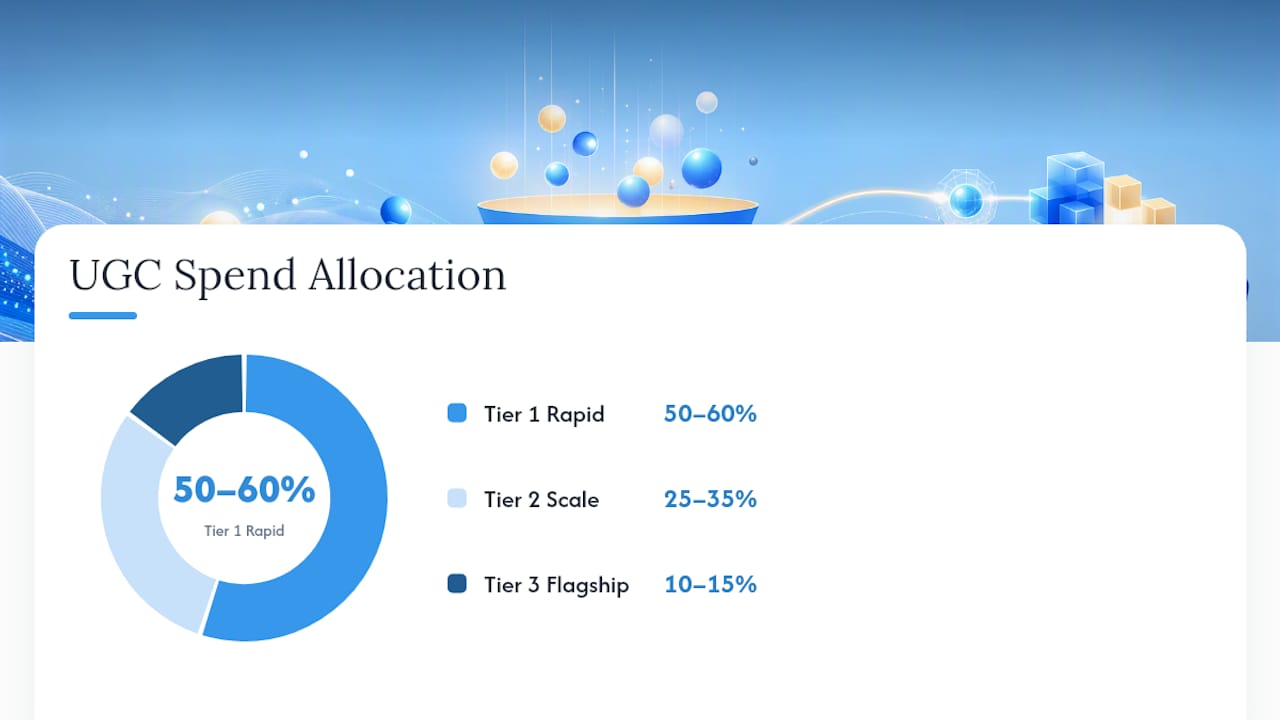
Four channels feed a UGC roster, and each solves a different problem. Customers give you the most authentic voice but the slowest turnaround. Creator marketplaces (platforms that connect brands with vetted UGC creators) trade some authenticity for speed and predictable pricing. Agencies handle sourcing, briefing, and rights paperwork end-to-end, useful when internal bandwidth is the bottleneck. AI UGC tools remove the human entirely, ideal for fast hook iteration but weaker for formats that need real emotional delivery.
A tiered spend model keeps volume high without blowing the budget:
- Tier 1 (roughly 50-60% of budget): high-volume, low-cost creators for rapid hook testing.
- Tier 2 (roughly 25-35%): mid-tier creators with proven delivery for scaling winning concepts.
- Tier 3 (roughly 10-15%): signature creators for flagship campaigns once a concept is validated.
Commissioned UGC clips commonly run $100 to $500 per video at the low-to-mid tier, with signature creators priced well above that. When screening creators, weigh delivery speed, camera comfort, adherence to the brief, and willingness to sign over full usage rights in writing.
How to Write a UGC Brief That Actually Works
A vague brief produces vague footage, then a slow edit tries to save it. Seven elements keep that from happening:
- Hook — the exact first line or visual, scripted, not suggested.
- Key belief — the one thing the viewer must believe by second 15.
- Proof — the specific detail (result, comparison, demonstration) backing that belief.
- Format and length — which archetype, and a target runtime.
- Call to action — the exact phrase and where it lands in the cut.
- Constraints — what not to say, show, or imply.
- Disclosure and claims guidance — required sponsorship language and any product claims to avoid.
On the edit side, cutting every 1.5 to 2.5 seconds, keeping text inside the vertical safe zone, burning in subtitles, and holding a 2 to 3 second CTA card are the baseline rules, not optional polish. Mix in B-roll to break up talking-head fatigue.
Pro Tip: Brief two or three different hooks per deliverable and shoot everything in 9:16 vertical from the first take. Reformatting a horizontal clip after the fact almost always costs more time than filming vertical from the start.
What Metrics Decide If a UGC Ad Scales or Dies
Creative-level metrics tell you what a click-through rate alone never will: where exactly a viewer dropped off.
- Hook rate (thumbstop ratio): the percentage who keep watching past the first 3 seconds. This is your single earliest signal.
- Hold rate (watch rate): how far through the full video viewers get. A weak hold rate with a strong hook usually means the middle drags.
- CTR: clicks relative to impressions, a mid-funnel intent signal.
- CPA: the number that ultimately decides budget allocation.
A workable decision framework runs the test until it has enough impressions or time to gather clear data, often about a week’s duration, whichever comes first, before making a kill or scale call. Cutting a test earlier than that risks killing a genuine winner on noisy early data.
Change only one major variable per test cycle, whether that’s the hook, the format, or the CTA placement. Stack multiple changes and you’ll never know which one moved the number. Every result, win or loss, belongs in a shared library. That log becomes the fastest briefing tool your team has after a few months of testing, because it’s a searchable record of what worked and why. Vertical Brands’s creative testing framework walks through naming conventions and test structures that make this easier to run consistently.
Turning Winners Into a Repeatable Weekly Operation
A single viral UGC ad is luck. A steady stream of them is a system. Three things make that system run without you rebuilding it every month.
- Weekly brief cycle: every week, brief one iteration of your current top performer (new hook, new angle) alongside one entirely new concept. This keeps the library growing while protecting what’s already working.
- Winner library fields: log the hook line, format, creator, hook rate, hold rate, CPA, and launch date for every ad that clears your scale threshold. New briefs should draw directly from this list instead of starting from a blank page.
- Scale checklist: increase budget in increments rather than in one jump, match the ad’s language and visuals to the landing page it points to, and set a refresh rule (commonly every 2 to 3 weeks) before fatigue drags performance down.
Matching creative to landing page matters more than most teams assume. If the ad promises a specific result and the landing page design doesn’t echo that same proof point in the first screen, the conversion lift the ad earned gets lost at the door. UGC repurposed onto product pages and in email can also lift conversion and retention beyond the ad itself, which is reason enough to keep winning clips out of a folder and into every part of the funnel.
Real Results From Running This Playbook
The tactics above aren’t theoretical. Vertical Brands has applied this exact combination, brief discipline, testing cadence, and landing-page continuity, on real client accounts.
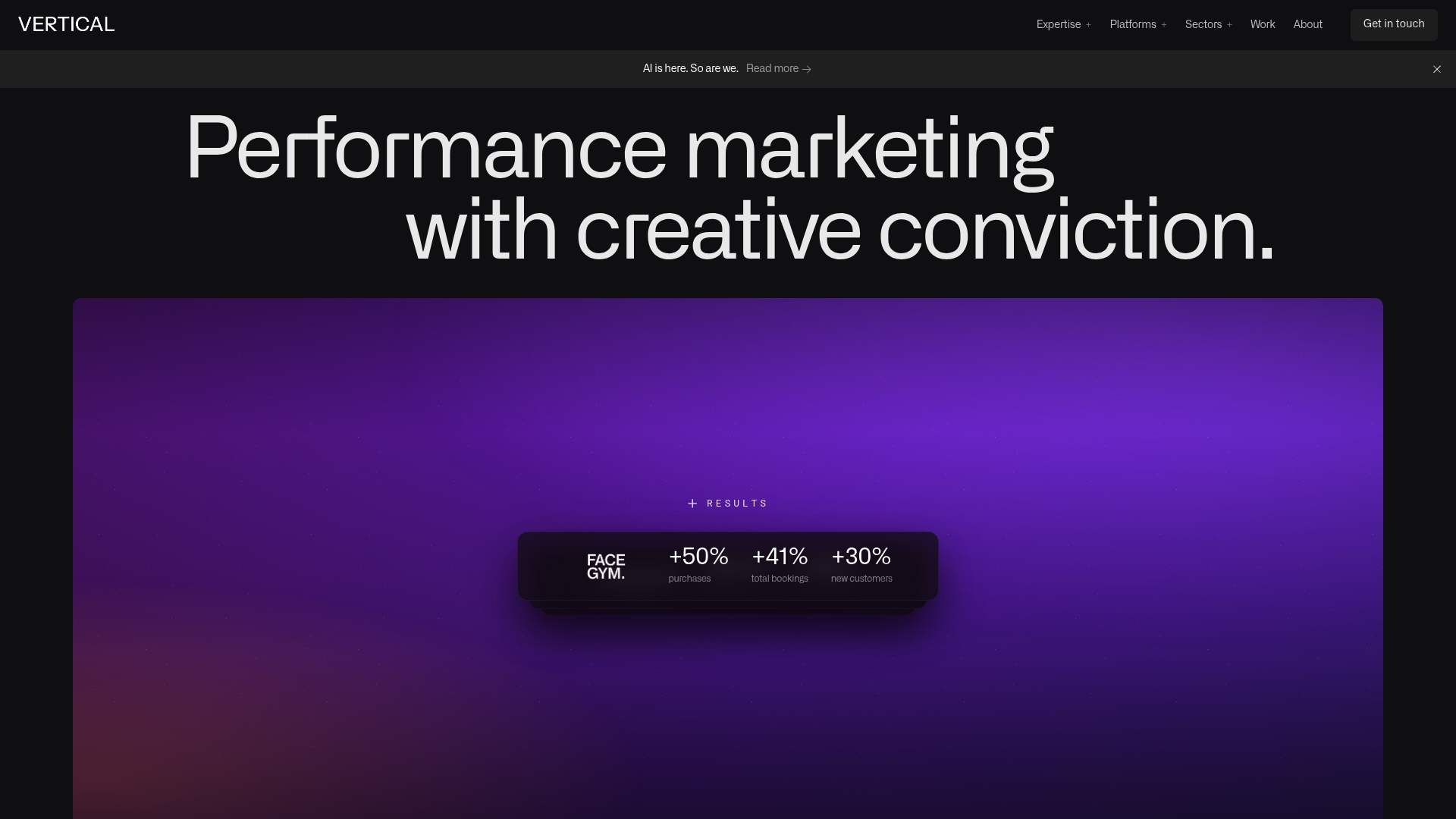
- FACEGYM saw a 50% increase in purchases and a 41% rise in bookings.
- Results at Tribal followed the same operating model: hook-first briefs, weekly creative cycles, and creative tightly paired with the landing experience it fed.
The common thread across both accounts wasn’t a single viral ad. It was the cadence, brief structure sharp enough to remove guesswork, a testing rhythm that surfaced winners fast, and landing pages built to continue the exact promise made in the hook. Marketers who want that system run for them can see the full scope of services Vertical offers on its services page.
Legal Considerations Beyond Rights and Consent
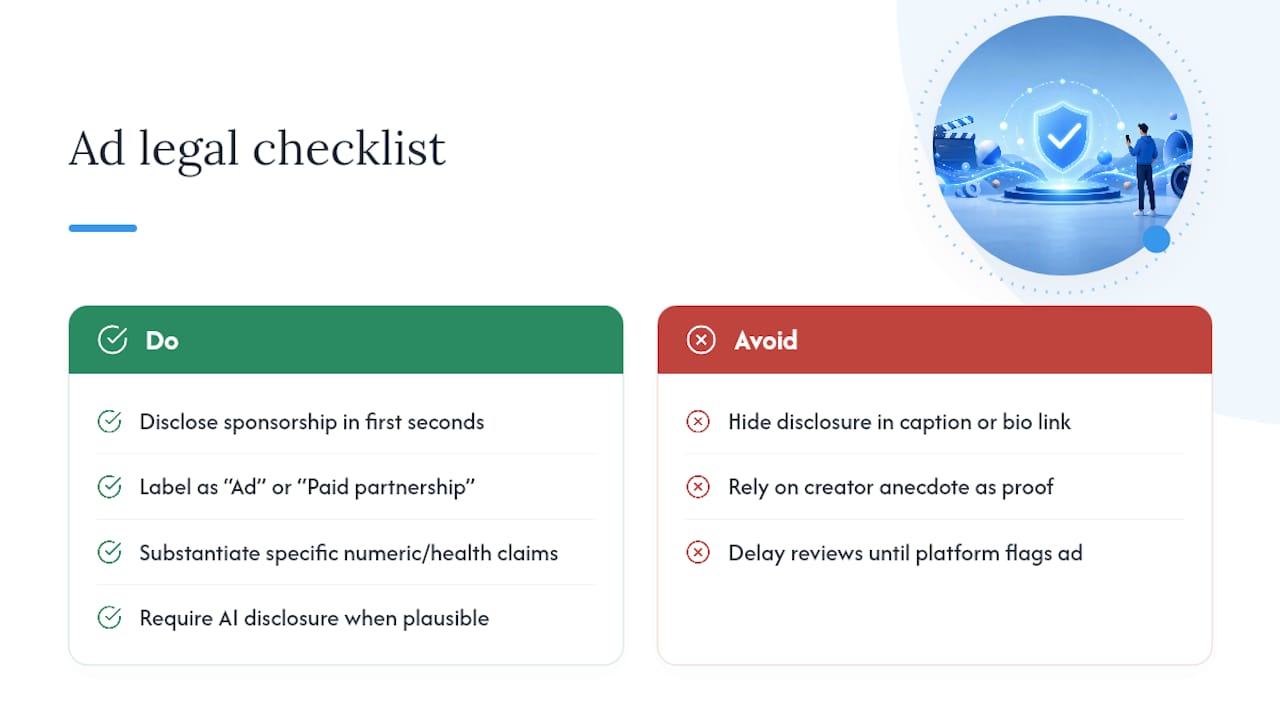
Securing permission to use a clip is only step one. Once that content runs as a paid ad, endorsement disclosure rules apply, and they apply regardless of whether the creator was paid in cash, product, or a flat fee. Any material connection between a brand and the person featured in an ad needs to be disclosed clearly and conspicuously, near the claim itself, not buried in a caption or a bio link. “Ad” or “Paid partnership” placed prominently in the first few seconds of the video is the safer standard, not a hashtag at the end of a long caption.
Claims made inside the ad need the same scrutiny as claims in any other marketing channel. A testimonial that says a product “cured” something or delivers a specific numeric result needs to be a claim the brand can actually substantiate, because a personal anecdote from a creator doesn’t exempt the brand from responsibility for what the ad implies. This matters more in regulated categories like health, beauty, and finance, where a casual creator comment about results can read as a marketing claim once it’s running as a paid ad.
AI-generated UGC adds a newer wrinkle. Synthetic-creator content increasingly requires its own disclosure when a viewer could reasonably mistake it for a real customer, separate from any sponsorship disclosure. Build both checks into the brief template itself, disclosure language and claims review, so they happen before a clip ever reaches the ad account rather than becoming a scramble after a platform flags it.
When UGC Isn’t the Right Tool for the Job
Cold prospecting rewards the native, low-resistance feel of UGC. Retargeting and brand-defining moments often need the polish and control studio creative provides.
UGC tends to underperform in high-consideration B2B sales, in categories where trust depends on visual craftsmanship (luxury, premium beauty), and in markets where a creator’s casual tone undercuts the claim being made. In those cases, a hybrid approach, UGC-style pacing shot with studio lighting, often outperforms either extreme.
The staffing question comes down to volume. Teams needing fewer than five new clips a week can usually run this in-house. Past that, sourcing, rights tracking, and editing cadence become a full job, which is where an outsourced partner earns its keep.
— Alex
Let Vertical Brands Build Your UGC Ads Strategy
Running the sprint above well requires strategy, creative production, paid media management, and a web team that keeps landing pages aligned with every hook you test, four disciplines most brands split across four vendors. The agency runs all of them under one roof, which is exactly why FACEGYM and Tribal saw the results described above: no handoff gaps between the person writing the brief and the person managing the budget.
If your current UGC output is a handful of clips a month with no test structure behind them, that’s the gap Vertical Brands closes. The team builds the brief templates, manages the creator roster across tiers, runs the weekly testing cadence, and matches every winning ad to a landing page built to continue its promise. Explore the full scope of digital marketing strategy, creative, and paid media services and get in touch to scope what a UGC program built around your funnel would look like.
Sources
- 4 Types of UGC Ads and How To Collaborate on UGC Ads (2026) - Shopify
- What are UGC Ads? | Feefo
- UGC Ads on Meta 2026: The Complete Playbook (Briefs, Creators, Editing & Compliance) | AdRiseLab
- UGC ads guide and operational playbook | AdLibrary
- Ugcad
FAQ
Is UGC Still a Thing in 2026?
UGC is more established in 2026 than ever, and it now functions as an operating model rather than a trend. Brands increasingly commission content built to look organic, and platforms continue to reward the native, feed-first aesthetic over polished studio spots in prospecting campaigns.
What Is UGC in Ads?
A UGC ad is paid content shot in a native, creator-style format, regardless of whether a real customer, a paid creator, or an AI UGC tool produced it. What defines it is the aesthetic and delivery style, not strictly its origin.
Are UGC Ads Legal?
Yes, provided the brand secures explicit permission or a formal rights assignment before running any customer or creator content as a paid ad. Endorsement disclosure also applies whenever there’s a material connection between the brand and the person featured, even in UGC-style content.
How Much Does a UGC Ad Cost?
Commissioned UGC videos commonly cost $100 to $500 at the low-to-mid tier, with signature or high-experience creators priced higher. Vertical Brands’ UGC content services don’t list a fixed rate publicly; current pricing is available by contacting the team directly through its services page.
Recommended

Other posts
























































Stay ahead with better decisions.
Get business insights today.
