How to Reduce E-commerce Churn Rate for High-Growth D2C Brands
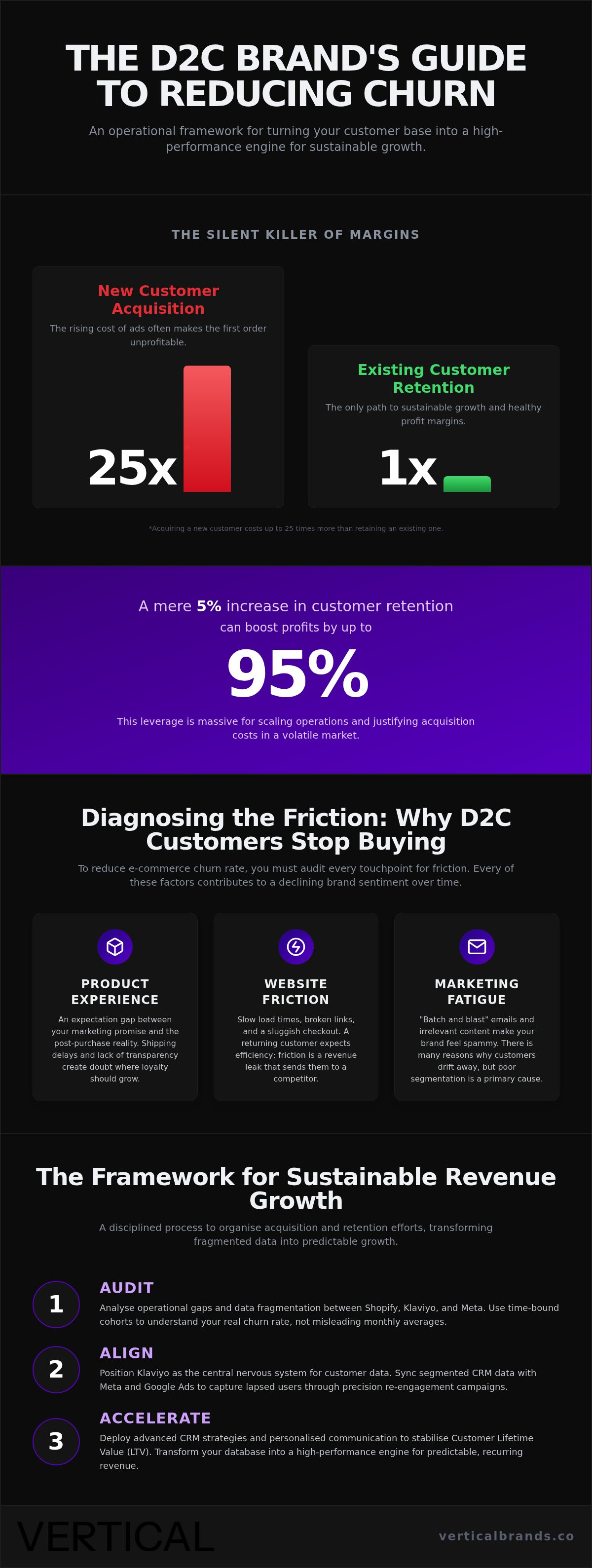
Acquiring a new customer costs up to 25 times more than retaining an existing one. For high-growth D2C brands, this reality is often a silent killer of margins. You likely feel the pressure of rising Customer Acquisition Costs (CAC) making that first order unprofitable. To scale, you must reduce e-c...
Acquiring a new customer costs up to 25 times more than retaining an existing one. For high-growth D2C brands, this reality is often a silent killer of margins. You likely feel the pressure of rising Customer Acquisition Costs (CAC) making that first order unprofitable. To scale, you must reduce e-commerce churn rate through precision and operational rigour. Fragmented data between Shopify, Klaviyo, and Meta often hides the truth of where customers are dropping off. Each of these friction points contribute to a leaking bucket that no amount of ad spend can fix.
We understand the operational frustration of seeing hard-won customers drift away without a clear reason. This article provides the operational framework needed to analyse these gaps and deploy advanced CRM strategies. A brands ability to retain its audience is the only path to sustainable growth. The data show that a 5% increase in retention can boost profits by up to 95%. You'll learn how to align your marketing programmes to create predictable, recurring revenue. Predictable growth. Operational excellence. We will examine how to stabilise Customer Lifetime Value (LTV) and turn your database into a high-performance engine.
Key Takeaways
• Recognise churn as a survival metric and understand why it is the core barrier to profitability in high-CAC environments.
• Identify the three operational pillars of friction to effectively reduce e-commerce churn rate across your digital storefront.
• Deploy a defensive retention stack by positioning Klaviyo as the central nervous system for a brands customer data.
• Sync segmented CRM data with Meta and Google Ads to capture lapsed users through precision re-engagement.
• There is several strategies to organise acquisition and retention through a disciplined framework of audit, align, and accelerate.
Understanding E-commerce Churn: The 2026 Metric of Survival
Churn is the percentage of customers who fail to make a repeat purchase within a specific timeframe. It is a binary reality. Either they return, or they are lost. In a high-CAC market, churn is the silent killer of high-growth brands. First-time orders are often unprofitable after accounting for Meta and Google spend. Survival depends on the second, third, and fourth transaction. You must reduce e-commerce churn rate to protect your margins. There is many reasons why customers drift away, but most stem from a lack of engagement or technical friction.
Retention is not just a marketing goal; it is an operational necessity. Research from Mage Loyalty in May 2026 indicates that retaining a customer is five times cheaper than acquiring a new one. Churn typically falls into two categories. Voluntary churn occurs when a customer chooses to leave because the product or brand experience no longer fits. Involuntary churn is a failure of systems. This includes payment failures or technical friction during the checkout process. Both require a disciplined, data-driven response to ensure the bucket stops leaking.
Calculating Your Real Churn Rate
The standard formula is simple: (Customers lost / Total customers at start) x 100. However, simple monthly averages often hide the truth. High-growth brands must use time-bound cohorts to see the real picture. This allows you to track specific groups over their lifecycle rather than looking at a blended, misleading average. You must also identify the latent churn period for your specific product category. If a customer typically buys every 30 days but has not purchased in 60, they are effectively lost. A brands ability to identify this window early determines the success of any win-back programme.
The Relationship Between Churn and LTV
Customer Lifetime Value (LTV) is the only metric that justifies aggressive paid search spending. If your LTV is low, your bid ceiling is low. You'll be outpriced by competitors who have mastered retention. A 5% reduction in churn has been shown to boost profits by 25% to 95%. This leverage is massive for scaling operations. None of these metrics are useful without clean data from your CRM. Fragmented data leads to false conclusions and wasted budget. You need a single source of truth to drive growth and justify your acquisition costs in a volatile market.
Diagnosing the Friction: Why D2C Customers Stop Buying
Identifying why customers vanish is the first step to operational recovery. Three core pillars drive this attrition: product experience, website friction, and marketing fatigue. Every of these factors contributes to a declining brand sentiment over time. If your acquisition ads promise a premium experience but the post-purchase reality is mediocre, you create an expectation gap. This gap is where loyalty dies. To reduce e-commerce churn rate, you must audit every touchpoint for friction that prevents a second transaction.
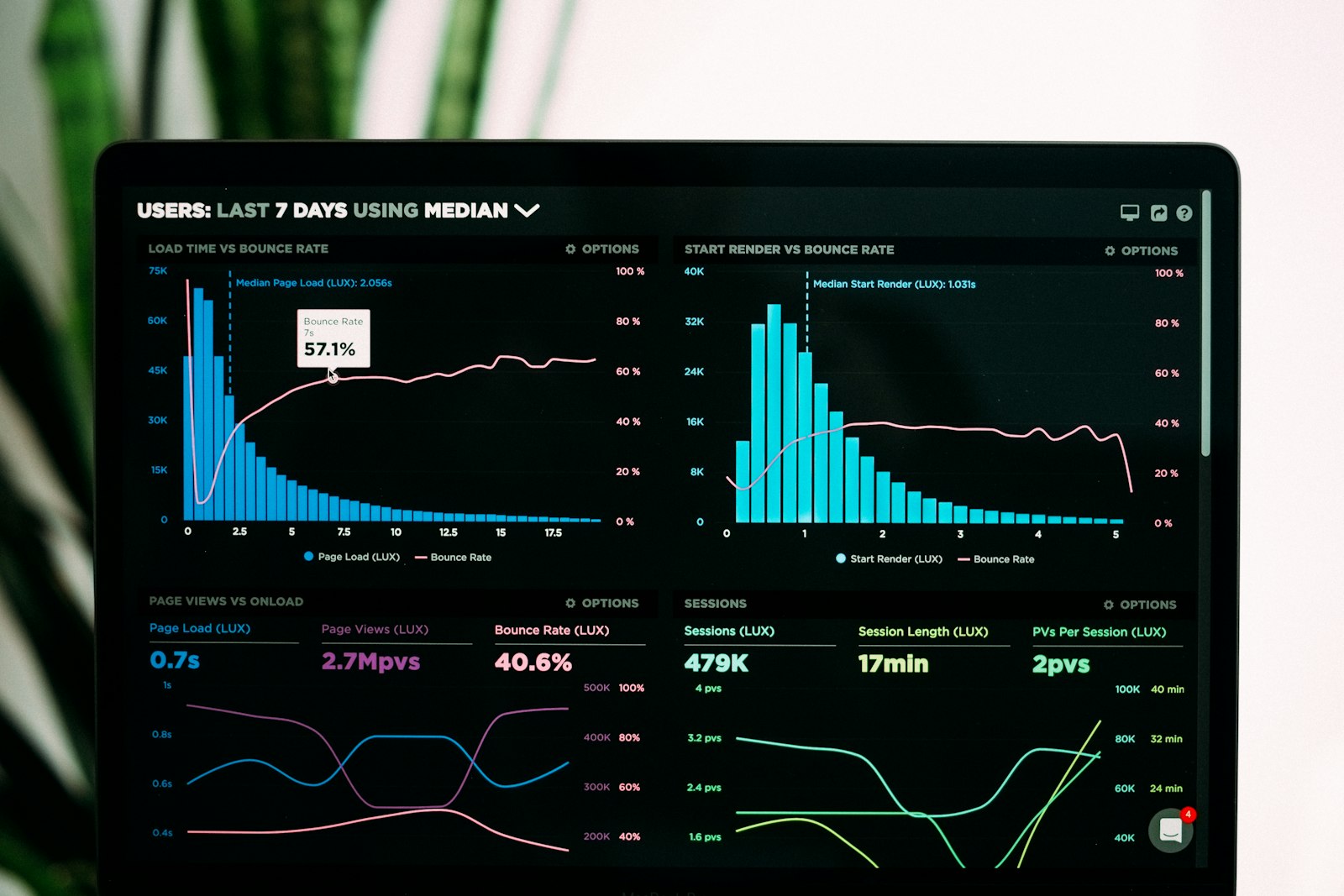
Website performance is a primary, yet often ignored, driver of churn. Slow load times kill repeat purchase intent instantly. A returning customer expects efficiency. If they encounter broken links or a sluggish checkout, they will go to a competitor. This is not just a technical issue; it is a revenue leak. The data suggests that most brands ignores the subtle signals of site fatigue before it is too late. High-growth brands require a disciplined approach to website development to ensure the storefront remains a high-performance asset.
Post-Purchase Cognitive Dissonance
The first 48 hours after a purchase are critical for long-term retention. This is when cognitive dissonance is highest. Customers question if they made the right choice. Shipping delays and a lack of transparency on delivery times exacerbate this doubt. You must use transactional emails to build excitement rather than just providing dry data. A well-timed update can transform anxiety into anticipation. Transparency builds trust. Trust is the foundation of Customer Lifetime Value. Without clear communication, your first-time buyers will likely become one-time buyers.
Marketing Fatigue and Irrelevant Content
Many brands rely on "batch and blast" email strategies that accelerate churn. Sending the same generic offer to your entire list is a waste of resources. It makes your brand feel "spammy" to your best customers. Poor segmentation is the root cause of this fatigue. Your paid media strategy for e-commerce must align with your retention goals to avoid sending conflicting messages. Irrelevant content signals to the customer that you don't understand their behaviour. Precision in your CRM management ensures every message adds value rather than noise.
Building a Defensive Retention Stack with Klaviyo and CRM
Klaviyo acts as the central nervous system for customer retention. It is not merely a tool for sending newsletters. It is a strategic asset. For high-growth brands, a basic setup is no longer sufficient. You must leverage the full power of the platform to reduce e-commerce churn rate effectively. Often, a Klaviyo migration is necessary to move away from legacy systems that silo your data. Integrating your storefront with sophisticated CRM management allows for a unified view of the customer journey. Implementing these flows ensure that no customer falls through the cracks or feels ignored.
Zero-party data is the fuel for this engine. This is information customers provide voluntarily through quizzes or preference centres. It allows you to personalise the retention journey with surgical precision. Instead of guessing what a customer wants, you use their own stated preferences to drive engagement. This level of relevance is what separates market leaders from those struggling with high churn. It builds a structural integrity into your marketing that competitors cannot easily replicate. Data-driven decisions beat gut feeling every time.
The Essential Retention Flows
Winback flows are your first line of defence. Timing is critical here. You must trigger re-engagement based on specific product consumption cycles. If a supplement lasts 30 days, the winback sequence should start at day 35. Sunset flows are equally important to protect your deliverability. You must identify when to stop emailing inactive profiles to prevent your messages from being flagged as spam. Finally, VIP flows reward your high-value customers before they have a chance to drift. Exclusive access or early product launches keeps this cohort locked in and loyal.
Advanced Segmentation Strategies
Predictive analytics in Klaviyo can identify customers with a high churn probability before they actually leave. This allows for proactive intervention with targeted offers. You can also deploy behavioural segmentation. This triggers content based on site browsing history rather than just purchase data. If a customer views a specific category three times without buying, your CRM should react automatically. Automation should also handle cross-sell and replenishment cycles. This ensures the next logical step in the journey is always presented. Every of these tactics works together to stabilise your revenue and drive long-term growth.
Leveraging Paid Search and Social to Re-engage Lapsed Users
Retention requires a coordinated, multi-channel response. Relying solely on email is a strategic error that leaves significant revenue on the table. To effectively reduce e-commerce churn rate, you must sync your Klaviyo segments with Meta and Google Ads to create a unified front. This precision allows you to target lapsed users exactly where they spend their time whilst they browse. A range of creative assets are needed to keep retargeting fresh and effective. Using User Generated Content (UGC) in these ads is particularly effective for rebuilding trust. It provides the social proof required to validate a second purchase decision.
Operational excellence in this area involves more than just basic retargeting. You must use your first-party data to reduce e-commerce churn rate by appearing at the precise moment of intent. If a customer is searching for a competitor, your brand must be there to intercept. This level of integration ensures that your acquisition and retention teams are working in total alignment. For brands scaling in competitive markets, professional paid search management London provides the technical oversight needed to execute these complex sequences. There is several ways to automate this process to ensure no opportunity is missed.
Search Retention: Protecting Your Branded Terms
You must bid on your own brand name. It is a defensive necessity. Competitors will aggressively target your branded search terms to steal your returning customers. This is "churn to competitors" at the point of search. Bidding on your own terms prevents this leakage and secures the top position. You should also deploy dynamic search ads to show relevant products based on a user's previous browsing history. Align your search copy with the specific stage of the customer lifecycle. A returning visitor should see a message focused on loyalty or replenishment, not a generic "welcome" offer.
Social Retargeting for Lapsed Customers
Social campaigns should feel like a reminder, not an intrusion. "We Miss You" sequences work best when they lead with value rather than a hard sell. Remind the customer of the brand's unique value proposition through influencer content and high-quality UGC. This content feels more organic and less like a traditional advertisement. You must also maintain strict exclusion lists. Don't waste budget showing re-engagement ads to users who have already purchased in the last 7 days. Efficiency in spend is just as important as the creative itself. If you want to scale your results, partner with Vertical Brands to align your paid media with your CRM goals.
The Vertical Brands Framework for Sustainable Revenue Growth
Sustainable growth is not an accident. It is the result of structural integrity and disciplined execution. Our framework focuses on removing the friction that leads to customer attrition. We follow a methodical path: audit, align, and accelerate. This process ensures that your brand is not just growing, but scaling profitably. Growth advisory is essential in this context. It provides the high-level perspective needed to navigate e-commerce volatility. Our team organise your data so that every decision is backed by evidence. By integrating creative production with technical CRM management, we help you reduce e-commerce churn rate through precision and relevance. Evidence beats intuition every time.
Operational Alignment: The Missing Link
Acquisition and retention teams must work from the same data set. If they don't, you are wasting budget. Fragmentation is the enemy of efficiency. Vertical Brands acts as the bridge between performance marketing and CRM. We align these functions to create a seamless customer experience. Conversion rate optimisation is also a critical component. It reduces initial friction and sets the stage for long-term loyalty. This alignment is a core part of an integrated digital marketing strategy for e-commerce. There is several ways to achieve this, but it requires a partner who understands the mechanics of growth. You cannot scale a brand on broken systems.
Next Steps for High-Growth Brands
You must start with an audit. Calculate your churn rate by cohort and identify the specific points of failure. Are your customers dropping off due to poor post-purchase communication or irrelevant marketing? Once identified, prioritise your automated winback flows. These are your most effective tools for immediate recovery. High-growth brands cannot afford to ignore these leaks. The cost of acquisition is too high to treat customers as disposable assets. Contact Vertical Brands for a strategic growth audit. We will help you identify friction points and deploy the advanced CRM strategies required to stabilise your revenue. Predictable growth starts with a single, disciplined step toward operational excellence. It is time to turn your data into a competitive advantage.
Operationalising Retention for 2026 and Beyond
Churn is not a marketing problem; it is a structural failure. To reduce e-commerce churn rate, you must move beyond generic re-engagement and embrace a disciplined, data-first approach. Every of these strategies we have discussed require total alignment between your CRM and performance channels. Fragmented data is a luxury high-growth brands can no longer afford. You must audit your friction points and deploy advanced automation to protect your margins whilst you scale. Precision is the only path to sustainable growth in a high-CAC environment.
Vertical Brands is a Klaviyo Platinum Partner with a proven track record in scaling D2C brands nationally. We provide the expertise in integrated performance marketing needed to turn your database into a high-performance engine. There is no reason to let hard-won customers drift away due to system inefficiency. Partner with Vertical Brands to stabilise your growth and reduce churn. Our team will help you build the structural integrity required for long-term profitability. It is time to stop the leak and start building a loyal, recurring revenue base. Your brand has the potential for sustainable success.
Frequently Asked Questions
What is a good churn rate for e-commerce in 2026?
A monthly churn rate below 5% is considered excellent for direct-to-consumer businesses in 2026. According to data from Finsi, the average monthly churn for subscription e-commerce ranges between 6.5% and 8.5%. The data show that benchmarks varies significantly by category. Food and beverage boxes often see higher rates of 12% to 18%. You should compare your performance against direct peer groups to ensure accuracy whilst you scale your operations.
How does Klaviyo help in reducing customer churn?
Klaviyo acts as a central nervous system by centralising customer data to reduce e-commerce churn rate. It allows for the deployment of automated flows like winback and sunset sequences based on real-time behaviour. By using predictive analytics, the platform identifies profiles with a high churn probability before they leave. This allows for proactive intervention through personalised content. Professional management ensures these flows are optimised for maximum retention and Customer Lifetime Value.
Can paid search really be used for customer retention?
Paid search is a critical tool for protecting your branded terms from competitor conquesting. By bidding on your own brand name, you prevent "churn to competitors" at the point of search. You can also sync Klaviyo segments with Google Ads to show specific, loyalty-focused copy to returning visitors. This integrated approach ensures that your acquisition spend supports your retention goals. It is about appearing with the right message at the precise moment of intent.
What is the difference between customer churn and revenue churn?
Customer churn measures the percentage of individual buyers lost over a specific period. Revenue churn tracks the percentage of total sales value lost from those departures. It is possible for customer churn to stay flat whilst revenue churn increases if your high-value VIPs are the ones leaving. Monitoring both metrics is essential for a brand's long-term health. Understanding this distinction helps you prioritise which segments require the most urgent intervention to protect your recurring revenue.
How often should I run a winback campaign for lapsed customers?
Winback campaigns should be automated and trigger based on your specific product consumption cycles. If a typical customer repurchases every 30 days, your winback sequence should ideally start around day 35. Running these as manual campaigns is inefficient and leads to missed opportunities. Automation ensures that every lapsed user receives a timely reminder. There are several ways to structure these flows to keep your brand top-of-mind without causing marketing fatigue or list burnout.
Is it possible to automate the entire churn reduction process?
You can automate the execution of retention flows, but the strategy requires constant manual oversight. Systems like Klaviyo handle the delivery of winback, replenishment, and VIP sequences automatically. However, the underlying data analysis and creative refreshes must be managed by experts to remain effective. Churn reduction is an ongoing operational process of audit, align, and accelerate. Automation provides the scale, but strategic advisory provides the direction needed to navigate e-commerce volatility effectively.
Why is my e-commerce churn rate increasing despite good sales?
Rising churn despite strong sales often indicates a leaky bucket where new acquisition is masking poor retention. This usually happens when your Customer Acquisition Cost is high but your post-purchase experience is lacking. There is several factors that causes this. If first-time buyers don't return, your growth is unsustainable and reliant on constant ad spend. You must investigate if there is a gap between your marketing promises and the actual product or delivery experience.
What role does site speed play in customer retention?
Site speed is a primary driver of technical churn. Slow load times create friction that kills repeat purchase intent instantly. Returning customers expect a fast, efficient experience when they come back to buy again. If your storefront is sluggish, they will likely abandon their basket for a faster competitor. Operational excellence in website development ensures that your storefront remains a high-performance asset. Reducing this friction is a fundamental step in stabilising your Customer Lifetime Value.

Other posts

















































Stay ahead with better decisions.
Get business insights today.
