Avoid ASA Complaints: Branded Search Bidding Playbook for UK Marketers

Bidding on your own or a competitor’s brand name in paid search is generally permitted, but the moment your ad copy, display URL, or landing page borrows a competitor’s trademark, the risk profile changes sharply. That single behavior, visible use of another brand’s name in what the searcher actually sees, is the trigger most likely to bring a legal or platform complaint. Before running any branded campaign, audit your copy and URLs first, then use the structure below to build a defensible setup.
TL;DR:
- Bidding on competitor trademarks in paid search becomes risky when ad copy, URLs, or landing pages imply a connection to the trademark owner, increasing legal and platform complaint risks.
- Structuring campaigns into separate buckets for core brand, product, comparison, and reputation queries with dedicated landing pages reduces the chances of misleading impressions and improves conversion.
- Regularly monitoring auction insights and impression share, especially on core brand terms, is essential for early detection of competitors bidding against your brand.
- Ensuring your ad copy and URLs clearly display your brand identity and avoid direct competitor mentions in headlines or lookalike domains minimizes legal and misleading ad issues.
- Automating ad creation tools like dynamic keyword insertion require strict oversight to prevent accidental publication of competitor trademarks in visible copy.
Table of Contents
- What branded search bidding actually means
- The legal and platform risks marketers need to understand
- How to structure your branded search campaigns
- Keeping your ad copy and URLs clearly your own
- Auditing automation before it publishes a competitor’s name
- Measuring whether branded bids are actually paying off
- If a competitor complains: a three-step response
- A one-week checklist and where Vertical fits
- When to keep branded search in-house versus bring in support
- How Vertical can help you run branded search with confidence
- Sources
- FAQ
What branded search bidding actually means
Branded search bidding is the practice of targeting keywords that contain a brand name, yours or a competitor’s, in paid search auctions. The keyword itself sits in the background: Google Ads and Bing Ads don’t require the advertiser to reveal whose name they bid on. Trouble starts when that name becomes visible, in a headline, a display URL, or a landing page that implies a connection to the trademark owner.
Effective branded campaigns split traffic into four intent segments, each needing its own treatment:
- Core brand: searches for your exact name, where the goal is to protect the click and send it to a conversion page.
- Product or feature: searches that pair your brand with a specific product, best served by a page matching that exact query.
- Comparison: searches like “brand A vs brand B,” which need honest, factual landing pages rather than defensive copy.
- Reputation: searches including “reviews,” “complaints,” or “is it legit,” which call for testimonial-heavy pages.
Mapping each segment to its own landing page improves conversion and keeps your ad impression clearly tied to your own brand, reducing the odds of anyone mistaking it for someone else’s.
The legal and platform risks marketers need to understand
Bidding on a keyword and using that keyword’s owner in your ad are judged very differently under UK advertising rules. The Advertising Standards Authority’s guidance on company names and URLs assesses ads in their entirety: a display URL or company name that implies a false connection to another business can contribute to a misleading overall impression under the CAP Code, even if the underlying keyword bid was never disclosed to the searcher.
Separately, UK trademark law allows bidding on a competitor’s name in many situations, but claims under the Trade Marks Act 1994 or the common law tort of passing off can arise when the ad or landing page affects the mark’s origin function, meaning a searcher reasonably believes they’re dealing with the trademark owner. Most disputes hinge less on the keyword bid itself and more on what the searcher sees once they click, according to legal analysis of UK trademark bidding.
Platform complaint processes and legal claims run on different tracks. A rival can report an ad to Google or Bing and get it pulled within days, while a Trade Marks Act claim or an ASA ruling takes longer but carries more lasting consequences for repeat conduct.

How to structure your branded search campaigns
A durable defense stack separates your account into distinct campaigns rather than lumping every branded query into one. Search Engine Land’s framework for branded PPC defense recommends four buckets, each with its own bidding logic and landing page:
- Core brand: exact match, aggressive bids, aiming for high impression share on your own name, sent straight to a conversion page.
- Product and feature terms: phrase match, moderate bids, sent to the specific product page that matches the query.
- Comparison terms: phrase or broad match modified, aggressive bids on high-intent queries, sent to a fair, factual comparison page.
- Reputation terms: exact and phrase match, aggressive bids, sent to a page built around verified testimonials and sitelinks.
Some B2B advertisers allocate 15% to 25% of search budget to brand protection across these buckets, according to practitioner guidance on PPC brand defense, with review and comparison queries treated as high value because losing that click to an aggregator often costs more than the bid itself. Monitor impression share and auction insights weekly: a sudden drop on core brand terms is usually the first sign a competitor has started bidding against you.
Pro Tip: Check auction insights on your core brand campaign every week, not just monthly. A new competitor showing up there is often the earliest warning sign you’ll get.
Keeping your ad copy and URLs clearly your own
The safest branded campaigns make it obvious, at every touchpoint, whose ad the searcher is looking at. That means your trading name appears prominently in the headline, and words like “official” or “authorized” only appear when they’re literally true.
- Display URLs should use your own root domain, never a lookalike domain designed to resemble a competitor’s name.
- Ad copy should avoid directly naming a competitor’s brand in headlines or descriptions unless the comparison is clearly factual and fair.
- Landing pages need brand identity visible above the fold: logo, name, and a clear statement of who you are, not a page styled to mimic a rival’s layout or claims.
These checks matter most for comparison and reputation campaigns, where the temptation to borrow a competitor’s language is highest and the misleading-impression risk under CAP Code guidance is greatest.
Auditing automation before it publishes a competitor’s name
Dynamic keyword insertion and auto-generated responsive search ads are efficient, but they’re also the most common way advertisers accidentally publish a competitor’s trademark in visible ad copy. If your DKI template pulls from a keyword list that includes competitor brand terms, the ad text can insert that name directly into the headline a searcher sees.
Before any automated campaign goes live, run through a short checklist:
- Add competitor terms to a DKI blocklist so they can never populate ad text.
- Preview every generated asset in the ad group, not just a sample.
- Validate any product feed for stray brand names in titles or descriptions.
- Review automated rules and scripts for anything that touches ad copy without human sign-off.
Vertical’s guide to auto-generated assets and creative testing covers similar governance for platforms beyond search, and the same discipline applies wherever automation writes copy on your behalf.
Measuring whether branded bids are actually paying off
Branded search often converts at a high rate regardless of whether the ad was there, since the searcher already intended to find you. That makes incrementality testing, not click volume, the right way to judge whether the spend is earning its keep.
- Run a holdout experiment that pauses branded bids in a subset of geographies or a fixed time window and compares conversions against a control group.
- Size the test long enough to cover normal demand swings before drawing conclusions, and repeat it periodically rather than treating one result as permanent.
- Feed the results into your broader measurement, alongside media mix modeling and attribution, to set a bid ceiling for branded terms rather than bidding on instinct.
Google Ads has made incrementality experiments more accessible, lowering the barrier for advertisers who want to test causal lift rather than assume every branded click was worth the cost.
If a competitor complains: a three-step response
A complaint about your branded campaign, whether from a rival, their lawyer, or a platform notice, is best handled fast and calmly.
- Pause and preserve evidence. Screenshot the exact ad, keyword, and landing page that triggered the complaint before making any changes.
- Identify the target. Work out whether the complaint concerns the keyword bid itself, the visible ad copy, or the landing page, since each calls for a different fix.
- Amend, defend, or negotiate. Minor copy or URL issues are often fixed in minutes; genuine trademark or passing-off concerns should go to legal counsel before you respond, and platform complaint tools can resolve straightforward cases without escalation.
This sequence mirrors common remediation steps used by agencies and counsel handling UK trademark bidding disputes, and it usually resolves the issue faster than an immediate legal letter.
A one-week checklist and where Vertical fits
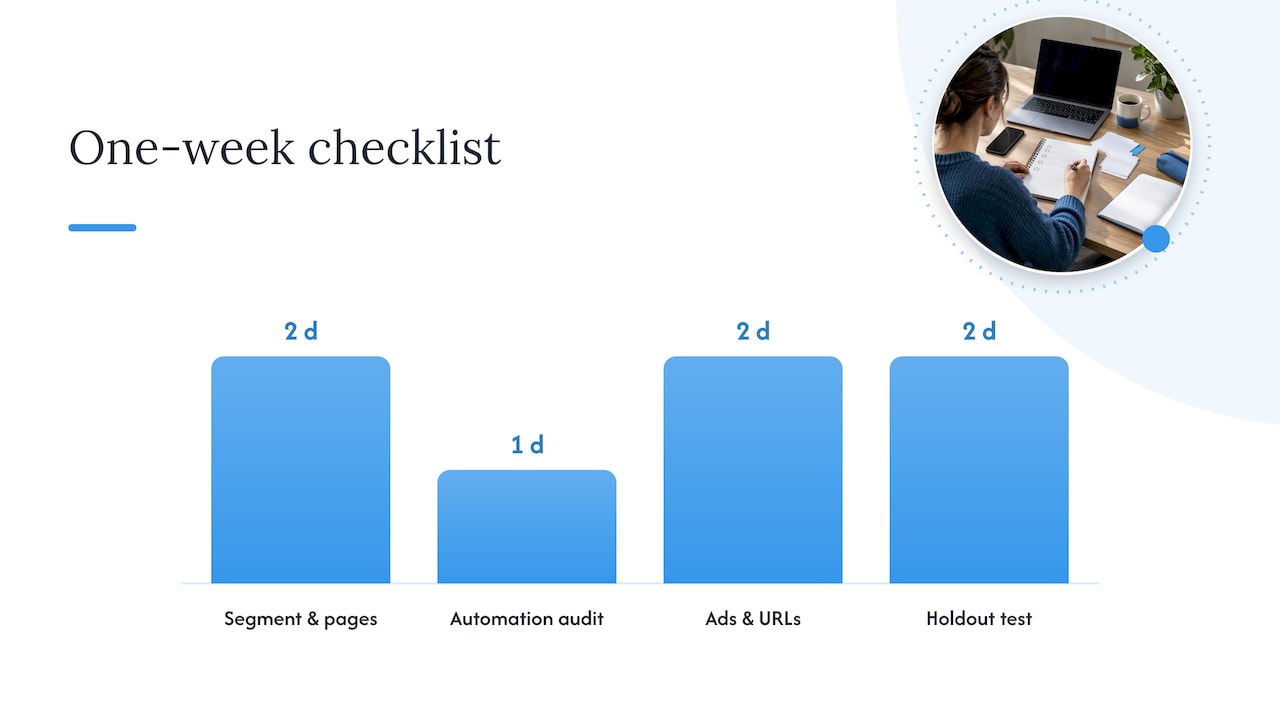
A working branded search defense doesn’t need months to stand up. In one week, a marketing team can segment terms into the four intent buckets, build or repurpose landing pages for each, audit every automated rule and DKI template for competitor names, and launch a small incrementality test on core brand spend.
- Day 1 to 2: segment queries and map each to an existing or new landing page.
- Day 3: audit DKI settings, feeds, and automated rules for competitor terms.
- Day 4 to 5: update ad copy and display URLs for clarity and compliance.
- Day 6 to 7: launch a small holdout test on core brand bids.
An integrated approach that combines strategy, creative, and web development can help keep legal risk and conversion quality in view at the same time rather than treating them as separate workstreams.
Pro Tip: Treat the automation audit and the landing page rebuild as one project, not two. A clean ad with a mismatched landing page still hurts conversion and still risks a misleading impression.
When to keep branded search in-house versus bring in support
We recommend keeping branded search in-house when the brand guardrails are simple and the team can iterate quickly on copy and bids without much legal complexity. Managed support earns its cost once the setup spans multiple markets, faces real trademark risk, or needs proper incrementality testing rather than guesswork. Either way, one clear governance rule matters most: legal, brand, and paid media sign off on any ad copy or landing page before it touches a live campaign.
— Alex
How Vertical can help you run branded search with confidence
Building a defensible branded search program means getting media planning, paid search, creative, and web development working from the same brief, rather than coordinating separate vendors who each see only part of the picture. Bundling these services together can keep ad copy, landing pages, and measurement aligned from the start instead of catching mismatches after launch.
If your branded campaigns need a proper audit, a rebuilt landing page structure, or an incrementality test to justify the spend, Vertical’s services page outlines the paid search, creative, and web development work involved. Get in touch through Vertical’s site to talk through your current setup and next steps.
Sources
For complaint examples and misleading-impression rulings, see the ASA’s guidance on company names and URLs. For experiment setup, consult Google Ads’ incrementality testing support page. Both cover the practical detail this article summarizes.
- Company names and URLs — ASA
- UK trademark bidding — Sprintlaw
- Strengthen media measurement and ROI clarity with incrementality testing improvements — Google Ads Help
FAQ
Is PPC better than SEO?
Neither replaces the other: PPC delivers immediate visibility for a price per click, while SEO builds organic rankings that keep working without ongoing spend. Most brands run both, using PPC to protect branded terms and capture comparison or reputation searches while SEO builds longer-term organic authority.
What is the 3-3-3 rule for marketing?
Definitions of the 3-3-3 rule vary across marketing sources, and no single authoritative version applies specifically to branded search bidding. Rather than force a fit, focus on the intent segmentation and measurement practices covered above, which have direct support in PPC brand defense guidance.
What does “branded search” mean?
Branded search refers to queries that include a specific brand name, whether the searcher’s own preferred brand or a competitor’s. Advertisers bid on these terms to control the paid results a searcher sees when they already have a specific company in mind.
What are the disadvantages of paid search?
Paid search costs money for every click regardless of intent, and branded terms in particular can see costs rise once a competitor starts bidding against your name. Poorly matched ad copy or URLs also carry the misleading-impression risk described under ASA guidance, which can trigger a complaint even when the underlying bid was lawful.
Recommended

Other posts



























































Stay ahead with better decisions.
Get business insights today.
