Increase Customer LTV in 90 Days for Marketers: Fix the Weakest Input

Retention is the fastest lever for increasing customer lifetime value, followed by expansion and then margin. Start with onboarding sequences that get customers to first value fast, consumption-timed replenishment triggers, and a subscription pitch sequenced to order number two. Measure results over a full 90-day cohort window before you call a test a win or a loss.
TL;DR:
- Improving retention through onboarding, predictive churn prevention, and timely replenishment can significantly boost long-term customer value.
- Expansion tactics like post-purchase cross-sells, sequenced subscription offers, and referral programs have the highest leverage when timed correctly and targeted precisely.
- Margin-focused strategies, including discount suppression for top customers and cost-efficient support flows, help protect profitability without reducing revenue growth.
- Tracking cohort-based metrics and leading indicators weekly over a 90-day period ensures accurate measurement of LTV improvements and prevents premature termination of strategies.
- Starting with the weakest LTV input and testing one tactic at a time maximizes impact and minimizes risk, with clear thresholds set before launching each experiment.
Table of Contents
- What Is Customer LTV and Why Does It Matter?
- Which Levers Actually Move Customer LTV?
- How Do You Measure LTV Improvements Correctly?
- How Do You Decide Which LTV Tactic to Run First?
- What Data Infrastructure Do You Need to Run These Tactics?
- What Can You Learn from a Real LTV Case Study?
- What Should Your 90-Day LTV Checklist Look Like?
- What Mistakes Quietly Undermine LTV Programs?
- Ready to Run Your Own 90-Day LTV Pilot?
- Sources
What Is Customer LTV and Why Does It Matter?
Customer lifetime value measures the total revenue (or profit) a customer generates across their entire relationship with your business. The basic formula is straightforward: average order value multiplied by purchase frequency, multiplied by customer lifespan, multiplied by margin. Drop the margin variable and you get revenue LTV, which is useful for top-line planning but dangerous if you’re deciding where to spend on retention, since a high-revenue, low-margin customer can look more valuable than they actually are.
The business case for prioritizing LTV over pure acquisition is not close. Research highlighted by Wharton’s executive education program shows that a 5% improvement in retention can increase profits by roughly 25% to 95%, depending on the industry. No acquisition channel offers that kind of leverage on a comparable budget.
Three benchmarks are worth pinning to your dashboard right now:
- LTV to CAC ratio near 3:1. Below that, your unit economics are strained; well above it, you’re probably underinvesting in growth.
- Net revenue retention (NRR). This is your best single indicator of expansion health, especially for subscription and repeat-purchase businesses.
- Cohort observation windows. Most retail and eCommerce brands need at least one full purchase cycle before cohort LTV data means anything.
Marketing managers who treat customer LTV optimization as a side project usually default to acquisition spend because it’s easier to measure quickly. The data says that’s backward.
Which Levers Actually Move Customer LTV?
Three levers move LTV: retention, expansion, and margin. Each one has a distinct set of tactics, and each tactic moves a specific input in the LTV formula, which matters because “improve LTV” is too vague to test against.
1. Retention plays. These reduce churn and extend customer lifespan, the biggest multiplier in the formula.
- Onboarding to first value. Customers who reach their first meaningful “win” inside 7 to 14 days retain at dramatically higher rates than those who don’t. Trigger signal: account creation or first purchase. Time to impact: 30 to 60 days. Measure: activation rate and day-30 retention.
- Predictive churn interventions. Flag accounts showing early disengagement (declining logins, skipped replenishment windows, support tickets going unanswered) and route them to a save sequence before they lapse. Trigger signal: behavioral drop-off score. Time to impact: 60 to 90 days. Measure: churn rate by risk segment.
- Consumption-timed replenishment. For consumable products, prompt reorder at roughly 70% product depletion rather than on a fixed calendar. Trigger signal: estimated usage based on purchase date and product type. Time to impact: immediate on next cycle. Measure: repeat purchase rate.
- Proactive support playbooks. Reach out before a known friction point (a shipping delay, a subscription renewal, a failed payment) rather than waiting for a complaint. Trigger signal: order status or billing event. Time to impact: 30 days. Measure: support-driven churn.
2. Expansion plays. These increase order value and frequency without new customer acquisition costs.
- Post-purchase cross-sells and one-click upsells. Re-matching one-time buyers to a product suited to their actual usage pattern is one of the highest-leverage tactics available, according to RetentionLab’s tactical breakdown. Trigger: order confirmation. Time to impact: immediate. Measure: attach rate.
- Sequenced subscription offers at order #2. Pitching a subscription on the first purchase often fails because trust hasn’t formed yet. Sequencing that offer to the second order lifts subscription conversion meaningfully, per the same RetentionLab analysis. Trigger: second purchase event. Time to impact: 30 to 60 days. Measure: subscription conversion rate.
- VIP offers and referral programs. Reward the behaviors you want (repeat purchases, referrals, reviews) rather than handing out blanket discounts, a distinction Bloomreach’s research on retention strategy backs up directly. Trigger: lifetime spend threshold. Time to impact: 90 days. Measure: repeat rate among enrolled members.
3. Margin plays. These protect the profit side of the equation instead of just chasing more revenue.
- Suppress discounts for your top decile. Your best customers will often buy without a discount. Sending them one anyway is margin you didn’t need to give away.
- Self-serve flows for low-complexity requests. Password resets, order tracking, and simple returns handled without a human touch keeps cost-to-serve down.
- Returns-aware audience suppression. Exclude high-return customers from aggressive upsell campaigns; a $200 upsell that comes back as a $200 return isn’t expansion, it’s a wash.
Pro Tip: Don’t run all three levers at once. Pick the tactic that maps to your weakest input, run it in isolation for a full quarter, then layer in the next one. Stacking five untested changes in one month makes it impossible to know which one actually worked.
How Do You Measure LTV Improvements Correctly?
The formula you use depends on your business model. Subscription businesses typically calculate LTV as average revenue per account (ARPA) divided by churn rate. Non-subscription and eCommerce businesses use average order value multiplied by purchase frequency multiplied by lifespan, adjusted for margin, a distinction monday.com’s CRM guidance lays out clearly for teams choosing between the two.
Historic LTV tells you what already happened. Predictive LTV, built from early behavioral signals, tells you what’s likely to happen, and it’s the version you need if you’re trying to prove a test worked before a full cohort matures.
Cohort measurement is non-negotiable here. Comparing this month’s blended average customer value to last month’s tells you almost nothing, because the mix of new versus returning customers shifts constantly. Track customers grouped by acquisition month or first-purchase date instead, and give the cohort time to develop.
Watch these leading indicators weekly, since full cohort LTV takes too long to catch a problem early:
- Repeat purchase rate within 30, 60, and 90 days
- Purchase frequency trend by cohort
- Average revenue per account (ARPA)
- Early churn signals by risk segment
Cohort-based measurement paired with these leading indicators lets you catch a failing test in week six instead of discovering it in month four. Give major LTV experiments a full quarter to prove out unless a leading indicator turns sharply negative before then. Stopping early on a retention play because week two looked flat is one of the most common mistakes marketing teams make.
How Do You Decide Which LTV Tactic to Run First?
Start with a diagnostic, not a favorite tactic. Pull your LTV inputs apart and identify which one is weakest: average order value, purchase frequency, margin, or lifespan.
- If frequency is weak, prioritize consumption-timed replenishment and the second-order subscription pitch. These directly target how often customers come back.
- If margin is weak, prioritize discount suppression for high-value segments and self-serve support flows before you touch acquisition spend at all.
- If lifespan is weak, prioritize onboarding-to-first-value and predictive churn interventions. A customer who churns in month two never gets the chance to become valuable.
Once you’ve named the weak input, size each candidate tactic on two axes: expected impact and implementation cost. A predictive churn model might have high impact but requires data infrastructure you don’t have yet. A replenishment email trigger might have moderate impact but ships in a week. Pick the top three by impact-to-cost ratio, not by which one is most exciting in a planning meeting.
Structure each test the same way: a written hypothesis, a defined sample (usually a cohort segment, not your whole customer base), one primary metric, a weekly check-in cadence, and explicit stop or scale criteria decided before launch, not after you see the results.

Pro Tip: Write your stop/scale threshold on paper before the test starts. “If repeat rate doesn’t move by at least 3 percentage points in 60 days, we kill it” is a decision. “Let’s see how it feels” is not.
What Data Infrastructure Do You Need to Run These Tactics?
None of these tactics run reliably without a single customer view. That means transaction history, product usage, engagement data, and support signals living in one profile instead of scattered across four disconnected tools, a foundational point in monday.com’s CRM guidance for lifetime value.
The minimum event list you need to automate the tactics above:
- Purchase and order-status events, tagged by product type
- Estimated consumption or usage milestones (the trigger for replenishment at roughly 70% depletion)
- Plan or subscription limit alerts (commonly set around 80% of usage cap)
- Second-order completion (the trigger for the subscription pitch)
- Support ticket volume and resolution time by account
Segment your customer base by revenue potential and route accordingly. Your highest-value segment should reach a dedicated account contact or a high-touch flow; everyone else runs through automated sequences, a routing principle Monday also recommends. A CRM built for eCommerce operations makes this segmentation and routing far less painful to maintain than a spreadsheet ever will.
Pro Tip: If you can only instrument one trigger this quarter, make it the consumption-based replenishment alert. It’s the fastest to build, the fastest to show results, and it doesn’t require predictive modeling.
What Can You Learn from a Real LTV Case Study?
Vertical Brands’s work with FACEGYM shows what happens when the tactics above are applied together instead of piecemeal. Neither number came from one single change. It came from tightening the sequence between purchase and next action, and removing friction at the exact moment a customer was deciding whether to come back.
Three takeaways generalize well beyond fitness and beauty brands:
- Post-purchase timing matters more than post-purchase creativity; a well-timed, plain message often outperforms a clever one sent too late.
- Booking or reorder friction is often the quiet reason repeat rate stalls, not a lack of interest.
- Improvements compound when retention and conversion tactics run in the same sequence rather than as separate campaigns.
What Should Your 90-Day LTV Checklist Look Like?
- Weeks 1 to 2: Audit current LTV by cohort and identify your weakest input.
- Weeks 3 to 6: Implement your top three tactics, one per weakest-input category.
- Weeks 7 to 10: Measure leading indicators weekly; don’t touch the test unless a stop-criterion trips.
- Weeks 11 to 13: Evaluate against your predefined threshold and decide: scale, adjust, or kill.
Your weekly dashboard should show cohort LTV, repeat purchase rate, churn by cohort, ARPA, your LTV to CAC ratio, and NRR. A 5% retention gain that shows even a fraction of the 25% to 95% profit lift Wharton’s research documents is your signal to scale the tactic to the next customer segment.
What Mistakes Quietly Undermine LTV Programs?
Most LTV programs fail from thin spreading, not bad tactics. Teams run six experiments at once, measure company-wide averages instead of cohorts, and lean on discounts because they’re easy to greenlight. The fix is cultural: give one team clear ownership, hold a retro after every test, and tie incentives to retention, not just new orders. Pick three tactics. Run them for a full quarter. Measure them properly.
— Alex
Ready to Run Your Own 90-Day LTV Pilot?
An integrated agency approach can replace hiring separate agencies for strategy, creative, and lifecycle marketing when you’re trying to move customer LTV. One team handles the diagnostic, builds the flows, and reads the dashboard, instead of you coordinating between three vendors who don’t talk to each other.
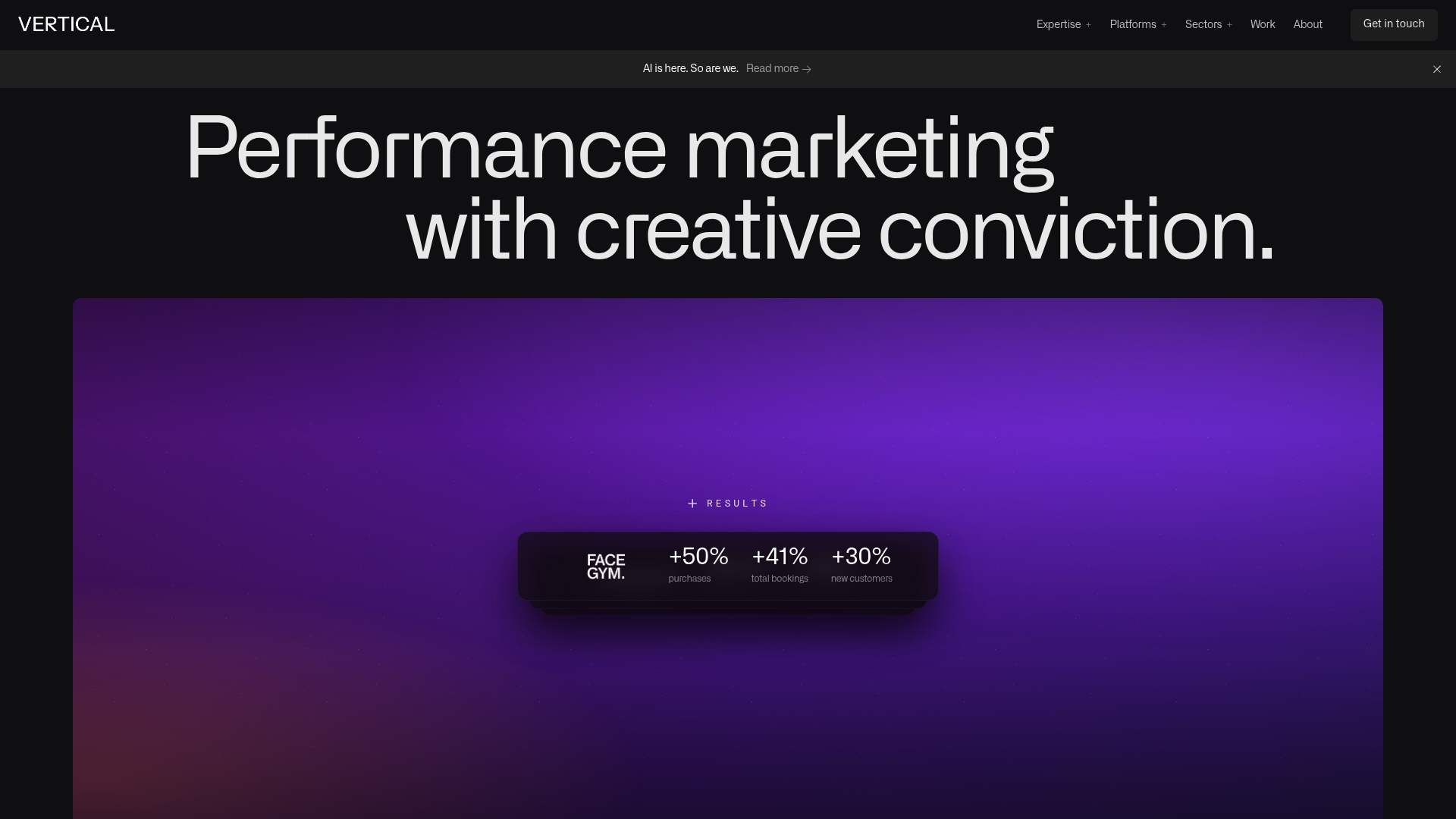
A typical 90-day pilot with Vertical Brands starts with the same diagnostic covered above: identifying your weakest LTV input, then building three tactical experiments matched to it, whether that’s post-purchase email sequencing, replenishment automation, or a sequenced subscription offer. Clients receive measurement dashboards built around cohort LTV and leading indicators from day one, not bolted on at the end. For persona and segmentation work that feeds directly into the routing rules mentioned earlier, The Lead Lab’s guide to buyer personas is a solid complement to the diagnostic phase.
If you’re ready to stop guessing which lever to pull first, visit Vertical Brands to request a pilot brief.
Sources
- How to Increase Customer Lifetime Value With Your CRM in 2026
- How to Increase Customer Lifetime Value: 12 Tactics That Actually Work
- Customer Lifetime Value (CLV): Formula + 8 Ways to Increase It
- Proven strategies to increase CLV
Recommended

Other posts































































Stay ahead with better decisions.
Get business insights today.
