Move Buying Groups Faster: 3 Signal First B2B Lead Nurture Flows

B2B lead nurture works when it is signal driven and account aware, moving whole buying groups forward instead of drip feeding one contact on a calendar. Sales cycles typically run 6 to 18 months, so the metric to watch isn’t email opens. It’s pipeline influence, the share of closed revenue that nurture touched along the way.
TL;DR:
- Signal-driven, account-aware nurturing influences pipeline influence more effectively than calendar-based drip campaigns, especially over 6 to 18 months sales cycles.
- Segmentation by role, firmographics, and intent is critical to delivering relevant content at each buying stage, with email remaining the primary channel.
- Behavioral scoring that reacts to recency and intensity of engagement outperforms fixed scores, increasing responsiveness and sales handoff speed.
- Nurture programs should prioritize rapid sales follow-up, with response SLAs under five minutes for hot leads and suppression of disengaged contacts.
- Coordinating messaging across multiple stakeholders in the account, aligned with clear measurement and calibration, drives better conversion and revenue impact.
Table of Contents
- What Is B2B Lead Nurture and Why Generic Drips Fail
- Why Nurturing Pays Off: The Business Case in Numbers
- Building the Architecture: Segments, Content, and Channels
- How Do You Design a Signal-Based Scoring and Trigger System?
- Coordinating Multi-Stakeholder Buying Groups
- Nurture Flows You Can Copy This Week
- Measuring and Optimizing Nurture Performance
- Launch Checklist and the Pitfalls That Sink Programs
- How Vertical Brands Approaches Nurture in Practice
- What Actually Moves the Needle in Nurture Programs
- Getting Nurture Implementation Right
- Sources
What Is B2B Lead Nurture and Why Generic Drips Fail
B2B lead nurture is the structured process of delivering the right content to the right stakeholder at the right stage of the buying process, moving a prospect from awareness through evaluation to a decision. Salesforce defines it as providing valuable resources that build trust and persuade prospects to advance through the funnel. That definition holds, but the execution in B2B looks nothing like consumer email marketing.
A B2C drip sequence assumes one buyer, one decision, one short window. B2B rarely offers any of that. Deals commonly run 6 to 18 months and pull in multiple stakeholders, according to industry research on B2B buying complexity, from a champion who found your website to a finance lead who signs off on the invoice.
That’s why a calendar-based drip underperforms. It sends email five whether the prospect is ready for email five or still stuck on email two’s objection.
The stages that matter:
- Awareness: the buyer recognizes a problem and starts researching, often anonymously.
- Evaluation: stakeholders compare approaches, request proof, and loop in colleagues.
- Decision: the buying group aligns on budget, risk, and vendor fit.
A signal-first system reads where each stakeholder sits in that progression and reacts accordingly, rather than assuming everyone moves at the same pace.
Why Nurturing Pays Off: The Business Case in Numbers
Nurture programs shorten sales cycles and lift the conversion rate from marketing qualified lead to sales qualified lead, because prospects arrive at the sales conversation already educated instead of starting cold. Salesforce’s framework ties this directly to relationship building over time rather than a single pitch, and that compounding trust is what shows up later as faster deal velocity.
The metric that matters most: pipeline influence, meaning the percentage of closed-won revenue that touched a nurture track before the deal closed. A composite figure sometimes called “nurture velocity,” how fast a lead moves from first touch to closed-won, ties nurture activity directly to revenue instead of vanity engagement stats, as recent B2B nurturing benchmarks describe.
Track relevant metrics monthly, including conversion rates, re-conversion of nurtured leads, sales handoff timing, and pipeline influenced by nurture interactions.
Most teams that only track open rates are measuring effort, not outcome. Pipeline influence measures the outcome.
Building the Architecture: Segments, Content, and Channels
A nurture program is an assembly of three decisions: who gets which track, what content moves them forward, and which channel delivers it. Get these wrong and even a well-built scoring model won’t save the program.
Segmentation comes first. Split leads by role (economic buyer, technical evaluator, end user), firmographic fit (company size, industry, revenue band), and intent signal (content downloaded, pages visited, competitor comparison viewed). A CFO and a systems administrator at the same company should never receive identical emails. Map each segment to its own track, built around the questions that stakeholder actually asks.
Content progression follows the funnel stage:
- Awareness stage: educational blog content, benchmark reports, and short explainer videos that name the problem without pitching a solution.
- Evaluation stage: case studies, comparison guides, and ROI calculators that help a buyer justify the project internally.
- Decision stage: implementation guides, pricing transparency, and references or testimonials that de-risk the final signature.
Channel orchestration keeps email as the anchor, since it’s the only channel that carries full context and a clear call to action, layered with LinkedIn engagement and retargeting ads for reinforcement, a structure Oracle’s marketing team recommends for B2B specifically. Events and webinars slot in as high-intent triggers rather than standalone channels.
A minimal tech stack needs:
- A CRM that logs every touchpoint against the account, not just the contact
- Marketing automation for trigger-based sends
- Intent or website-visitor tracking to catch anonymous research activity
- A CRM built for the way your funnel actually works matters more than which vendor logo is on the login screen
Skip any of these four and the program degrades back into a manual, guesswork operation.
How Do You Design a Signal-Based Scoring and Trigger System?
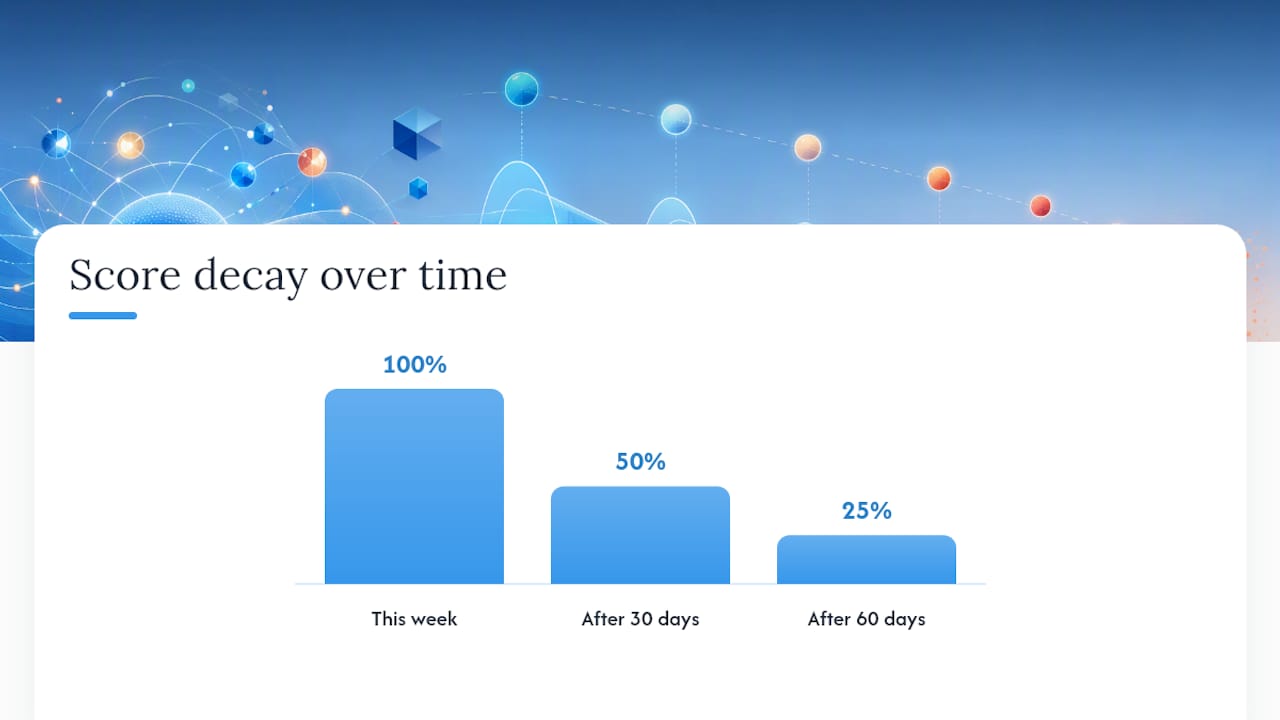
Behavioral scoring beats fixed drips because it reacts to what a prospect actually does instead of what day it happens to be. A signal-based model assigns points for intensity (a demo request scores higher than a blog visit) and recency (activity from yesterday counts more than activity from three months ago), then applies decay so old signals stop artificially inflating a score.
Build the scoring logic in four steps:
- Assign point values by action intensity. Pricing-page visits, demo requests, and case-study downloads score highest. Newsletter opens score lowest.
- Weight for recency. An action from this week counts fully; older activity should count for less.
- Apply decay rules on a schedule. A common approach halves the score’s weight after 30 days and halves it again after 60, so a lead who went quiet stops looking “hot” on a stale action.
- Set a threshold that triggers handoff. Once a lead crosses the score line, route it to sales automatically rather than waiting for a weekly review.
Speed matters enormously once that threshold is crossed. Response SLAs of under five minutes during business hours dramatically improve qualification rates on hot inbound leads, because interest peaks the moment someone requests a demo and fades fast after that.
Pro Tip: Set two SLA tiers, not one. A demo request gets the sub-five-minute treatment. A pricing-page revisit after 60 days of silence gets a same-day human follow-up instead, since it signals renewed interest but not urgency.
Exit and suppression rules deserve equal attention. A lead who unsubscribes, marks an email as spam, or explicitly says “not now” should drop out of active nurture and into a long-cycle re-engagement track, checked quarterly rather than weekly. Without suppression logic, a program keeps emailing people who’ve told you to stop, which damages deliverability for every other lead in the system.
Coordinating Multi-Stakeholder Buying Groups
Treat the account, not the individual contact, as the unit you’re nurturing. A single champion filling out a form tells you almost nothing about whether the account is actually heating up. Aggregate signals across every known contact, a practice recommended for B2B specifically because deals with multiple engaged stakeholders close at meaningfully higher rates than deals with one lone advocate.
Signs an account is heating up as a whole, not just one person:
- Multiple distinct contacts from the same domain visiting pricing or comparison pages within the same week
- A new stakeholder appearing in the CRM with a title that signals budget authority
- Increased email forward activity or multiple people registering for the same webinar
Once you see two or more of those in the same 30-day window, escalate the whole account, not just the original contact.
Build parallel role-based tracks that run at the same time but carry different messages. A CFO track emphasizes ROI calculators and total cost of ownership. An IT or technical evaluator track leans on security documentation and integration guides. An end-user track focuses on day-to-day workflow and ease of adoption. Coordinate timing so all three tracks reach their audience within the same general window, so the internal conversation these stakeholders have with each other lines up rather than leaving one person a step behind.
Pro Tip: Not every deal needs full account-based orchestration. Reserve it for deals above your average contract value or where you’ve identified three or more distinct stakeholders. Smaller deals with a single buyer waste effort on multi-track complexity they don’t need.
Nurture Flows You Can Copy This Week
Three flows cover most of what a B2B program needs to run well.
- Welcome flow. Purpose: orient a new lead and set expectations. Trigger: form fill or content download. Front-load 3 to 5 emails over two weeks, a cadence that consistently outperforms slower rollouts, then taper into behavior-based sends.
- MQL nurture flow. Purpose: move a qualified lead toward a sales conversation. Trigger: score threshold crossed. Assets: one case study, one ROI tool, one direct demo invitation.
- Lost-deal re-engagement flow. Purpose: revive stalled opportunities. Trigger: deal marked closed lost or 90 days of inactivity. Assets: a product-update email, then a light check-in with no pitch attached.
Cadence should react to engagement, not a fixed schedule. If opens and clicks drop for two consecutive sends, pause the sequence and switch the next touch to a lower-commitment ask.
Subject lines and calls to action should shift with the stage:
- Educational stage: curiosity-driven subject lines, CTA to read or watch
- Evaluation stage: proof-driven subject lines, CTA to compare or calculate
- Decision stage: direct subject lines, CTA to book a demo or request pricing
Adobe’s roundup of nurture email examples reinforces a simple point: personalization and a single clear CTA per email consistently beat multi-offer emails that ask the reader to do three things at once.
Measuring and Optimizing Nurture Performance
Two metric tiers matter here. Primary metrics tie directly to revenue: MQL to SQL conversion rate, pipeline influence percentage, and nurture velocity. Secondary metrics diagnose why the primary numbers move: email click rate by segment, content engagement by stage, and time-to-first-response after a score threshold trigger.
Calculate pipeline influence by tagging every deal in the CRM with whether it received at least one nurture touch before the sales conversation started, then comparing average deal size and close rate between the two groups.
Run experiments deliberately rather than by instinct:
- A/B test subject-line framing (curiosity versus direct benefit) on the awareness-stage track
- Test scoring threshold levels, moving the handoff trigger up or down by 10 points to see the effect on sales acceptance rate
- Test cadence spacing on the welcome flow, comparing daily versus every-other-day sends
| Report cadence | What to review | Who’s in the room |
|---|---|---|
| Weekly | Score threshold triggers, SLA response times | Marketing ops, sales development |
| Monthly | MQL to SQL rate, content engagement by segment | Marketing, sales leadership |
| Quarterly | Pipeline influence, nurture velocity, scoring calibration | Full revenue team |
The quarterly review is where scoring rules get recalibrated. A threshold that worked in January often needs adjustment by summer as content library and buyer behavior shift.
Launch Checklist and the Pitfalls That Sink Programs
Before turning on any automated sequence, confirm the fundamentals are in place. Skipping this step is the single biggest reason nurture programs stall within their first quarter.
Pre-launch checklist:
- CRM data hygiene: duplicate contacts merged, job titles standardized
- Suppression list built and connected to every sending tool
- ICP filters applied so nurture doesn’t waste budget on poor-fit leads
- Content library mapped to each funnel stage with no obvious gaps
The three pitfalls that show up most often:
- Static lead scores that never decay, which keep stale leads looking hot long after interest faded.
- Sales reps who receive a handoff with zero context, no visibility into what content the lead engaged with or why the score crossed threshold.
- Over-mailing, where every segment gets every send regardless of relevance, driving unsubscribes that damage the whole program’s deliverability.
Pro Tip: Calibrate scoring rules every quarter, not once a year. Buyer behavior and your content library both change faster than an annual review can track.
How Vertical Brands Approaches Nurture in Practice
Nurture programs build around four connected steps: strategy that defines the segments and stages, creative that produces the actual assets each track needs, automation that wires the triggers and scoring together, and measurement that closes the loop back to what’s working. That order matters. Automation without the right creative just sends the wrong message faster.
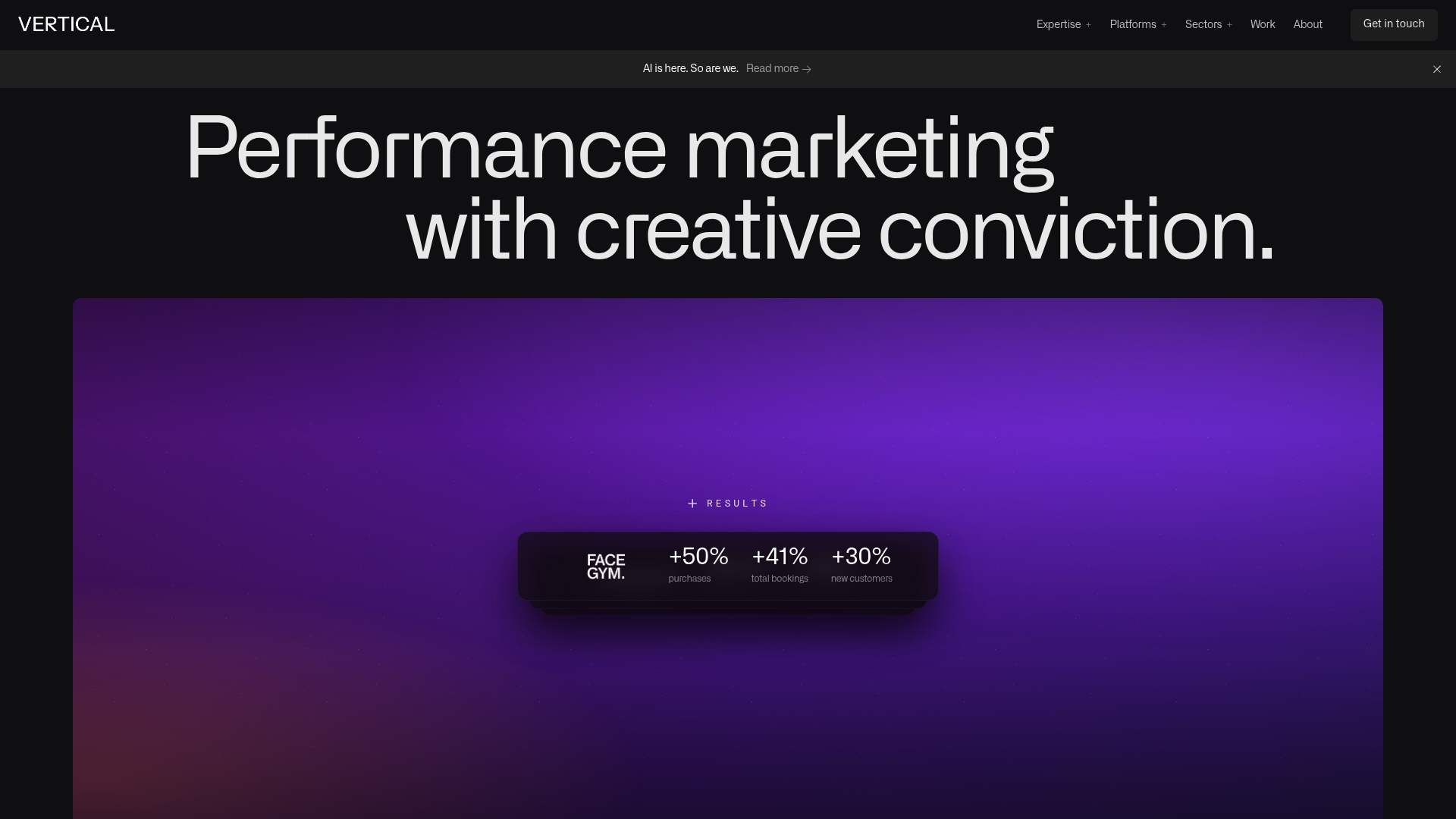
One checkable result: skincare and wellness brand FACEGYM saw a 50% increase in purchases and a 41% rise in bookings after integrated marketing work that combined creative and performance channels rather than treating them separately. The likely driver is straightforward: messaging and offers built specifically for where a customer sat in their decision process, delivered through the channel that customer actually used, rather than one generic sequence sent to everyone.
A reader looking to test this approach doesn’t need to overhaul an entire nurture program at once. Start with an audit of current scoring and content gaps, run a small pilot on one segment, and set a measurement cadence before expanding further.
What Actually Moves the Needle in Nurture Programs
Most nurture failures trace back to one decision made in the first week of setup: treating nurture as an email cadence problem instead of a signal and coordination problem. Teams spend weeks debating subject-line copy while their scoring model still treats a six-month-old webinar registration the same as yesterday’s pricing-page visit.
If you fix one thing this week, fix the handoff. Set a sub-five-minute response SLA for hot leads during business hours, and give the sales rep the lead’s actual engagement history at the moment of handoff, not just a name and email address. That single change surfaces problems in scoring, content gaps, and account coordination faster than any dashboard review will.
— Alex
Getting Nurture Implementation Right
A single agency alternative exists to piecing nurture together across five disconnected vendors. Strategy, creative, automation, and measurement operate under one team, so the scoring model, the email creative, and the reporting all speak the same language instead of getting rebuilt every time tools are switched.
That matters most in the gap this guide just walked through, the space between “we bought marketing automation software” and “our sales team actually trusts the leads it hands over.” A signal-based scoring system only works if someone builds the content library to match it, and Vertical Brands’ team handles both sides at once rather than leaving creative and automation as two separate projects that never quite sync. Clients like FACEGYM saw measurable lifts in purchases and bookings once strategy and execution stopped living in separate silos.
If your current nurture program is running on stale scoring rules or a sales team that ignores marketing qualified leads, start with an audit. Get in touch with Vertical Brands to scope a pilot on one segment, set a measurement cadence, and see what a coordinated program actually looks like before committing to a full rebuild.
Sources
- What is Lead Nurturing? - Salesforce
- B2B lead nurturing strategy that converts MQLs
- Lead Nurture Campaigns Every B2B Brand Needs
- Lead Nurturing Strategy: How to Convert Leads Into Pipeline 2026
Recommended

Other posts
































































Stay ahead with better decisions.
Get business insights today.
