Common E-Commerce Marketing Mistakes and How to Fix Them
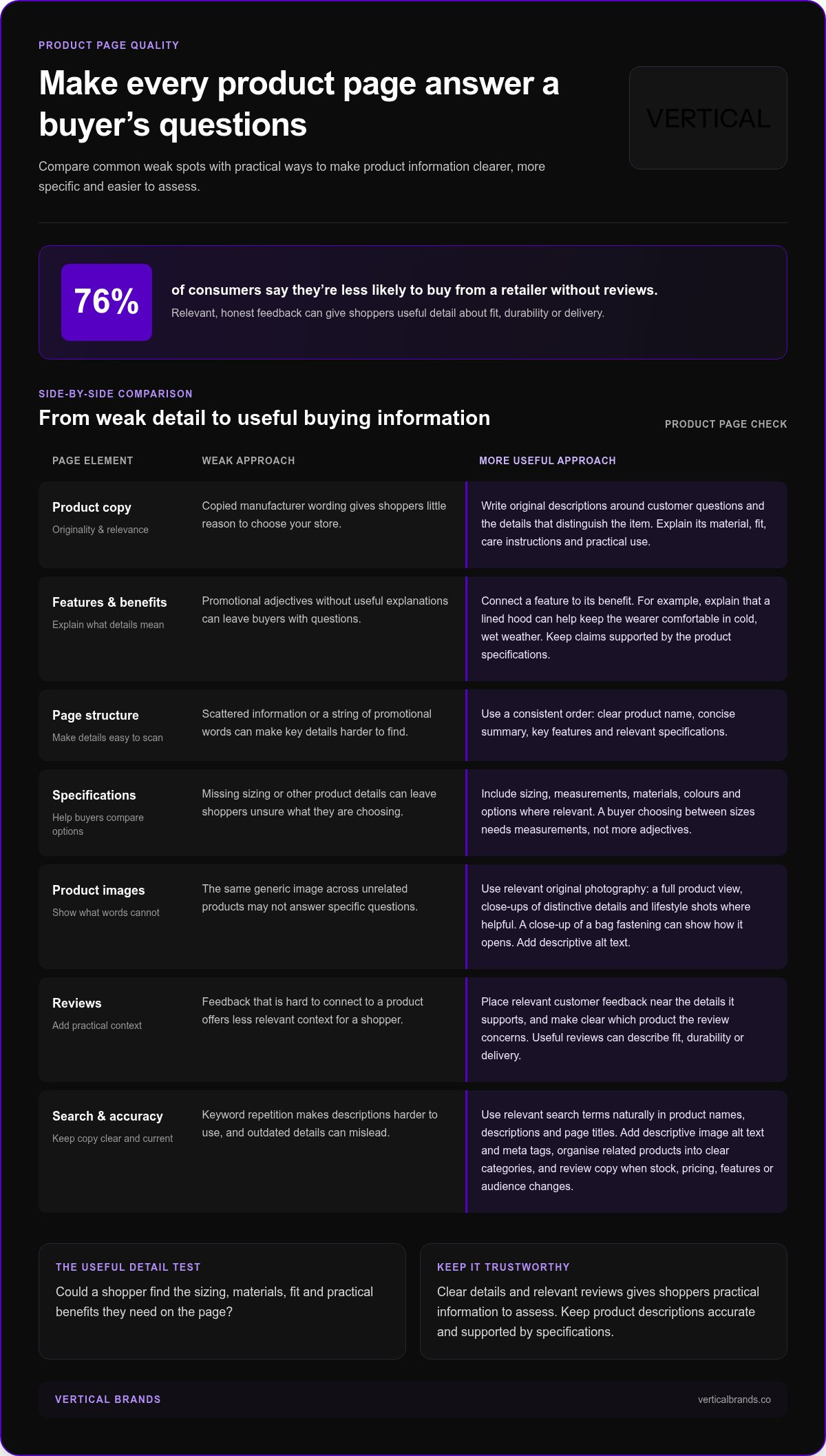
76% of consumers say they’re less likely to buy from a retailer without reviews. The common e-commerce marketing mistakes that undermine sales often come down to weak social proof, generic product descriptions, poor audience insight, checkout friction and confusing navigation. Address these points d...

76% of consumers say they’re less likely to buy from a retailer without reviews. The common e-commerce marketing mistakes that undermine sales often come down to weak social proof, generic product descriptions, poor audience insight, checkout friction and confusing navigation. Address these points directly, and shoppers can make informed decisions with less effort.
It’s easy to focus on campaigns and traffic while overlooking what happens after someone reaches your store. But a click is only the start. If product information is vague or the next step is unclear, potential customers may leave without buying.
This article covers practical ways to improve reviews, write relevant product descriptions and use audience research to make marketing more useful. You’ll also find ways to simplify checkout and improve site navigation. Clear reviews, useful product copy and a straightforward journey help create a stronger customer experience.
Key Takeaways
• Invite customers to share honest feedback and make useful reviews easy for shoppers to find.
• Write original product descriptions that explain key features and benefits for your audience.
• Use customer behaviour and market research to make campaigns more relevant.
• Offer a straightforward checkout, with clear policies and payment options that suit your customers.
• Keep navigation simple and test the mobile experience. Clear calls to action helps visitors decide what to do next.
1. Customer reviews and social proof
Reviews help buyers judge whether a product matches its description. 76% of consumers say they’re less likely to buy from a retailer without reviews. Ask customers to describe their experience after receiving an order, then display honest feedback beside relevant products. A review about fit, durability or delivery gives prospective buyers practical detail.
Make the request straightforward. Send a brief follow-up asking for an honest review, not a positive one. Ecommerce businesses can offer a discount on a future purchase in return for a review, but explain the terms clearly and never make the reward depend on favourable feedback. Genuine social proof is more valuable than polished praise.
For a broader view of online-store decisions, watch this video:
Useful reviews start with understanding who buys from you. Build buyer personas from customer research, including relevant characteristics such as age, gender, income and organisational role. Then compare those profiles with actual purchase behaviour. A short post-purchase survey can reveal what customers valued, what caused hesitation and what information they needed before buying. One persona might prioritise clear sizing information; another might care most about delivery options.
Social proof also depends on how an ecommerce business behaves in public. Respond promptly to comments and messages, and answer product questions with specific information. Make business contact details easy to find, including a monitored email address or contact form. A chatbot can handle routine questions, such as where to find delivery information, but provide a clear route to a person for more complex issues. Clear contact details and prompt replies build confidence.
What are common email marketing mistakes for e-commerce businesses? Sending the same promotional message to every buyer, relying only on discounts and ignoring customer behaviour can make emails irrelevant. Use targeted lists, useful content and timely messages instead. According to the Information Commissioner’s Office (ICO), a service message appended to a sales email is still subject to marketing rules. The ICO also says people can object to the use of their personal data, especially for marketing.
How do poor shipping, delivery and returns policies affect UK e-commerce sales? Unclear costs, delivery expectations or return steps create uncertainty and can stop a buyer completing an order. State shipping, refund and returns policies plainly before checkout, and keep those details consistent across product pages and customer emails.
How can online retailers avoid weak retention and over-reliance on discounts? Give existing customers useful reasons to return, such as relevant product updates, helpful guidance and responsive support. Use purchase behaviour to tailor follow-up messages, and reserve discounts for considered moments rather than making them the default reason to sell again.
Write for customers first, then make the page easy to understand through search. Use plain language to explain what a review means, and avoid forcing search terms into customer-facing replies. A helpful answer such as “This jacket has a relaxed fit” serves buyers better than awkward keyword repetition. This balance supports ecommerce visibility without sacrificing clarity.
2. Writing unique product descriptions
Copied manufacturer copy gives shoppers little reason to choose your store. Write original descriptions for each product, based on customer questions and the details that distinguish the item. For a waterproof coat, explain its material, fit, care instructions and practical use. Then connect features to benefits: a lined hood can help keep the wearer comfortable in cold, wet weather. Avoid claims that the product specifications don’t support.
Give every product page a consistent structure. Start with a clear product name, followed by a concise summary, key features and relevant specifications. Include sizing, materials, colours and options where applicable. A buyer choosing between two sizes needs measurements, not a string of promotional adjectives. Review the page whenever stock, pricing, features or the target audience changes, so the description stays accurate.
Images should answer questions that words can’t. Use original product photography, including a full product view, close-ups of distinctive details and lifestyle shots where they help show scale or use. For example, a close-up of a bag’s fastening can clarify how it opens. Keep each image relevant to the product and add descriptive alt text explaining what it shows. Don’t use the same generic image across unrelated products.
Product reviews and user-generated content can add useful context to your own copy. A customer might explain how a garment fits or show how a homeware item looks in a real room. Place relevant feedback near the product details it supports, and make clear which product the review concerns. Choose customer content that adds practical information rather than repeating claims already made in the description.
Search-friendly copy starts with understanding what buyers need, not repeating keywords. Use relevant search terms naturally in product names, descriptions and page titles. Google can then better understand the page while shoppers get readable, specific information. Add descriptive image alt text and meta tags, and organise related products into clear categories. Keyword repetition makes descriptions harder to use and doesn’t replace useful detail.
How can poor product pages and weak product descriptions hurt e-commerce conversions? If buyers can’t find sizing, materials or a clear explanation of benefits, they may hesitate or leave for another listing. Missing or inconsistent details can also create expectations the product doesn’t meet, undermining trust after purchase.
Use page analytics to identify products with strong traffic but weak conversions. Compare those pages with better-performing listings, then test one improvement at a time, such as clearer sizing or a more informative lead image. A focused review of product page design can help identify gaps across the wider shopping experience. Clear descriptions, useful media and accurate product details works together to support more confident decisions.
3. Market research and target audience definition
Marketing misses its target when an online store assumes every buyer wants the same thing. Build an audience profile from customer evidence, not guesswork. Start with purchase history, product enquiries, returns feedback and post-purchase survey responses. Group customers by needs and behaviour, then create practical personas. For example, a first-time buyer may need product comparisons, whilst a repeat customer may want relevant updates. Age, income and role can add context, but purchase behaviour should guide decisions.
Test those assumptions with an online market survey or conversations with people who match your target audience. Ask what they were trying to solve, what alternatives they considered and what nearly stopped them buying. Compare your findings with the questions arriving through customer support. A reported 56% of consumers believe businesses need a deeper understanding of their needs. That makes specific customer insight more useful than broad demographic labels.
Research should also shape the content you publish. Identify the detailed questions buyers ask before choosing a product, then create blog posts around helpful long-tail searches. A customer looking for “how to choose a waterproof walking jacket” needs a different answer from someone searching for a particular product name. Link each useful article to the relevant product page. This creates a clear route from information to shopping, rather than attracting traffic with no next step.
Review the competitive landscape to understand how other businesses present products, pricing and digital marketing. Compare the detail they provide, the needs they address and the gaps their content leaves. Don’t copy their positioning. Use the comparison to identify a sharper role for your own offer. If research shows mobile shoppers struggle to compare sizes, for instance, make sizing guidance easier to find on mobile product pages.
What UK rules apply to e-commerce marketing, email consent and cookies? The Information Commissioner’s Office (ICO) says a service message appended to a sales email remains subject to marketing rules, and people can object to their personal data being used for marketing. Make email preferences and cookie choices clear, and honour customers’ choices.
What metrics should e-commerce marketers track to spot marketing mistakes? Track conversion rates, click-through rates and return on investment against each campaign’s goal. Compare results by audience, channel and landing page. Weak clicks can point to mismatched targeting, while strong traffic with few sales may indicate a page or offer problem. Use analytics to examine customer behaviour and adjust the campaign accordingly.
Revisit audience assumptions as customer behaviour changes. A content plan built for one segment can miss another, and 51% of consumers believe brands send too much irrelevant content. Use purchase behaviour to tailor messages and topics, then assess whether each piece supports a clear business goal. The findings points to stronger decisions when research, content and measurement work as one process.
4. Checkout friction and cart abandonment
A shopper can decide to buy, then abandon the order because checkout demands too much effort. Nearly 20% of consumers report abandoning an order in the last three months because checkout was overly long or complicated. The average cart abandonment rate is almost 70%, based on 44 reported statistics. These figures make checkout a core part of your ecommerce strategy, not a final technical detail.
Start by completing a test purchase on your own store. Count each screen and field, then remove steps that don’t help fulfil the order. Offer guest checkout so visitors can buy without creating an account. Ask only for information needed to process and deliver the purchase. Show a clear order summary, delivery costs and returns information before payment, not as a surprise at the final step.
Payment options should meet different customer needs. Support relevant choices such as payment cards, bank links and mobile wallets, then display them clearly at checkout. Use an SSL certificate and HTTPS across store pages to protect the connection. Make payment errors specific: explain whether a card was declined or a required field needs attention. A generic error message leaves buyers unsure how to proceed.
Mobile checkout needs its own test. Complete an order on a smartphone and check that fields, buttons and payment options are easy to use. Keep the form readable, avoid unnecessary pop-ups and preserve entered details if a validation error occurs. A clear order summary and visible delivery costs reduce doubt at the point of payment. Review analytics by device to identify where visitors leave.
Abandoned-cart emails can provide a timely reminder. Trigger the message after a shopper leaves items behind, and link directly back to the basket. Abandoned-cart triggered emails have a 42.3% open rate. Businesses can send 1-3 emails over the week after abandonment, with useful product details or a clear route back to checkout. A discount or free shipping offer may help in a later message, but don’t make incentives the only reason to complete an order.
Measure each step in the purchase journey, from basket creation through payment confirmation. If visitors add products but exit at delivery selection, review shipping costs and timing information. If payment failures rise, test the payment flow and error messages. Search engines can bring relevant traffic, but they can’t repair a broken checkout. This is one of the common ecommerce problems that calls for testing the full customer journey, not just campaign performance.
5. User experience and website navigation
A slow, confusing online store makes it harder for shoppers to find products and buy. Over 60% of traffic to ecommerce platforms is mobile, so test the experience on smartphones as well as desktop screens. Check that menus, product pages and calls to action remain usable on different devices. Short paragraphs, scannable content and large buttons make key information easier to access on smaller screens.
Start with the route to a product. Organise categories around how customers shop, use clear labels and add a visible search bar. For example, group related clothing by type, then provide useful filters for size or colour. Keep navigation simple. A clear menu and visible search bar make it easier for visitors to move from a category to a relevant product.
Visual design affects whether buyers stay. 38% of buyers leave a website without an attractive layout. Use consistent colours, readable text and clear spacing, then make the product image and purchase action easy to identify. Avoid unnecessary modules that add visual clutter or slow the page. 86% of buyers are willing to pay more for a great customer experience, so usability has a direct commercial role.
Speed matters at every step. Compress large files, remove features that serve no clear purpose and test key pages on mobile data connections. Google’s search systems need to crawl and index pages, so run an SEO audit before launching an online store. Check that important product and category pages can be indexed without errors. Relevant product descriptions and descriptive page titles help visitors and search engines understand what each page offers.
Use analytics to locate friction rather than redesigning by instinct. Heatmaps show where customers click, scroll or stop engaging. If shoppers repeatedly use search instead of category menus, review the labels and structure. If a product page gets visits but few actions, check its layout, load speed and the visibility of the next step. Test one change at a time and compare behaviour before and after.
Give each page a clear call to action. A category page might guide visitors towards a product; a product page should make the purchase step obvious. Check that buttons work, links lead to the right destination and forms display useful error messages. These small checks support a smoother journey and help more visitors convert. Improving the structure or performance of your store may call for website design and development focused on usability.
Vertical Brands: Klaviyo Email Marketing
Vertical Brands helps ecommerce businesses address retention and email relevance through Klaviyo Email Marketing and Email Marketing & CRM Management. Turn to this support when customer data, campaign planning and follow-up emails need a more coordinated approach. For example, purchase behaviour can inform relevant messages for first-time buyers and returning customers, rather than sending every subscriber the same promotion.
A clear strategy also connects email activity with other acquisition channels. Vertical Brands offers Paid Social and Paid Search, which can sit alongside customer communications in a broader marketing plan. The right mix depends on the gaps you need to address, from inconsistent follow-up to disconnected campaign activity. Relevant messages make the customer journey more coherent.
Visit verticalbrands.co to discuss how Vertical Brands can support your ecommerce marketing.
Build a more deliberate growth system
Make your next step a focused review, not a complete overhaul. Choose one point in the customer journey where people hesitate, then use customer feedback and performance data to identify the cause. Set a clear improvement goal and measure the change before moving to another issue. This keeps decisions tied to customer needs and business outcomes.
When the challenge extends beyond one page or campaign, Vertical Brands can support the wider marketing system through Klaviyo Email Marketing, Email Marketing & CRM Management and Paid Social. These services help connect customer communications with acquisition activity, so your strategy works across more than one touchpoint. Common e-commerce marketing mistakes are easier to address when each improvement has a clear owner and purpose.
Take the next step with a practical discussion about your priorities. Contact Vertical Brands today to explore where its marketing support fits. A clearer plan gives your team a stronger basis for action, and progress starts with choosing what to improve first.
Frequently Asked Questions
How do I avoid common ecommerce mistakes with content?
To avoid common e-commerce marketing mistakes in content, map each page to a buyer question and the next useful action. For example, a comparison guide can explain selection criteria, then lead readers to a relevant category without forcing a sales pitch. Build a content calendar around seasonal demand and stock changes. A calendar helps keep these updates organised. Review Search Console queries alongside sales-page visits, then revise content that attracts visitors with the wrong intent.
What are the most common e-commerce marketing mistakes?
Frequent problems include disconnected campaign messages, unclear product information and marketing decisions based on clicks alone. A retailer might promote a product feature in an advert, then send shoppers to a page that barely explains it. Review the full path from advert to landing page and purchase. Assign someone to check that prices, availability and campaign claims stay consistent across each customer touchpoint.
How do slow website speed and poor mobile design affect online sales?
Slow pages interrupt shopping, while awkward mobile layouts make key information harder to use. A visitor may abandon a product page if content shifts during loading or a button is difficult to tap. Test core journeys on different screen sizes, including category browsing, product selection and basket review. Fix the pages that block progress first, then retest them on an actual mobile device.
What are common mistakes in e-commerce SEO and product page optimisation?
Common errors include duplicate descriptions, vague page titles and product pages that search engines cannot access. Check that each important item has a distinct title and useful copy, and that category pages link clearly to their products. For products with several variants, organise the page so shoppers can select the right option without landing on confusing duplicate listings. Track whether search visits reach relevant products.
How can online shops avoid wasting money on paid advertising?
Set a campaign goal before spending, then connect each advert to a landing page that fulfils its promise. For example, an advert for a specific product range should not send visitors to a broad homepage. Use tracking parameters to distinguish campaign traffic, and assess completed sales or qualified actions alongside clicks. Pause placements that repeatedly attract poorly matched visitors, then refine the audience and message.
How can e-commerce businesses reduce cart abandonment and checkout friction?
Make it easy for shoppers to return to an unfinished basket and continue without rebuilding it. Test checkout with different payment methods and note where errors occur, especially when a payment fails or an address field rejects an entry. Give clear guidance beside the problem and preserve information already entered. Review abandonment patterns by device and payment method to identify where the journey needs attention.

Other posts


























































Stay ahead with better decisions.
Get business insights today.
