AI Search Schema: Start With FAQ and Product Pages, Not Hype

Schema markup helps AI systems read and reuse your content, but it is not a guaranteed route to citations. Bing’s webmaster guidance says there is no special “AI schema,” and industry evidence is suggestive, not conclusive. Our advice: implement it, and start with FAQ or product pages, where the payoff is fastest.
TL;DR:
- Start with FAQPage on existing question and answer pages or Product markup for visible price and availability; then add HowTo and author details.
- Place linked data in the initial page response, match every field to visible content, and connect Organization, Person, and Product records through shared identifiers.
- Validate staging pages with Google’s Rich Results Test and a Schema.org validator, then monitor Search Console errors and sample a fixed query set monthly.
- Keep pages crawlable and render markup early; review robots rules and crawler access, because accurate structured data cannot help systems that cannot reach pages.
- Mark up only facts visible on the page, since inaccurate prices, dates, or availability can be ignored or reduce index visibility.
Table of Contents
- How structured data gives AI systems usable facts
- What the evidence shows, and where it stops
- Which Schema.org types to implement first
- Implementation checklist: JSON-LD, placement and entity linking
- Crawl and access signals that affect AI retrieval
- How to test markup and measure AI visibility
- Prioritization: which pages to mark up first
- Realistic expectations for schema and AI citations
- How we help you get schema and AI search readiness live
- FAQ
- Sources
How structured data gives AI systems usable facts
Schema turns paragraphs into discrete facts: entities, properties and relationships that a retrieval system can match to a question. Without it, a model has to infer that “Sam Lee” in your byline is the same person who wrote other posts. With it, you state that outright.
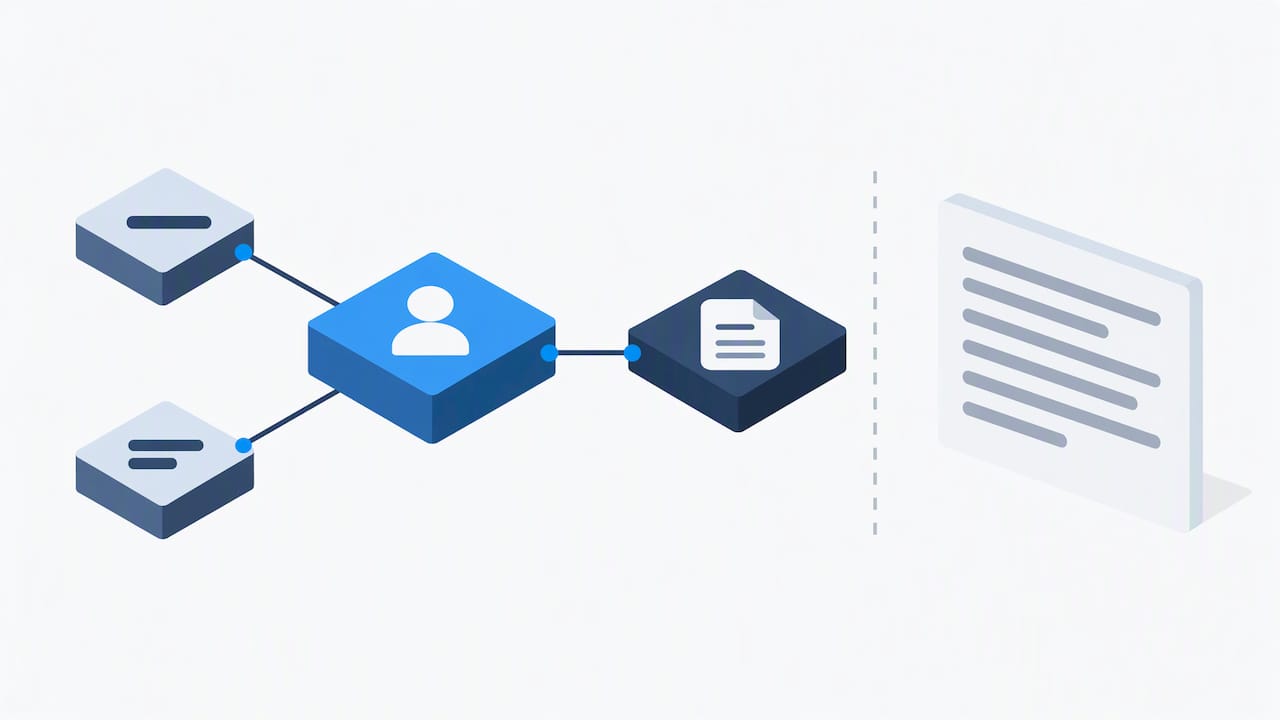
Entity disambiguation matters most here. Giving each Organization, Person and Product an @id lets every block on your site point to the same entity, which removes ambiguity during retrieval. Ahrefs describes LLM search as retrieval-augmented generation, which is why clean, structured, accessible content tends to be easier to pull into an answer.
Here is how common content maps to answer components:
- FAQ questions and answers become ready-made question and response pairs.
- How-to steps become an ordered sequence a model can quote step by step.
- Product fields such as price and availability become comparable attributes.
Structured data supports clearer grounding but does not guarantee visibility or AI-generated citation traffic, according to Microsoft’s Bing guidelines. Treat markup as a clarity layer, not a lever you can pull for a guaranteed result.
What the evidence shows, and where it stops
The official position is the most reliable piece we have. Bing states that Copilot uses the same crawling, indexing and ranking infrastructure as traditional search. There is no separate schema for AI, so the same markup that serves classic search serves AI features.
Industry findings point the same direction, with caveats; for a deeper understanding, see what AI-powered marketing entails.
- Search Engine Land notes that limited tests suggest pages with structured data may appear more often in AI Overviews, but causation is not established.
- WordStream argues that FAQPage and HowTo map well to how AI answers are built, and that author and organization markup supports verification.
- Correlation studies cannot separate schema from the other qualities of well-maintained pages, such as better writing and stronger authority.
Accuracy is the other half of the story. Bing warns that misleading markup can be ignored or can reduce index visibility. If your schema says a product is in stock and the page says otherwise, you have created a trust problem, not an advantage. Mark up only what a visitor can see on the page.
Which Schema.org types to implement first
Start with types that mirror how AI answers are assembled, using the Schema vocabulary:
- FAQPage: Include real question and answer pairs that already appear on the page. It is high-leverage because conversational AI works in questions and answers.
- HowTo: List steps in order, plus estimated time and supplies where relevant. Clear step structure makes extraction easier.
- Article plus Person: Add author, affiliation,
datePublishedanddateModified. Named authorship helps verification. - Organization: Populate
sameAswith links to official profiles and knowledge graph entries so your brand is not confused with a similarly named one. - Product plus Review: Include price, availability and
aggregateRating. This helps when an AI compares options. - BreadcrumbList and VideoObject: Small signals for site hierarchy and media extraction.
Pro Tip: Do not mark up everything at once. A well-validated type on important pages is better than half-finished types sitewide.
Implementation checklist: JSON-LD, placement and entity linking
Use JSON-LD, the format Search Engine Land recommends for AI optimization. Follow these steps:
- Add the JSON-LD block in the page head or body, and server-render it where you can so crawlers do not depend on JavaScript.
- Keep every value identical to the visible page: titles, prices, dates and author names.
- Assign an
@idto your Organization, then reference it from Article, Person and Product blocks to build one connected entity graph. - Add
sameAslinks wherever official profiles exist. - Include
datePublishedanddateModified, and update the latter only when content genuinely changes. - Remove duplicate or conflicting blocks, which often come from a plugin and a theme both outputting schema.
AI crawlers can read HTML, metadata and inline JSON-LD, which is why markup that is present in the initial response is safer than markup injected late. For e-commerce patterns, our developer notes on server-rendered schema for product pages go deeper.
Crawl and access signals that affect AI retrieval
Perfect markup is useless if systems cannot reach the page. Check these access controls:
- Robots.txt and meta directives: These decide what gets discovered. Review NOARCHIVE and NOCACHE directives before blocking content from Copilot, and review them before blocking anything.
- Sitemaps with accurate lastmod: List your important pages and keep modification dates honest to support freshness.
- AI crawler access: Decide deliberately which AI crawlers you allow rather than blocking them by accident through a broad rule.
- llms.txt and llms-full.txt: These are emerging conventions for offering curated excerpts and metadata to language models. Use them as a complementary signal and do not rely on them, since they are not an established standard.
If you suspect rendering or access problems, our guide to measuring AI search visibility walks through the audit.
How to test markup and measure AI visibility
Validation catches errors. Measurement tells you whether the work matters. Run this sequence:
- Test staging pages with Google’s Rich Results Test and a schema.org validator before release.
- After launch, watch Search Console for structured data errors and enhancement reports.
- Sample AI answers monthly for a fixed set of queries, and log whether your pages are cited.
- Compare marked-up pages against similar pages without markup, or roll out in stages so you can compare before and after.
- Record every change with a date, so a content rewrite does not get mistaken for a schema effect.
Expect correlation, not proof. Small controlled comparisons are the most honest evidence you can produce yourself.
Prioritization: which pages to mark up first
Limited engineering time calls for a clear order:
- Quick wins: High-traffic FAQ and support pages, plus product pages with clear attributes such as price and availability.
- Next: Cornerstone how-to articles, author bio pages and your About page, which build entity strength.
- Longer term: A sitewide Organization graph tied to knowledge graph identifiers, plus VideoObject markup for rich media.
Pro Tip: Pick the pages that already earn the most organic traffic. Markup works best on content that search engines already trust.
Realistic expectations for schema and AI citations
Schema is an enabler, not a guarantee. Correctness and consistency count for more than coverage, and a small, accurate rollout beats a sprawling, messy one. Form a small team of SEO, developer and content owner, then work in phases: pick one page type, validate it, measure it, and iterate. Resist the urge to promise stakeholders citations. Promise cleaner, more reusable content and measure from there.
— Alex
How we help you get schema and AI search readiness live
We handle the technical SEO, schema implementation and content structuring in one team, so strategy, copy and engineering stay aligned instead of passing through multiple vendors. Our approach covers:
- Technical SEO audits that find crawl, rendering and markup issues
- Schema design and implementation across your key page types
- Content restructuring so answers are easy to extract
Book a technical audit or discovery call through our services page, and we will show you where to start.
FAQ
Does schema markup help you get cited in AI answers?
It can help AI systems interpret your page, but it does not guarantee citations. Bing’s guidelines state that structured data supports clearer grounding without ensuring AI-generated visibility.
Which schema type should you add first for AI search?
Start with FAQPage on pages that already answer questions, or Product on pages with clear attributes. These types mirror how AI answers are built, so they may be a practical place to start.
Is there a special schema for AI search?
No. Bing says Copilot uses the same crawling, indexing and ranking infrastructure as traditional search, so standard Schema.org types in JSON-LD are what you need.
Can wrong schema markup hurt your visibility?
Yes. Misleading or inaccurate markup can be ignored or can reduce index visibility. Keep every value consistent with what visitors see on the page.
Should you use llms.txt?
Treat it as an optional, experimental extra. It may offer curated excerpts to language models, but it is not an established standard, so it should never replace solid markup and crawl access.
Sources
- Webmaster Guidelines - Bing Webmaster Tools
- Schema Markup for AI: Types, Benefits, & How to Set It Up | WordStream
- What We Actually Know About Optimizing for LLM Search
- AI optimization: How to optimize your content for AI search and agents
- What Is Schema Markup? A Beginner’s Guide to Structured Data
Recommended

Other posts




























































Stay ahead with better decisions.
Get business insights today.
