How to Launch a Product on Social Media: A Practical 2026 Guide
A launch-day post isn’t a launch plan. If you’re working out how to launch a product on social media, the real challenge is coordinating the right audience, platform and message before attention peaks. An announcement can still fall flat when teaser, launch-day and follow-up content lack a clear seq...

A launch-day post isn’t a launch plan. If you’re working out how to launch a product on social media, the real challenge is coordinating the right audience, platform and message before attention peaks. An announcement can still fall flat when teaser, launch-day and follow-up content lack a clear sequence, or when likes fail to lead anywhere useful.
This guide turns that challenge into a practical plan. The priority is to turn attention into a measurable path towards action. It covers audience insight, platform selection, content formats, timings and responsibilities, then shows how creator content and paid social can support discovery. It also explains how to connect campaign posts to a landing page with a clear next step, and how email and CRM can continue the conversation with people who have opted in. Likes and comments are only part of the picture. Clicks, conversions and other signals can help you decide what to do next. You’ll leave with a coordinated launch sequence and a measurement approach designed to inform follow-up growth, not just create a brief spike in attention.
Key Takeaways
• Start with one primary objective, then define the audience action that will show whether the launch is on track.
• Learn how to launch a product on social media with a sequenced plan, rather than relying on a single announcement.
• Match each platform and content format to audience behaviour, campaign purpose and the next step you want people to take.
• Separate reach and engagement from visits, leads and sales. Use these signals to decide what to adjust during launch week.
• Keep momentum going by responding to customer questions and using helpful follow-up content to support opted-in email and CRM communications. These actions helps sustain interest after launch.
How to launch a product on social media with a clear objective
A social launch is not simply a burst of posts around a release date. It is a planned sequence that gives a defined audience a reason to take a relevant next step. That is central to how to launch a product on social media: before choosing formats or channels, decide what the campaign must achieve and who it needs to reach.
A social launch objective connects a specific audience, a product-stage goal and a measurable action. That action might be learning about a new product, placing a pre-order, making a purchase or sharing feedback. Social marketing can support several of these aims, as outlined in this Social Media Marketing Overview, but one priority should lead the campaign.
For a wider introduction to product launch activity on social media, watch this video:
Set an objective before choosing social platforms
Choose the primary outcome according to the product’s stage and availability. An early-stage product may need awareness or feedback. If pre-orders are open, invite people to reserve one. If customers can buy now, focus on launch sales. Don’t treat all these objectives as equal priorities. Supporting indicators can help explain performance, but they shouldn’t replace the main outcome.
Define success in observable terms, without relying on a benchmark that may not fit your audience or offer. For awareness, decide which signals indicate relevant reach. For sales, connect campaign activity to product-page visits and completed orders. For feedback, specify what useful responses would reveal about customer needs. Keep the objective, audience and next action aligned.
Clarify the audience and product proposition
Describe the intended customer through their needs and circumstances, not just broad demographic labels. What are they trying to do? What currently gets in the way? What might make them hesitate, such as uncertainty about the product’s value, suitability or how it works? The answers help you shape a proposition that feels relevant rather than a generic claim designed to appeal to everyone.
Summarise the benefit in language that reflects the customer’s problem. Then identify what would make the claim credible: a clear explanation, a demonstration, product details or customer feedback, where available. Each piece of proof should answer a likely question, not add noise. Audience research and product knowledge give the campaign a stronger foundation before content decisions begin.
How to build a social media product launch plan before launch day
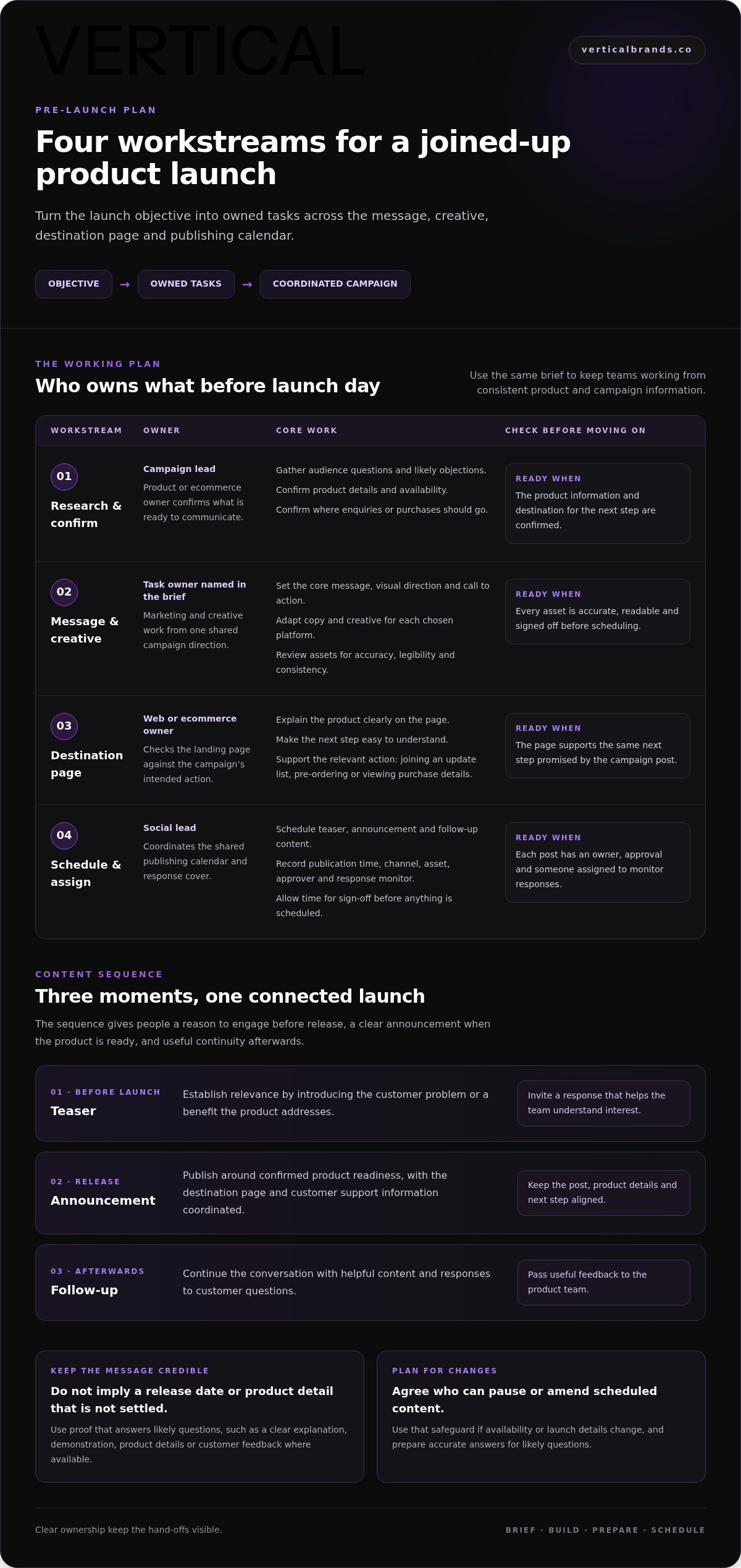
A launch plan turns the objective into work people can own. Set dates around product readiness, then coordinate the message, creative, destination page and customer responses. This is how to launch a product on social media as one connected campaign, rather than a set of disconnected posts.
Prepare the launch message and campaign assets
Start with a shared campaign brief. Record the product proposition, audience, main call to action, launch date and any known limits on availability. Give each task an owner and approval deadline. A single source of truth helps marketing, ecommerce and customer-facing teams work from consistent information.
Research and confirm.
The campaign lead gathers audience questions, product details and likely objections. The product or ecommerce owner confirms what is ready to communicate, including availability and the destination for enquiries or purchases.
Build the message and creative.
Set the core message, visual direction and call to action. Adapt the copy and creative for each chosen platform, rather than posting identical assets everywhere. Review every asset for accuracy, legibility and consistency before scheduling.
Prepare the destination.
The web or ecommerce owner checks that the landing page explains the product and supports the intended action. Make the next step clear, whether that is joining an update list, placing a pre-order or viewing purchase details.
Schedule and assign.
The social lead puts teaser, announcement and follow-up content into a shared calendar. Add the publication time, channel, asset, approver and person responsible for monitoring responses. Build in time for sign-off before anything is scheduled.
Sequence teasers, announcement and audience participation
Teasers should establish relevance, not create suspense for its own sake. Introduce the customer problem or a benefit the product addresses, then invite a response that helps the team understand interest. Keep the message truthful: don’t imply a release date or product detail that isn’t settled.
Schedule the main announcement around confirmed product readiness and the audience’s likely availability. Coordinate the post with the live destination page, customer support information and any planned creator content. Influencer activity can add a distinct perspective and show how a product fits a real need. Explore influencer marketing for D2C brands as part of the campaign mix.
Prepare for participation before publishing. Draft accurate answers to likely questions, assign someone to monitor comments and direct messages, and agree how feedback reaches the product team. Decide who can pause or amend scheduled content if availability or launch details change. This reduces delays and inconsistent replies when attention arrives.
Paid social can extend campaign distribution, but it should reinforce the same proposition and next action. Plan the audience, creative and destination together, then assign clear ownership for approvals and adjustments. A structured paid social campaign plan keeps promotion aligned with the wider launch rather than treating spend as a separate task.
Which social platforms and formats suit a product launch?
Choose channels based on where your intended customers discover products, what they need to understand and how they prefer to act. A platform’s popularity alone isn’t a reason to use it. When planning how to launch a product on social media, give each channel a clear campaign role, then focus on the platforms you can support with relevant content and timely responses.
Use this comparison as a starting point, not a fixed ranking. Audience behaviour and platform features change, so check current formats and advertising options before publication.
| Channel | Strengths | Considerations | Suitable launch content |
|---|---|---|---|
| Visual storytelling and product discovery, with Reels, Stories and carousel posts. | Creative should feel native to the feed and make the product benefit clear quickly. | Short demonstrations, carousel explainers, customer questions and creator content. | |
| TikTok | Search-led discovery and video that can show a product in context. | Build around an audience question or useful idea, rather than relying on a trend alone. | Direct-to-camera explanations, demonstrations and creator-led reviews or use cases. |
| Professional audiences and context for business products or work-related problems. | A consumer product may need a clear professional relevance to fit the audience. | Founder or expert perspectives, product demonstrations and practical explainers. | |
| YouTube | Space for both concise discovery content and deeper product explanations. | Longer videos need a clear structure and a reason to watch beyond the announcement. | Short-form previews, detailed demonstrations and answers to common questions. |
| Can support community discussion and product communication with established audiences. | Use audience evidence to decide whether it merits dedicated creative and attention. | Announcement posts, demonstrations, customer discussion and selected paid content. |
Match channel roles to audience behaviour
Start with the audience’s habits and purchase context. A product that needs to be seen in use may suit visual video; a specialist product may need a detailed explanation or a professional perspective. Check where customers already ask questions, compare options or discuss the problem. If your team can’t create and manage strong content across every channel, prioritise a focused mix: one primary discovery channel and a second channel that supports explanation or conversion.
Choose formats that demonstrate the product clearly
Short-form video can introduce a benefit quickly. Use a demonstration when the key value depends on seeing how the product works. Carousels can break a complex proposition into steps, while creator content can offer a distinct perspective and address practical questions. Live formats can suit real-time demonstrations or audience questions, provided someone can host and respond. The right format depends on the message, complexity and viewing context.
Keep three distribution choices distinct. Organic content builds ongoing visibility and conversation. Creator activity adds a partner’s voice and approach. Paid distribution can extend selected assets to a defined audience. Use paid activity to support content that already fits the campaign objective, not to compensate for an unclear proposition. Adapt creative to each platform rather than reposting identical material without considering its format or audience.
How to execute launch week and measure social media performance
Launch week needs clear ownership and a steady review rhythm. Publishing is only one part of the work. The team must monitor questions, keep campaign details accurate and use performance signals to decide what to adjust. A post attracting attention is useful, but it doesn’t automatically prove that social activity generated sales.
Coordinate publishing and audience response
Set named responsibilities before the first post goes live. One person publishes or checks scheduled content, another monitors comments and direct messages, and a clear escalation contact handles product, stock or website issues. If the team is small, one person can hold more than one role, but every task still needs an owner.
Check readiness.
Confirm the destination page works, the main call to action is clear and the information matches the approved campaign message.
Publish to schedule.
Use the launch calendar to coordinate posts across selected channels. Check each asset in its intended placement and confirm links lead to the right page.
Monitor and respond.
Answer questions with consistent, accurate information. Record recurring concerns, useful feedback and points that need escalation instead of improvising claims.
Review and adapt.
Compare early signals with the campaign objective. Adjust copy, creative or paid distribution where there is a clear reason, and note what changed so the team can interpret results later.
Keep social posts and the destination page aligned throughout the week. If product availability, delivery information or the next action changes, update the relevant customer touchpoints promptly. Conflicting details create friction and can undermine trust.
Review launch indicators and adjust activity
Separate attention from commercial outcomes. Reach and engagement show whether content is being seen and interacted with; visits, leads and sales show whether people are taking valuable next steps. Track measures that fit the objective, rather than treating likes or views as evidence of purchase intent.
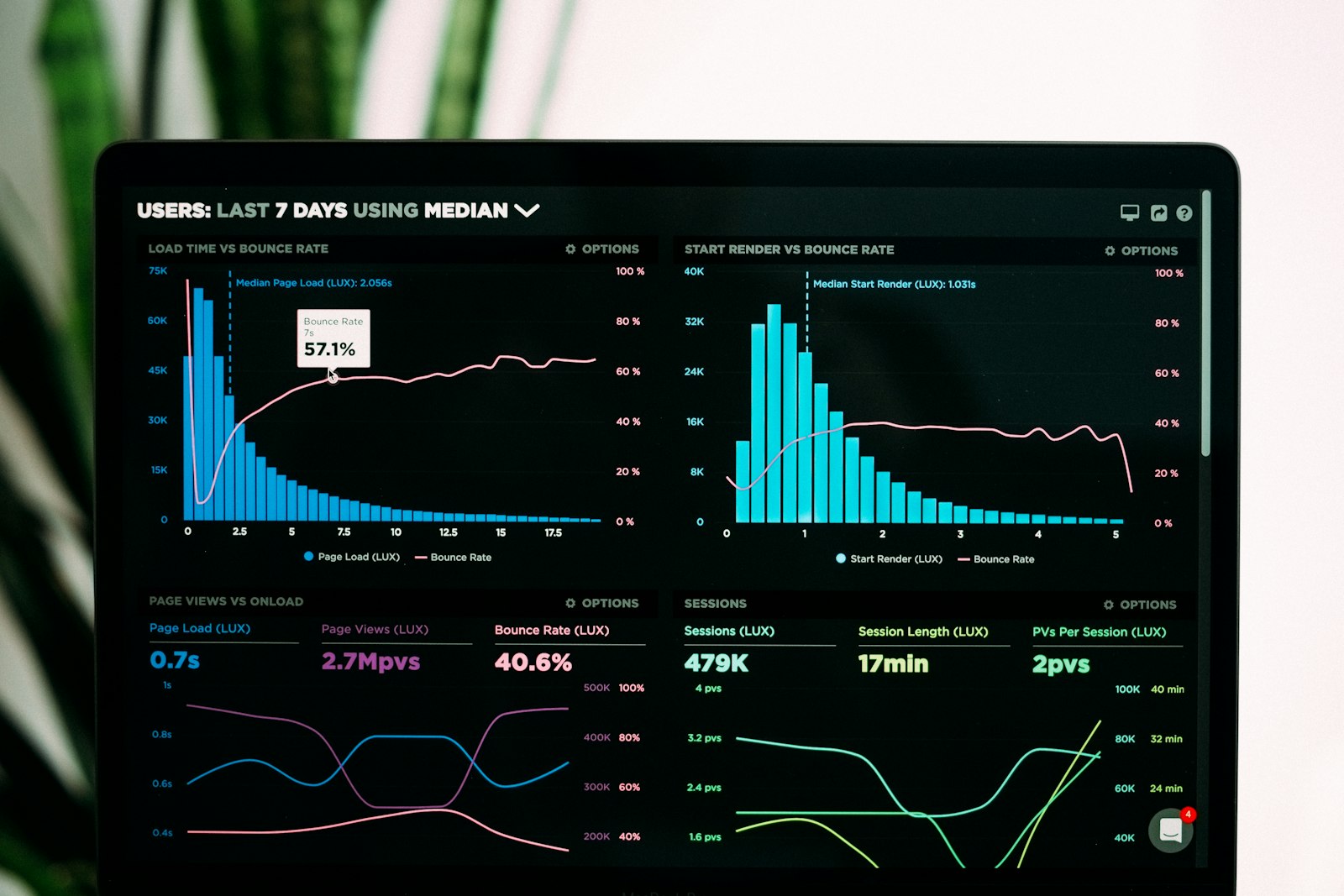
Use platform analytics to review reach, video views, saves, shares and other available engagement indicators. These can help identify which messages prompted attention, but they don’t tell you whether an individual later bought the product. Website analytics can show referral visits and on-site actions, though attribution may be incomplete. A visit alone doesn’t establish what caused a sale.
Campaign links with UTM parameters can label traffic by source, medium or campaign in analytics tools. Apply a consistent naming convention across posts and paid activity. UTMs help identify tagged visits, but they won’t capture every journey, account for every influence or prove that a post caused a conversion. Compare social and website data, and treat the relationship as an indication, not automatic proof of causation.
Record the content, audience response, referral activity and any changes made. Over time, these notes help you improve launch decisions without relying on unverified benchmarks. If you want a more coordinated approach to paid social campaign management, connect creative, distribution and measurement around the same objective.
How to sustain growth after a social media launch
The launch date passes, but the audience’s questions, feedback and purchase decisions continue. Keep useful activity going so people who need more information can find it, and so the team can learn from real responses rather than treating launch week as the end of the campaign.
Turn launch engagement into ongoing customer communication
Review comments, direct messages, reviews and customer feedback for recurring questions. Turn those themes into follow-up posts: a clearer product explanation, a demonstration or an answer to a concern several people raised. Where customers share reviews or content, use it thoughtfully and keep the message accurate. This gives later audiences practical information, not simply another announcement.
Social engagement can also inform relevant email communication. For people who have opted in, use the questions and interests expressed during launch to shape useful follow-up messages, such as product information or a related update. Email and CRM management can help organise those communications around audience context. Keep social posts, email messages and the landing page consistent, so product details and next steps don’t conflict across channels.
The landing page is part of this feedback loop. If visitors arrive but don’t take the intended action, examine whether the page answers their questions, communicates the proposition clearly and makes the next step easy to identify. Page behaviour can guide content improvements, but interpret it alongside customer feedback and other campaign signals. A single metric rarely explains the whole journey.
Build the next campaign from launch learning
After the initial activity, compare messages and formats by the quality of attention they attracted. Did people ask informed questions, visit the product page or take the action the campaign invited? Which concerns appeared repeatedly? Record what you observed, what you changed and what still needs testing. Avoid treating strong engagement as proof of sales impact unless sales data supports that conclusion.
Use the findings to refine both content and the customer experience. If people needed more context, develop an explanation that addresses the gap. If the page drew visits but left visitors uncertain, review its content and structure. Improvements to e-commerce landing page design can support a clearer journey from campaign message to action. If you’re reviewing your email platform or customer data setup, plan Klaviyo email marketing around the continuity of relevant customer communications.
These activities work best when paid social, CRM and website experience support one another. Launch content attracts and informs; the landing page gives people a next step; email can continue the conversation with opted-in audiences. Remaining questions can shape the next campaign. To discuss an integrated product launch built around your audience, content and customer journey, talk to Vertical Brands about your launch.
Turn launch learning into your next growth move
A product launch creates more than a moment of attention. It gives you evidence about what your audience notices, what they need explained and which next steps feel relevant. Use that learning to shape the next campaign, rather than treating each release as a fresh start. A stronger growth plan connects those insights across channels.
That’s the practical value behind how to launch a product on social media: build a repeatable approach that can adapt as customer understanding develops. Paid social, influencer and UGC activity can support discovery, whilst Klaviyo email and CRM management can extend relevant communication to opted-in audiences. Web development and growth advisory can help keep the customer journey and wider digital activity aligned. The next campaign are an opportunity to apply what you’ve learned with greater clarity.
If you’re ready to develop a more connected approach, discuss a more joined-up product launch with Vertical Brands. Set a clear direction, connect the right capabilities and make your next launch a stronger platform for continued growth.
Frequently Asked Questions
Is social media effective for launching a new product?
Yes, social media can help introduce a product, explain its value and prompt audience interaction. Its contribution depends on whether the right people see a clear offer and have a useful next step. For example, a demonstration may clarify how a product fits a customer’s routine. Assess whether interest leads to relevant actions, rather than treating high reach as proof of demand or assuming every sale came from a social post.
How far in advance should I start promoting a product on social media?
Start once the product message, launch date and next action are clear enough to communicate. The preparation period depends on how much explanation the product needs and how familiar your audience is with the problem it solves. If customers need to understand a new use or feature, allow time to explain that context before the announcement. Knowing how to launch a product on social media means preparing useful information, not just choosing a posting date.
What is the best day to launch a product on social media?
There isn’t one best day for every launch. Review your own audience activity where platform analytics provide it, then weigh that against product readiness and the team’s capacity to respond. A date that attracts attention but leaves questions unanswered may be less useful than one your team can support properly. Note the timing and response, so future launches can draw on your own experience rather than a universal rule.
Can I launch a product on social media with a small following?
Yes. A large following isn’t essential if the campaign reaches people with a relevant need. Make the product’s purpose easy to understand, and consider whether a creator with a closely matched audience could introduce it in a credible way. You can also invite existing customers to share useful feedback or questions, where appropriate. Judge early progress by the relevance of responses and actions, not by follower growth alone.
How often should I post during a product launch?
Post at a pace your team can maintain without sacrificing usefulness. A short sequence might introduce the problem, show the product in context and address a question that emerges. Before adding another post, ask what new information it gives the audience. If it only repeats the announcement, revise it or hold it back. Compare responses across posts to learn which topics deserve more explanation, rather than chasing a fixed posting quota.
Should I use influencers to launch a product on social media?
Influencers can support a launch when their audience, perspective and content style align with the product and campaign objective. Look beyond follower totals: review whether their usual content covers related needs and whether their communication style suits your brand. Give them a clear role, such as explaining a use case, while leaving room for a natural presentation. Then assess the partnership against its intended purpose, not popularity alone.
How do I measure whether a social media product launch worked?
Measure it against the objective you set, and consider the starting context. Compare the launch period with a relevant previous period, noting other activity that could influence visits or sales. Campaign tags can help distinguish traffic sources, but they won’t capture every customer journey or prove what caused a purchase. A useful report includes outcomes, unresolved questions and decisions for the next campaign, not just a collection of platform totals.

Other posts


















































Stay ahead with better decisions.
Get business insights today.
