How to Grow a Shopify Email List of Engaged Buyers
A bigger email list isn’t automatically a better one. Effective Shopify email list growth strategies attract interested shoppers, make sign-up clear and follow up with relevant messages. Use well-timed forms, useful incentives and an optional checkout subscription, never a pre-selected marketing box...

A bigger email list isn’t automatically a better one. Effective Shopify email list growth strategies attract interested shoppers, make sign-up clear and follow up with relevant messages. Use well-timed forms, useful incentives and an optional checkout subscription, never a pre-selected marketing box.
It’s tempting to judge progress by subscriber numbers alone, but people who don’t engage won’t strengthen your campaigns. The sign-up process is only part of the job. What happens after someone subscribes matters just as much.
This guide gives you a practical 30-day plan to build your Shopify email list and improve subscriber follow-through. You’ll learn how to test sign-up forms, personalise campaigns around customer interests and behaviour, and make focused improvements week by week. The aim is a stronger list with a clearer reason for each subscriber to stay engaged.
Key Takeaways
• Place sign-up forms where they fit the shopping journey, and make the incentive clear and consistent.
• Test one email element at a time to learn what encourages subscribers to take the next step.
• Use customer interests and behaviour to shape relevant segments, rather than sending every message to everyone.
• Choose useful content and promotions that attract people with a genuine reason to hear from your store.
• Use the 30-day plan to make one focused improvement each week; the results helps build a more engaged list over time.
How do I create an email list?
Add collection points throughout the Shopify store journey, then connect each sign-up to a relevant welcome message. These steps help you capture interest without relying on a single form.
•
Add newsletter forms and checkout opt-ins
Place a newsletter form in the sitewide footer and state its value clearly, such as product updates or a first-order incentive. Enable subscriber collection in Shopify’s checkout settings, but never pre-select the email marketing option. Make the subscription choice clear and let shoppers decide whether to sign up. Make the form and incentive clear on mobile and desktop so visitors understand what they’re signing up for.
•
Place and design signup popups
Set a popup to appear after a visitor has spent time on the site or scrolled through part of a page. An exit-intent prompt can reach visitors who are about to leave. For example, offer 10% off their next purchase, and repeat the same incentive in the footer. Keep the form focused on the email address and one clear benefit. Add a teaser tab so visitors can reopen a dismissed popup later.
•
Use landing pages and Meta Instant Forms
Create a dedicated landing page for each campaign, with one offer, a brief explanation and a visible sign-up form. For a Meta campaign, an Instant Form lets people submit their details within the platform. Align its wording with the advert and welcome email so the promise stays consistent. If the advert offers a guide, make that guide the first thing subscribers receive.
•
Embed sign-up forms in content
Add a relevant form at the end of a blog post, in a video description or as an in-content link. Match the invitation to the material: a product-care article could offer practical care tips, while a buying guide could invite readers to receive related updates. Avoid gating an entire free-download catalogue behind an email form, as this can prevent search engines from crawling those pages and reduce their SEO benefit.
Which Shopify email marketing apps are best, and what do they cost? Choose an app that supports form capture, segmentation and welcome automation, and fits your store’s workflow. Costs depend on the app’s pricing model, contact volume and features.
What signup and growth benchmarks are typical? Ecommerce sites may see two to five purchases per 100 visitors, while three to five email subscribers per 100 visitors who aren’t ready to buy is a suggested list-growth benchmark. Track form conversion separately from purchases to see where shoppers drop off.
A/B testing and subscriber follow-through
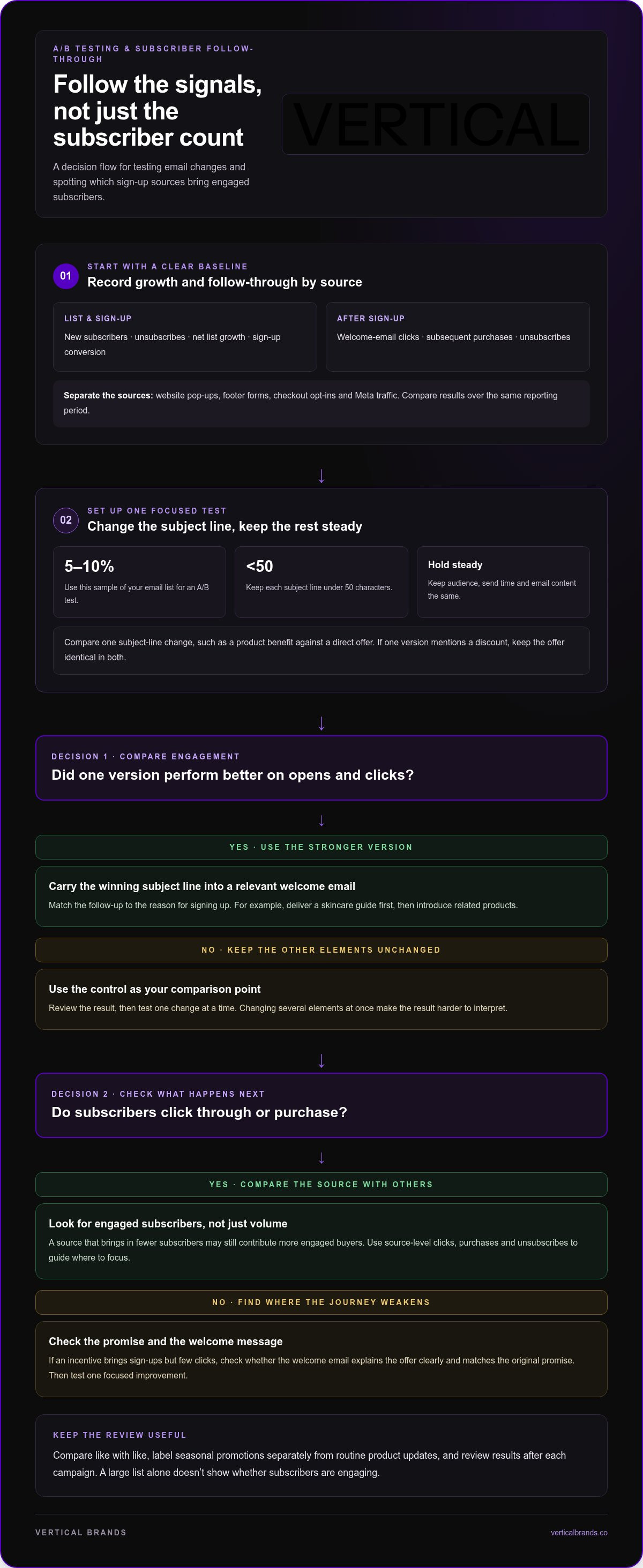
Track net list growth, sign-up conversion by source and subscriber quality through welcome-email clicks and purchases. Compare results by form, campaign and traffic source so a large list doesn’t hide weak follow-through.
•
Test subject lines and engagement
Test one subject-line change at a time, such as a product benefit against a direct offer. Keep each version under 50 characters, then compare opens and clicks against the same audience segment. Shopify recommends subject lines under 50 characters.
Use a sample of 5-10% of your email list for an A/B test. Hold the audience, send time and email content steady, so the subject line is the main variable. If one version mentions a discount, keep the offer identical in both versions. Otherwise, you won’t know whether the subject line or incentive influenced engagement.
Follow the winning subject line with a relevant welcome email. If someone subscribes for a skincare guide, deliver it first, then introduce related products. Check whether subscribers click through or purchase, not just whether they open the message. An open alone doesn’t show whether the next step worked.
•
Measure growth and subscriber quality
Record new subscribers, unsubscribes and net list growth alongside sign-up conversion for each form. Separate website pop-ups, footer forms, checkout opt-ins and Meta traffic in your reporting. This source-level view helps reveal which channels attract subscribers who respond after signing up.
Compare each source’s welcome-email clicks, subsequent purchases and unsubscribes over the same reporting period. A source that brings in fewer subscribers may still contribute more engaged buyers. These results give you a practical basis for deciding where to focus, rather than prioritising list size alone.
Then test one change, such as the form headline, incentive or welcome message. Keep the other elements unchanged and record the result before making another adjustment. If a discount attracts sign-ups but few clicks, check whether the welcome email explains the offer clearly and matches the original promise. Improve the part of the journey where engagement weakens, rather than changing everything at once.
Repeat this review after each campaign and compare like with like. A seasonal promotion and a routine product update may produce different behaviour. Label each clearly in your reporting so short-term traffic spikes don’t distort the baseline. Use the findings to refine the next test and make follow-up more relevant for subscribers.
For support connecting audience data with campaign optimisation, explore email marketing and CRM management.
Lifecycle segmentation and behavioural personalisation
Use customer interests and behaviour to decide who receives each campaign. A useful segment links a clear signal, such as a product view, to a relevant next message.
•
Segment audiences by lifecycle and behaviour
Separate new subscribers, first-time buyers and returning customers, then use behaviour to refine each audience. A shopper who browsed trainers but didn’t buy could receive product guidance, while a recent buyer receives care advice. Shopify stores can segment by interests and behaviour. A 2025 report found that 60% of consumers consider most marketing emails irrelevant, making relevance a practical priority.
•
Personalise offers for audience segments
Use preferences, purchase history and browsing behaviour to tailor each offer. For example, recommend related products to a returning customer, while a subscriber who viewed a specific category receives content about that range. Shopify stores can offer loyal customers exclusive rewards and benefits. Avoid sending the same discount to every segment when their interests or purchase patterns differ.
Collect useful preference data.
Add a product recommendation quiz to capture interests alongside a shopper’s email profile. Ask questions that inform a real decision, such as preferred product type or intended use. Use the answers to create segments, then reflect them in your email content. Don’t collect details that won’t affect what you send; irrelevant questions add friction without improving targeting.
Build lifecycle messages around customer actions.
Map the key stages, from new subscriber to repeat buyer, and connect each stage to an appropriate message. A welcome email can introduce the store, while post-purchase content can support the product already bought. Companies with the highest email marketing ROI are 20% more likely to use subscription lifecycle emails. Make each message reflect the subscriber’s current relationship with your store.
Use segments to test personalisation.
Compare a targeted email with a broader version, keeping the offer and timing consistent. A targeted Johnny Cupcakes email test using segmentation increased click-through rate by 42%. Treat that as an example, not a forecast for your store. Track clicks and purchases by audience segment, then use the results to refine the next campaign. The segment help show which signals are useful.
Valuable newsletter and campaign content
Useful incentives include a 10-20% discount, a practical guide or exclusive content matched to your products. Choose something subscribers can use immediately, then make the welcome email deliver exactly what the sign-up promised.
•
Plan newsletter and campaign content
Map each newsletter to a clear reader need, such as choosing between product options or learning how to use a purchase. Build a content calendar around launches, seasonal moments and useful advice, then connect each email to one action. Keep copy focused: readers should be able to get through it in 30 seconds to a minute. A product-care email, for example, can pair a short tip with a relevant product link.
•
Run giveaways, contests and partnerships
Use a giveaway when its prize appeals to the audience you want to reach. Ask for an email address or phone number for entry, then invite entrants to share the promotion with friends. A partnership with a complementary brand can extend reach through both brands’ social media channels. Giveaways can attract low-quality subscribers, so use them sparingly and segment entrants for relevant follow-up. Assess entries through clicks and purchases.
•
Select incentives and lead magnets
Match the lead magnet to your product category. A sleep brand could offer a “7-Day Sleep Reset Guide”; a wellness business might offer a 30-day planner. These incentives give visitors a practical reason to sign up, beyond a general promise of updates. For a product launch, an early-access announcement may fit better than a discount.
Build a focused content upgrade.
Turn a useful article into a related download, such as a product comparison checklist alongside a buying guide. Keep the landing page focused on the resource, explain what subscribers will receive and make the sign-up action easy to find. Deliver the promised upgrade directly after registration, with the welcome message reinforcing the connection.
Promote the offer and assess its performance.
Share the sign-up page through social media posts, campaign emails and targeted ads. Keep the offer consistent across channels so visitors recognise it when they arrive. Compare sign-ups and subsequent engagement by source. If a contest produces high volume but weak follow-through, refine the prize or audience targeting before repeating it. Subscriber relevance matters alongside conversion rate.
A 30-day email list growth plan
Run the next 30 days as a sequence of controlled improvements, not a race for raw subscriber volume. Each week should have one priority, one action and a clear measure of progress.
Week one: establish your baseline.
Record current subscribers, new sign-ups, unsubscribes and welcome-email engagement. Separate results by source, such as checkout, footer forms and pop-ups. Review the journey on mobile and desktop, then identify the main friction point. Is the offer unclear? Does the form interrupt browsing? Make one meaningful improvement this week and keep the other elements steady. This gives you a useful comparison for later changes.
Week two: strengthen the reason to subscribe.
Choose an incentive that fits your products and customer relationship. A Shopify store could offer new subscribers 15% off their first order, or provide a useful guide linked to a product category. Promote the sign-up page through social media posts and targeted ads. You can also test a referral programme that rewards both the referrer and new subscriber with discounts or loyalty points. Track each source separately, so traffic quality stays visible.
Week three: improve subscriber follow-through.
Review the welcome automation against the sign-up promise. If visitors joined for early access, make that the first message’s focus. If they subscribed for a guide, deliver it clearly before introducing other offers. Check clicks and purchases by acquisition source, then use those signals to refine the next email. A new subscriber and a returning customer have different needs. Align each message with the action that brought them onto your list.
Week four: test, learn and set the next priority.
Compare this month’s results with your baseline, including sign-ups, unsubscribes, engagement and purchase activity. Test one change at a time, such as the form headline or welcome email subject line. Record what changed and what happened. Don’t judge success by total email addresses alone. If one source brings fewer subscribers but stronger engagement, prioritise its approach in the next cycle. The results give you a practical decision, not just a bigger number.
Use this 30-day cycle to focus on one improvement each week. If you want support turning the findings into an email growth programme, plan your email marketing growth.
Vertical Brands: Klaviyo Email Marketing
Vertical Brands helps Shopify businesses turn list-growth activity into a structured email programme. Its Klaviyo Email Marketing and Email Marketing & CRM Management services support campaign planning, audience segmentation and subscriber follow-through. This is a natural next step when sign-up sources are growing but welcome messages, customer data and campaign activity need clearer coordination. The work connects acquisition insights with relevant email journeys, helping teams make informed decisions about what to improve. Strong foundations matter: a clear sign-up offer, useful subscriber information and a message that matches the original promise. Each segment and campaign should work together.
To discuss email marketing support for your Shopify store, visit Vertical Brands.
Make list growth part of your operating rhythm
Treat list development as a core growth channel, not a temporary campaign. Put Shopify email list growth strategies into a repeatable operating rhythm, with a clear owner responsible for reviewing performance and deciding what to improve next.
Set a decision rule before your next campaign. For example, decide what subscriber behaviour would justify changing the offer, shifting acquisition activity or refining the follow-up. This keeps decisions tied to customer response rather than internal preference. Growth decisions become easier when your team agrees on what evidence matters and acts on it consistently.
When paid acquisition and email activity need to work together, Vertical Brands can connect Paid Social with your growth priorities. Contact Vertical Brands to discuss your strategy and identify the next practical step for your Shopify store.
A disciplined approach gives you room to learn, adapt and build lasting customer relationships. Start with the next decision, then keep moving forward.
Frequently Asked Questions
What are the most effective email list growth strategies for Shopify stores?
Effective Shopify email list growth strategies connect a clear reason to sign up with relevant follow-up. Match the offer to your product range, then make the subscriber’s first email deliver what the form promised. For example, a homeware shop could offer a room-planning guide and send related product advice afterwards. Measure sign-ups alongside clicks, purchases and unsubscribes so you can prioritise sources that build customer interest, not just a larger contact database.
How can Shopify merchants add signup forms, pop-ups and embedded forms to their stores?
Add forms through a Shopify-compatible email app or your theme’s available sections, then preview them on mobile and desktop. Check that every field has a clear purpose and that the submit button explains the action. On a product page, an embedded form could invite shoppers to receive restock updates. Test the submission using a separate email address and confirm the contact appears in the right audience or segment.
How can Shopify stores grow email subscribers through checkout, customer accounts and post-purchase flows?
Offer a distinct, optional marketing sign-up at checkout and in account areas, rather than treating an order or account creation as automatic permission for promotions. After purchase, use the order-confirmation journey to invite customers to receive product updates or useful advice. Keep essential transaction messages separate from marketing content. This helps customers understand what they’re agreeing to and gives your team a clearer record of how each contact joined.
How can Shopify merchants use social media, landing pages and giveaways to grow their email lists?
Give each social media campaign a landing page that matches its post or advert, then track sign-ups by source. A giveaway can invite entries through a dedicated form, with a prize closely related to your products. For example, a coffee retailer could offer a tasting set rather than a general cash prize, attracting people interested in the category. Review subsequent engagement before repeating a promotion or partnership.
What UK GDPR and PECR rules apply to collecting email subscribers for Shopify marketing?
UK GDPR and PECR are relevant to collecting and using email addresses for marketing in the UK. Make the sign-up purpose clear, explain how the address will be used and provide a straightforward way to stop marketing messages. Don’t assume a purchase alone means someone wants promotional emails. Rules can depend on the recipient and context, so build your process around clear permission and transparent information, and seek qualified advice for your circumstances.
How can Shopify merchants use double opt-in and consent records to reduce compliance risks?
Double opt-in asks someone to confirm their subscription through a follow-up message. It can help identify mistyped addresses and create a clearer sign-up trail, though the confirmation step should fit your chosen process. Keep records of when and where each person subscribed, what the form said and whether they later withdrew permission. Clear records make it easier to investigate questions about a contact’s marketing status.
How can stores prevent fake signups, spam traps and low-quality email list growth?
Use form protections such as CAPTCHA or a hidden honeypot field, and limit repeated submissions from the same source. Confirm addresses where appropriate, then monitor delivery failures, unsubscribes and engagement by acquisition channel. Avoid buying lists or running broad giveaways with prizes unrelated to your products. For instance, a specialist skincare prize is more likely to attract relevant shoppers than a generic prize draw, helping improve the quality of future campaign audiences.
Which Shopify email marketing apps are best for growing an email list, and how much do they cost?
Choose an app that supports form capture, segmentation and welcome automation, and fits your store’s workflow. Costs depend on its pricing model, contact volume and features.

Other posts






















































Stay ahead with better decisions.
Get business insights today.
